An Anticipatory Mechanism Boosts Cooperation in Mutant Bacteria

Greg Howard
17th April, 2025

An Anticipatory Mechanism Boosts Cooperation in Mutant Bacteria

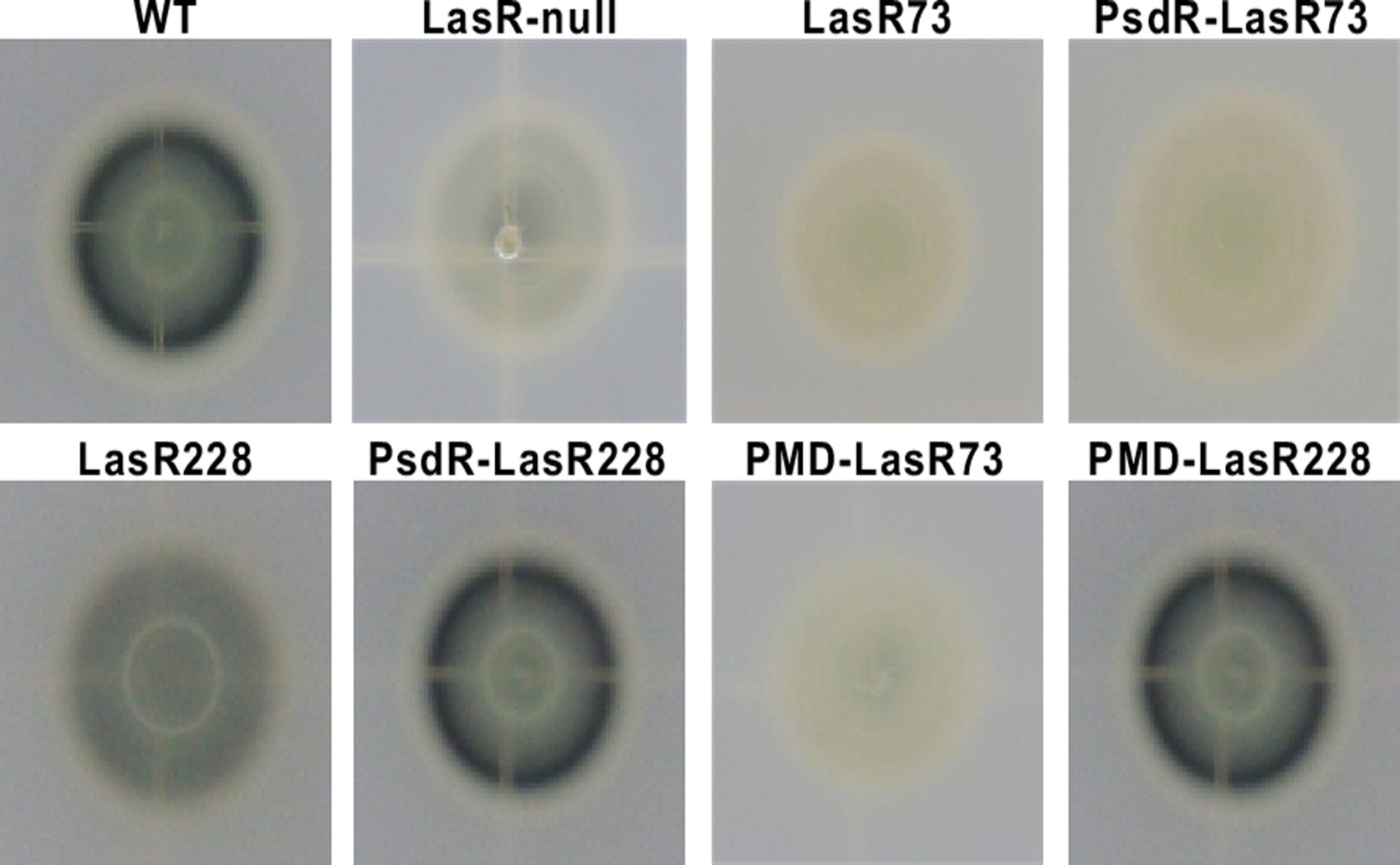
Inactivation of the transcriptional repressor PsdR substantially restores cooperative proteolytic activity in the Pseudomonas aeruginosa LasR228 quorum sensing variant, a function that is otherwise minimal compared to the wild-type strain.

Image adapted from: Yuan et al. / CC BY (Source)

Key Findings

  • Scientists from South China Agricultural University and the University of Colorado discovered how genes affect cooperation in the bacteria Pseudomonas aeruginosa
  • They found that turning off the gene PsdR restored teamwork in a mutant bacteria strain, preventing some cells from taking resources without contributing
  • This insight could help develop new methods to control infections and combat antibiotic resistance by targeting bacterial cooperation mechanisms
Cooperative behavior among microbial cells is fundamental to the functioning and complexity of microbial communities. However, maintaining such cooperation is challenging because some cells may exploit the collective resources without contributing, leading to conflicts within the population[2]. Understanding the mechanisms that stabilize cooperation is crucial for insights into areas like infection control and antibiotic resistance. A recent study conducted by researchers at South China Agricultural University and the University of Colorado Anschutz Medical Campus[1] explored how specific genetic variations can influence cooperative behaviors in the bacterium Pseudomonas aeruginosa. The study focused on quorum sensing (QS), a communication system that bacteria use to coordinate actions based on their population density. QS regulates various cooperative activities, including the production of virulence factors that contribute to the bacterium’s ability to cause disease. The researchers investigated a variant of the QS regulator LasR, known as LasR228, which typically shows reduced functionality in controlling QS-dependent behaviors. They discovered that the LasR228 variant exhibited minimal cooperative traits. However, when the transcriptional repressor PsdR was inactivated, the cooperative functions of LasR228 were restored, making the behavior of this variant similar to that of the non-mutated parental strain. This restoration suggests that PsdR plays a critical role in regulating cooperation, acting as a check against potential cheating by LasR variants. Further analysis revealed that the inactivation of PsdR led to a post-transcriptional regulatory mechanism that reactivated the cooperative behaviors of the LasR228 variant. In competitive environments, the PsdR-null LasR228 strain maintained its cooperative interactions, unlike strains lacking LasR entirely. This finding indicates that PsdR-mediated regulation serves as an anticipatory control mechanism, preventing cheating behaviors before they can disrupt the population’s cooperation. This study builds on previous research that highlights the importance of genetic and social structures in maintaining cooperation among microbes. For instance, earlier work has shown that gene mobility and horizontal gene transfer can enhance cooperation by increasing relatedness among cells[3]. The current study complements these findings by demonstrating how specific genetic regulators like PsdR can enforce cooperative behaviors, thereby stabilizing social interactions within microbial communities. Moreover, the research connects to studies on the relationship between cooperation and virulence. It was observed that the cooperative PsdR-null LasR228 strain exhibited increased pathogenicity toward eukaryotic host cells. This aligns with theories suggesting that cooperative behaviors in pathogens can enhance their ability to exploit host resources, thereby increasing their virulence[4]. By modulating cooperation through genetic mechanisms, the bacteria can balance between benefiting the population and causing damage to the host. The methods employed in this study involved creating and analyzing mutant strains of P. aeruginosa with specific genetic modifications. Through competitive assays and pathogenicity tests, the researchers were able to assess the impact of these mutations on cooperative behaviors and virulence. The use of both genetic manipulation and functional assays provided a comprehensive understanding of how LasR variants and PsdR interact to regulate cooperation. Overall, the findings from this study offer significant insights into the molecular mechanisms that sustain cooperation in microbial populations. By revealing how secondary mutations can modulate the functionality of QS regulators, the research provides a deeper understanding of the balance between cooperation and conflict among microbes. This knowledge has important implications for developing strategies to combat infections, as targeting these regulatory mechanisms could disrupt harmful cooperative behaviors in pathogenic bacteria.

GeneticsBiochem

References

Main Study

1) An anticipatory mechanism that enhances cooperative behaviors of quorum sensing mutants of Pseudomonas aeruginosa

Published 15th April, 2025

https://doi.org/10.1371/journal.ppat.1013046


Related Studies

2) Social interaction in synthetic and natural microbial communities.

https://doi.org/10.1038/msb.2011.16


3) Horizontal gene transfer of the secretome drives the evolution of bacterial cooperation and virulence.

https://doi.org/10.1016/j.cub.2009.08.056


4) Kin selection and the evolution of virulence.

https://doi.org/10.1038/sj.hdy.6801093


Related Articles

An unhandled error has occurred. Reload 🗙