Testing Sesame Plants for Resistance to Root-Knot Nematodes

Jenn Hoskins
15th April, 2025

Testing Sesame Plants for Resistance to Root-Knot Nematodes

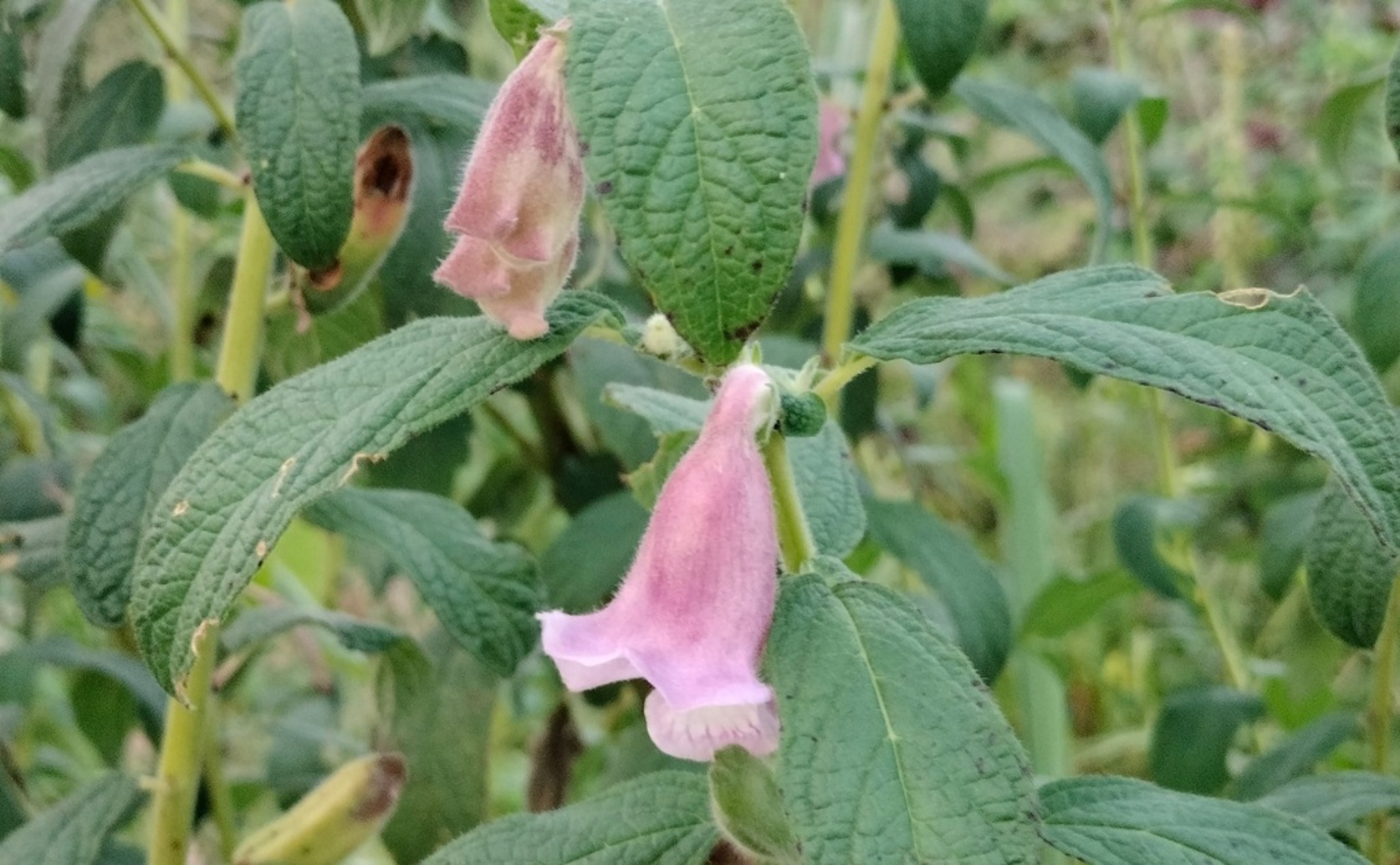
Sesame (Sesamum indicum)

Photo adapted from: Ong Jyh Seng / CC BY SA (Source)

Key Findings

  • In North Carolina, sesame varieties significantly reduced most harmful nematodes compared to tomato plants
  • Planting sesame in crop rotations can naturally lower nematode levels, protecting key crops like sweetpotato and soybean
  • Differences among sesame types indicate potential for breeding even more nematode-resistant cultivars
Root-knot nematodes (RKNs), particularly those belonging to the Meloidogyne species, pose a significant threat to agricultural productivity by parasitizing a wide range of plants. These microscopic worms induce the formation of galls, or abnormal swellings, on plant roots, which hinder nutrient uptake and stunt plant growth. In North Carolina, major crops such as sweetpotato, soybean, cotton, and tobacco are highly susceptible to various RKN species, making them vulnerable to substantial yield losses each growing season. Addressing this challenge, researchers at North Carolina State University[1] conducted a study to explore alternative crops that could resist RKN infestation, thereby helping farmers manage nematode populations naturally and maintain soil health. The focus of this study was on seven different cultivars of sesame, a crop known for its resilience and economic value, to determine their susceptibility and potential resistance to four specific Meloidogyne species: M. arenaria, M. incognita, M. enterolobii, and M. hapla. In their experiments, the team inoculated sesame seedlings with 1,000 eggs of each RKN species. After a period of sixty days, the researchers assessed the severity of root galls, counted the number of nematode eggs produced, and calculated the reproductive factor (RF), which is the ratio of final egg counts to the initial number of eggs introduced. A lower RF indicates greater resistance to nematode reproduction. The findings revealed that all seven sesame cultivars exhibited significantly lower RF values compared to the tomato variety Rutgers, a standard control, for three of the four RKN species tested. The exception was M. arenaria, where the sesame cultivars did not show a significant reduction in RF. Additionally, the study found that while the RF values for sesame plants infected with M. incognita and M. hapla were similar, there were notable differences among the cultivars when challenged with M. enterolobii. This suggests that genetic diversity within sesame may play a crucial role in conferring resistance to certain nematode species. These results build on previous research that identified resistant sweetpotato genotypes capable of suppressing M. enterolobii populations[2]. In that study, nineteen out of ninety-one sweetpotato varieties showed resistance, limiting nematode reproduction to fewer than 20 eggs per gram of root. This resistance is particularly valuable because M. enterolobii is known for its ability to overcome traditional resistance genes found in many crops[3], posing a persistent threat to agricultural systems. The current study by North Carolina State University expands the understanding of plant resistance to RKNs by demonstrating that sesame cultivars can serve as effective non-hosts for several Meloidogyne species, especially M. incognita and M. hapla. This trait makes sesame a promising candidate for crop rotation strategies aimed at reducing nematode populations in the soil. Crop rotation is a sustainable agricultural practice where different types of crops are grown sequentially on the same land to disrupt pest and disease cycles. By incorporating sesame into rotation schemes, farmers can naturally decrease RKN densities, leading to healthier crops and potentially higher yields in subsequent planting seasons. Moreover, the genetic variability observed in sesame's response to M. enterolobii highlights the potential for breeding programs to develop even more resistant cultivars. By selecting and crossing sesame plants that exhibit strong resistance traits, breeders can enhance the overall durability of sesame against RKN infestations. This approach mirrors efforts in sweetpotato breeding, where resistant genotypes from crosses between 'Tanzania' and 'Beauregard' varieties are being used to develop commercially viable resistant cultivars[2]. The implications of this research are significant for North Carolina's agricultural landscape. With sweetpotato, soybean, cotton, and tobacco being cornerstone crops, managing RKN populations effectively is essential for maintaining their economic viability. The introduction of resistant sesame cultivars into crop rotations not only helps manage nematode populations but also contributes to diversified farming systems, which can enhance soil health and reduce dependency on chemical nematicides. Furthermore, the study underscores the importance of ongoing surveillance and identification of RKN species in the field. Previous research identified M. enterolobii in North Carolina, confirming its presence in key agricultural regions and highlighting the need for resistant crop varieties[3]. By continuously monitoring nematode populations and understanding their interactions with different crops, researchers and farmers can stay ahead of potential outbreaks and implement timely management strategies. In conclusion, the research conducted by North Carolina State University offers a viable solution to the enduring problem of root-knot nematodes in important field crops. By identifying and promoting the use of resistant sesame cultivars, farmers can adopt more sustainable and effective methods to control nematode populations, thereby safeguarding crop yields and ensuring the long-term health of their agricultural systems[2][3]. This study not only enhances our understanding of plant-nematode interactions but also provides practical tools for farmers to combat one of agriculture's persistent challenges.

AgricultureGeneticsPlant Science

References

Main Study

1) Screening sesame (Sesamum indicum) for resistance to multiple root-knot nematode species (Meloidogyne spp.)

Published 12th April, 2025

https://doi.org/10.2478/jofnem-2025-0017


Related Studies

2) Screening Sweetpotato Genotypes for Resistance to a North Carolina Isolate of Meloidogyne enterolobii.

https://doi.org/10.1094/PDIS-02-20-0389-RE


3) First Report of Meloidogyne enterolobii on Cotton and Soybean in North Carolina, United States.

https://doi.org/10.1094/PDIS-03-13-0228-PDN


Related Articles

An unhandled error has occurred. Reload 🗙