Many Farms Struggle with Pollination in Various Specialty Crops

Jenn Hoskins
12th April, 2025

Many Farms Struggle with Pollination in Various Specialty Crops

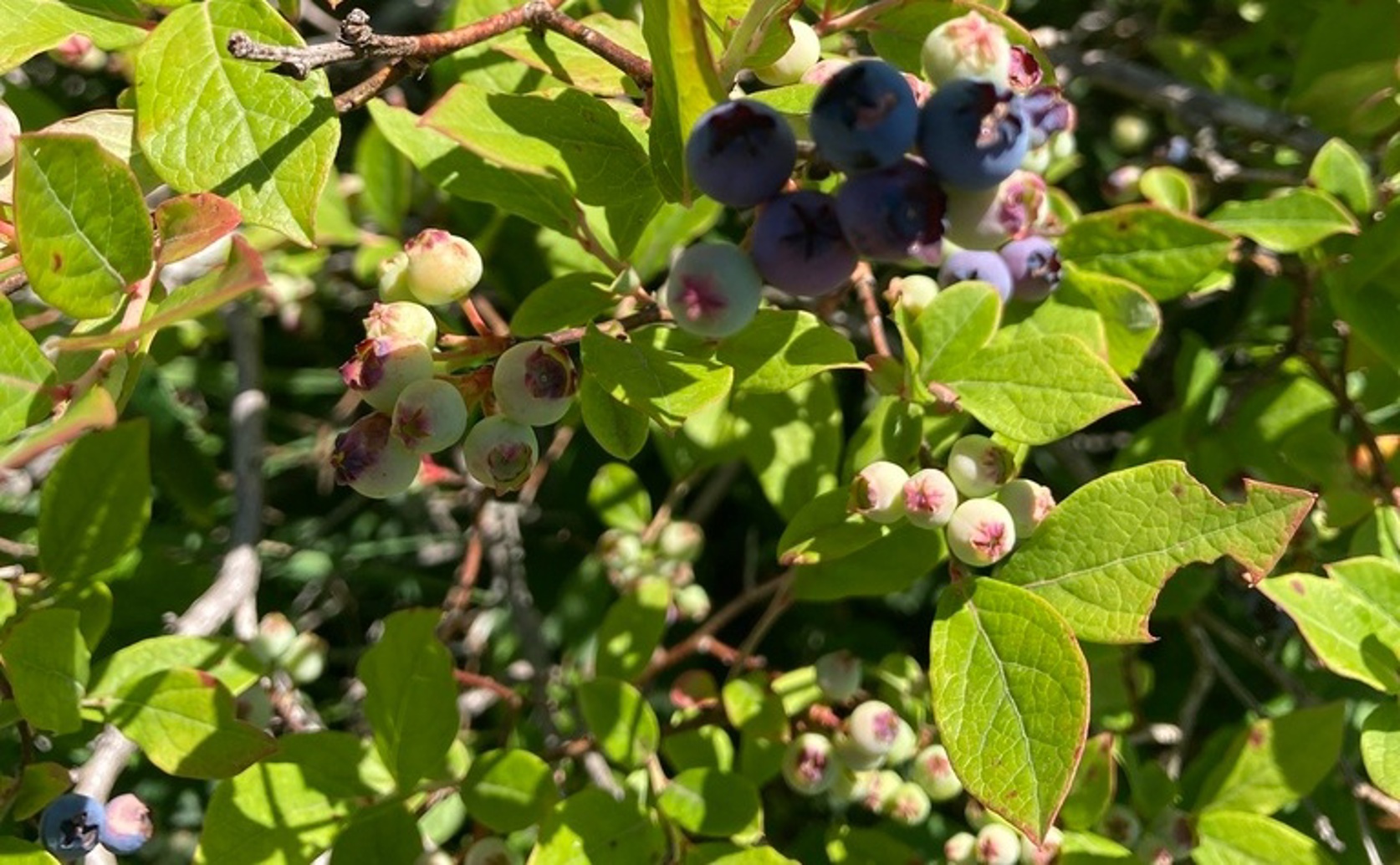
Northern highbush blueberry (Vaccinium corymbosum), one of the species mentioned.

Photo adapted from: Jaime McGuigan / CC BY (Source)

Key Findings

  • *In Indiana, Purdue University researchers found that insect pollination significantly boosted fruit production in crops like watermelons, apples, blueberries, and tomatoes.*
  • *Manually adding pollen further increased yields in most of these crops, showing that enhancing pollination can lead to better harvests.*
  • *Surprisingly, tomatoes—usually not reliant on pollinators—also showed significant yield improvements when pollination was increased.*
Pollination is a vital process for many crops, directly influencing both the quantity and quality of produce. Specialty crops, such as watermelons, apples, blueberries, and tomatoes, rely on insect pollinators to varying degrees. However, these crops may still face challenges due to insufficient pollination, a phenomenon known as pollen limitation. A recent study conducted by researchers at Purdue University[1] examined the extent of pollen limitation across different specialty crops and explored the factors affecting pollination dynamics. The study investigated how insect pollination impacts fruit set and quality by comparing three different pollination treatments: insect exclusion, open pollination, and hand pollination. Insect exclusion involved preventing insects from accessing the flowers, open pollination allowed natural pollination to occur, and hand pollination involved manually adding pollen to the flowers. By analyzing these treatments, the researchers aimed to determine the contribution of natural pollinators to crop production and identify potential areas for improving yields. Results from the study showed that insect pollination significantly increased fruit set in all the crops examined, with an average increase of 22.9% compared to conditions where insects were excluded. This finding aligns with previous research indicating the critical role of pollinators in agriculture. For instance, it is well-established that over 80% of all crops depend, to some extent, on insect pollination[2]. Despite this dependence, the global increase in pollinator-dependent crop areas has not consistently led to increased agricultural diversity. In some regions, such as parts of the Americas and Asia, the expansion of pollinator-dependent crops like oilseeds has actually decreased agricultural diversity, undermining pollination services[2]. In the Purdue University study, hand pollination further increased fruit set in most crops, except for apples after thinning, where the increase was modest at 5.8%. This suggests that while natural pollination is beneficial, there is still room for enhancing pollination efficiency through manual methods. The study also found that the effect of pollination on fruit quality varied among crops. Notably, field tomatoes were the only crop to show pollen limitation across all quality metrics, indicating a significant reliance on adequate pollination for optimal production. These findings are particularly relevant in the context of the United States, where the value of crops dependent on insect pollination has seen fluctuations over the years. From 1996 to 2009, the value attributed to directly dependent crops increased after an initial decline, highlighting the ongoing need for effective pollination services[3]. Additionally, indirectly dependent crops, such as legumes and carrots, initially declined in value but began to recover, partly due to increases in yield despite reductions in cultivated area[3]. This underscores the complexity of pollination dynamics and the importance of maintaining both managed and wild pollinator populations. The study also considered specific agricultural practices, such as thinning in apples and protected culture in tomatoes, which can influence pollination outcomes. Thinning involves selectively removing some flowers or fruits to improve the quality of the remaining produce, while protected culture refers to growing crops in controlled environments to reduce exposure to pests and weather extremes. These practices can affect how pollinators interact with crops, thereby impacting fruit set and quality. Comparing different regions, the study highlighted variations in pollination dynamics based on local and landscape factors. For example, in Michigan, where blueberry is grown within its native range, wild bee communities were more diverse and effective at pollinating crops compared to non-native production regions like British Columbia[4]. This regional difference emphasizes the importance of local biodiversity in supporting pollination services. Enhancing habitat diversity around farms can increase wild bee abundance, which in turn boosts pollination and crop yields[4]. Furthermore, the research ties into broader concerns about agricultural practices and their impact on pollinator populations. Extensive monocultures, which grow a single crop over large areas, are associated with reduced pollinator diversity and supply, leading to decreased pollination efficiency[2]. In contrast, agricultural diversification, which involves growing a variety of crops, can support a more robust pollinator community and enhance pollination services[2]. The Purdue University study adds to this body of knowledge by demonstrating that even within diversified systems, specific crops like tomatoes may still experience significant pollen limitation, indicating that additional strategies may be needed to support pollinator populations effectively. Overall, the Purdue University study provides valuable insights into the role of insect pollinators in specialty crop production. By quantifying the extent of pollen limitation and identifying factors that influence pollination dynamics, the research highlights opportunities for improving crop yields and ensuring the sustainability of pollination services. These findings reinforce the importance of maintaining diverse and healthy pollinator communities and adapting agricultural practices to support their vital role in food production.

AgricultureEcologyPlant Science

References

Main Study

1) Evidence of widespread pollen limitation in diverse specialty crops on commercial farms

Published 20th February, 2025

https://doi.org/10.1098/rsos.250201


Related Studies

2) Global agricultural productivity is threatened by increasing pollinator dependence without a parallel increase in crop diversification.

https://doi.org/10.1111/gcb.14736


3) Insect pollinated crops, insect pollinators and US agriculture: trend analysis of aggregate data for the period 1992-2009.

https://doi.org/10.1371/journal.pone.0037235


4) Contrasting Pollinators and Pollination in Native and Non-Native Regions of Highbush Blueberry Production.

https://doi.org/10.1371/journal.pone.0158937


Related Articles

An unhandled error has occurred. Reload đź—™