
Virus Counterattack Blocks Cells’ Anti-Virus Defense
Jenn Hoskins
3rd April, 2025


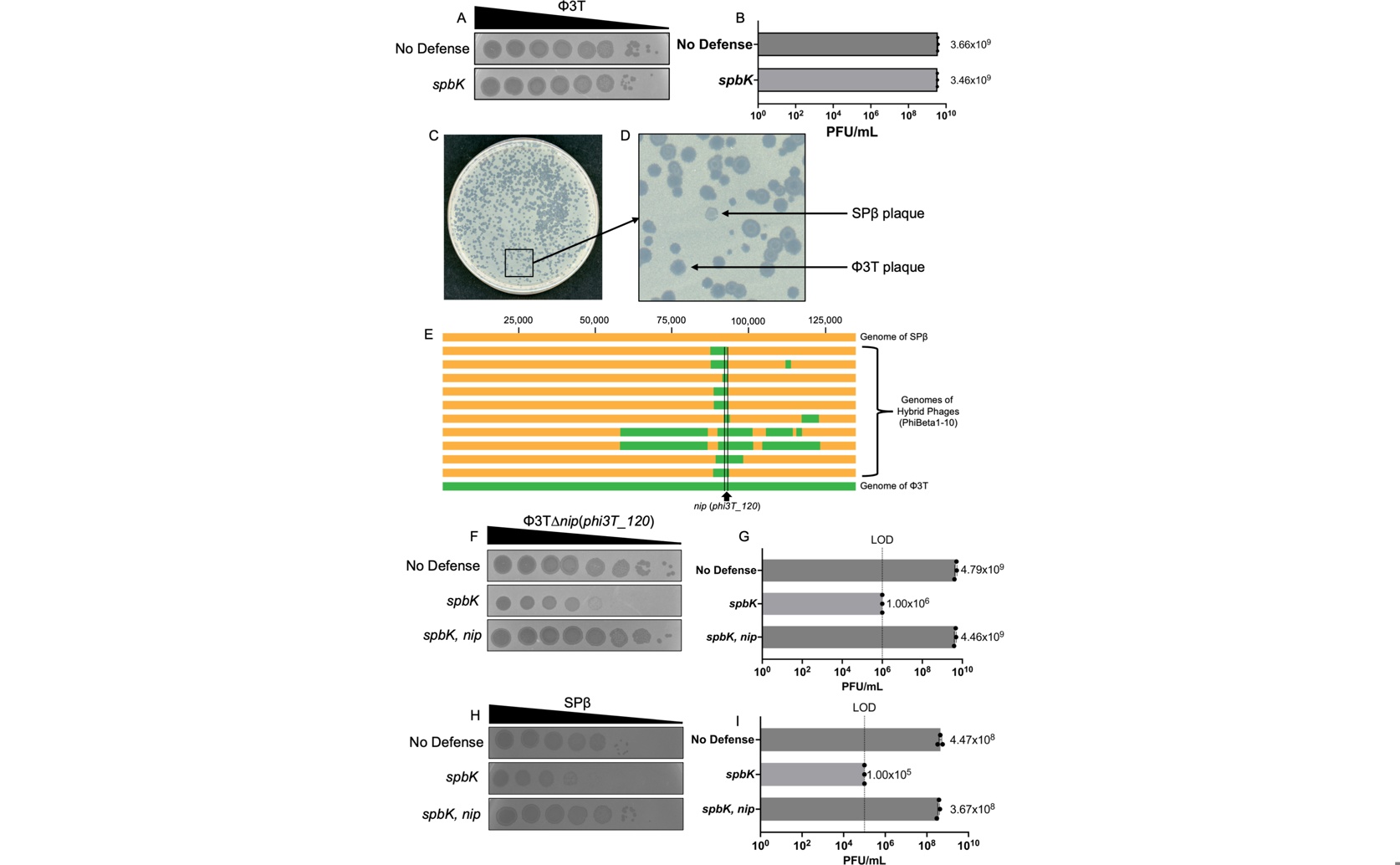
The phage Φ3T is resistant to the SpbK anti-phage defense system (a, b), and genetic analysis reveals a single gene, nip, that is both necessary for Φ3T's resistance (f, g) and sufficient to enable the normally susceptible SPβ phage to overcome this bacterial defense (h, i).
Key Findings
- MIT scientists discovered that Bacillus subtilis uses the spbK gene to defend against viruses by making infected cells self-destruct
- The spbK gene works by breaking down NAD+, a vital molecule for cell survival, thereby stopping the virus from spreading
- They also found that the phage Φ3T has a nip gene that blocks the spbK defense, allowing the virus to overcome the bacteria's protection
References
Main Study
1) A phage-encoded counter-defense inhibits an NAD-degrading anti-phage defense system
Published 2nd April, 2025
https://doi.org/10.1371/journal.pgen.1011551
Related Studies
2) Abortive Infection: Bacterial Suicide as an Antiviral Immune Strategy.
3) Phages overcome bacterial immunity via diverse anti-defence proteins.
4) Rapid evolutionary turnover of mobile genetic elements drives bacterial resistance to phages.
Related Articles
 16th March, 2024 | Jenn Hoskins