
Protein Balance Influences Gene Changes in Bacteria Resistant to Antibiotics
Jenn Hoskins
14th March, 2025


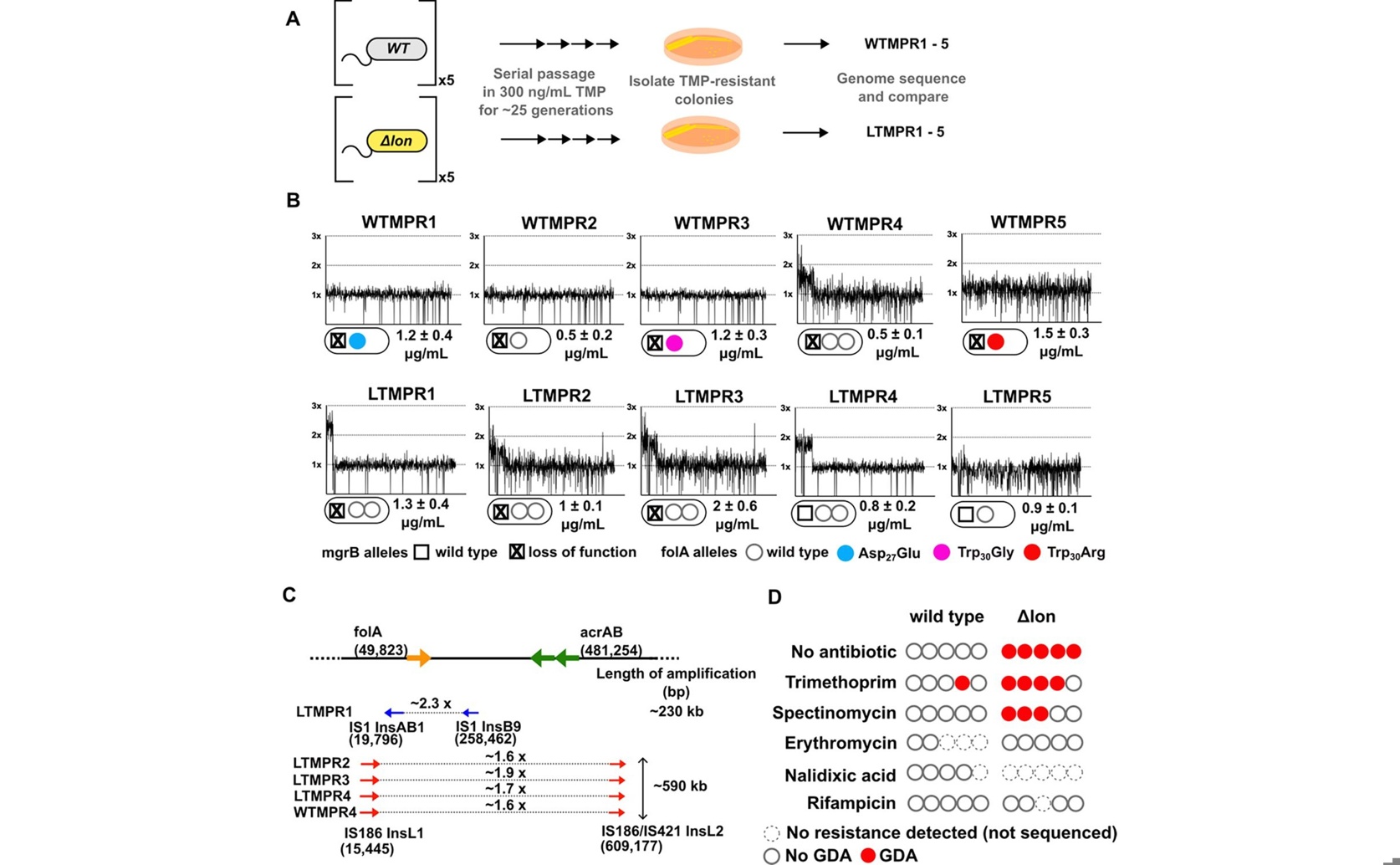
Lon protease deficiency in Escherichia coli increases the frequency of large IS-element-flanked genomic duplications encompassing folA during early adaptation to trimethoprim, revealing that proteostasis modulates the mutational landscape of antibiotic resistance evolution.
Key Findings
- *Researchers at IISER Pune found that E. coli bacteria can duplicate specific genes to produce more of a protective enzyme, helping them resist the antibiotic trimethoprim.*
- *When the Lon gene is disabled, E. coli more frequently duplicates these resistance genes, enhancing their survival during antibiotic treatment.*
- *Over time, duplicated genes are often replaced by mutations, but some bacteria maintain multiple gene copies alongside mutations to sustain high levels of resistance.*
References
Main Study
1) Proteostasis modulates gene dosage evolution in antibiotic-resistant bacteria
Published 12th March, 2025
https://doi.org/10.7554/eLife.99785
Related Studies
2) Gene amplification and adaptive evolution in bacteria.
3) Mechanisms and clinical relevance of bacterial heteroresistance.
4) Protein Homeostasis Imposes a Barrier on Functional Integration of Horizontally Transferred Genes in Bacteria.
Related Articles
 16th March, 2024 | Jenn Hoskins