Weakened Adenovirus Vector Created Using Genetic Engineering Techniques

Jenn Hoskins
25th March, 2025

Weakened Adenovirus Vector Created Using Genetic Engineering Techniques

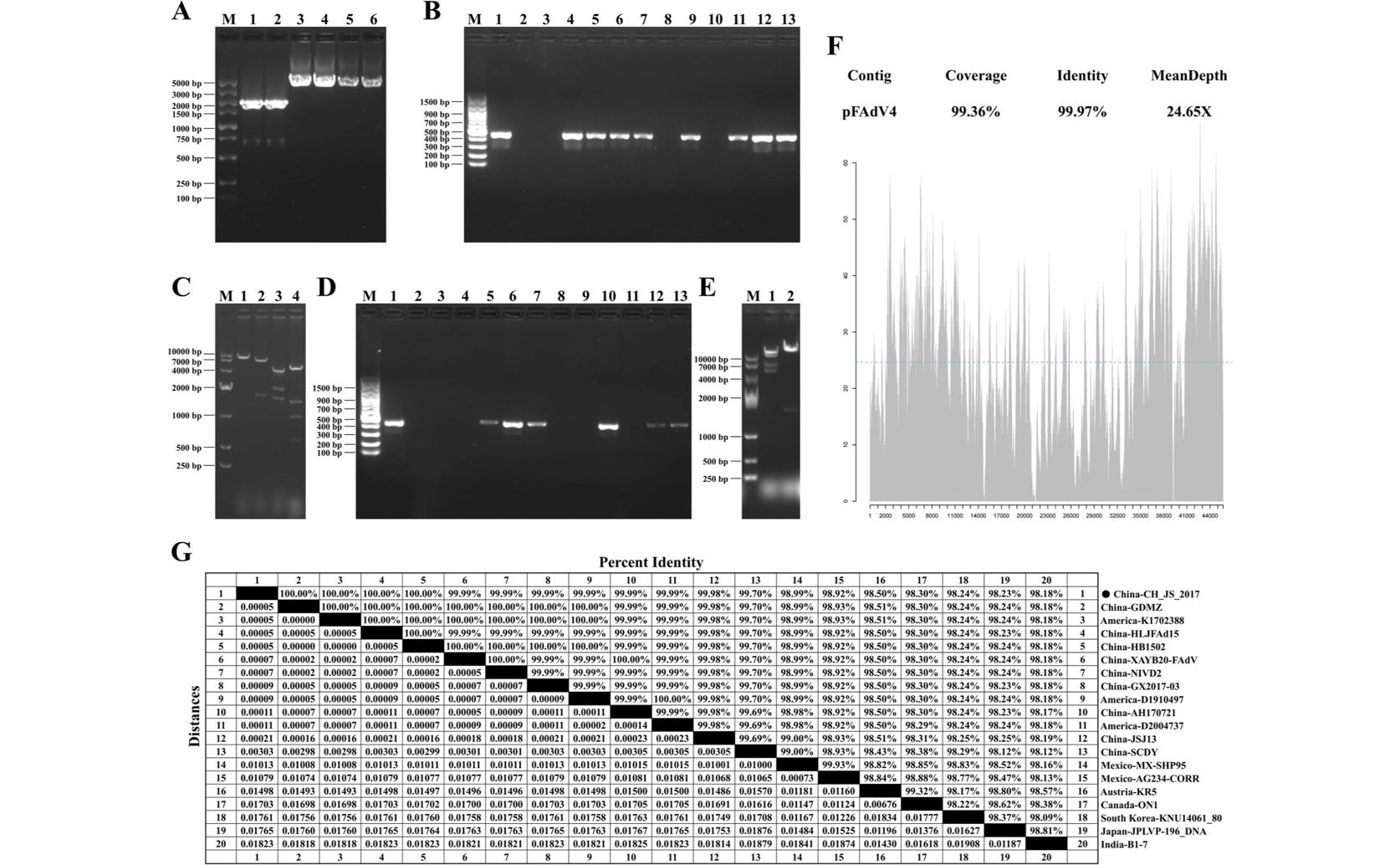
The full-length infectious clone of fowl adenovirus serotype 4 (FAdV-4) was successfully constructed using lambda Red-mediated recombination, as confirmed by PCR identification (b, d), restriction enzyme analysis (c, e), and sequencing validation showing 99.97% identity to the reference genome (f), with phylogenetic analysis revealing high sequence similarity (99.70–100%) among FAdV-4 strains from China and the United States (g).

Image adapted from: Tang et al. / CC BY (Source)

Key Findings

  • *In China, scientists developed a new genetic tool to study and modify FAdV-4, a harmful virus affecting poultry worldwide.*
  • *They created a weakened version of FAdV-4 by changing its hexon gene, reducing its ability to cause disease.*
  • *Tests in chickens showed the weakened virus is safe, offering promise for effective poultry vaccines.*
Fowl adenovirus serotype 4 (FAdV-4) has become a significant concern for the global poultry industry due to its association with various diseases that lead to substantial economic losses. These viruses are widespread, yet they cause sporadic outbreaks, raising questions about their pathogenicity. Over the past two decades, FAdV-4 has been linked to severe conditions such as hepatitis-hydropericardium syndrome (HHS), primarily in Asia, but also in regions like Arabia and Latin America[2]. Additionally, other serotypes like FAdV-2, -8a, -8b, and -11 have been associated with inclusion body hepatitis, while FAdV-1 is known to cause gizzard erosion[2]. Addressing the challenges posed by FAdV-4, researchers at Nanjing Agricultural University in Jiangsu, China, have made significant strides in developing tools to combat this pathogen[1]. Their recent study focused on creating a reverse genetics system for FAdV-4, which is essential for understanding the virus's behavior and developing effective vaccines. FAdV-4 is a non-enveloped double-stranded DNA virus with a genome size of 43–45 kilobases, making it a suitable candidate for use as a viral vector in multi-valent or multi-series vaccines for poultry. The research team successfully constructed a full-length infectious clone of FAdV-4 using lambda Red-mediated recombination in Escherichia coli DH10B. This method allows for precise manipulation of the virus’s genetic material. After constructing the clone, the scientists transfected it into LMH cells, a type of chicken liver cell line commonly used in virology studies. The resulting viruses exhibited the same cytopathic effects and growth kinetics as wild-type FAdV-4, indicating that the cloned virus retained its natural characteristics. Building on this foundation, the team aimed to attenuate the virus, making it less pathogenic while retaining its ability to provoke an immune response. They achieved this by replacing the hexon coding sequence of a highly pathogenic FAdV-4 strain with that of a nonpathogenic strain. The hexon protein is a major structural component of the virus and plays a critical role in its ability to cause disease. By altering this gene, the researchers created a recombinant virus that was significantly less virulent. When tested in 21-day-old specific pathogen-free (SPF) chickens, the attenuated virus showed low pathogenicity, demonstrating its potential as a safer vaccine candidate. This advancement is particularly important in light of previous studies that have highlighted the complexity of FAdV-4's pathogenicity. For instance, a study conducted by the same institution previously identified that the fiber2 and hexon genes are crucial for the virus's virulence[3]. By modifying the hexon gene, the current study builds on these findings, providing a practical application of genetic manipulation to reduce the virus's harmful effects. This approach not only validates earlier research but also paves the way for developing genetically engineered vaccines that can protect poultry more effectively. Moreover, the establishment of an easy-to-use reverse genetics system for FAdV-4 simplifies the process of generating recombinant viruses. This system allows researchers to manipulate and purify FAdV-4 genomic DNA within E. coli DH10B, streamlining the creation of modified viruses for vaccine development. The ability to quickly generate recombinant FAdV-4 viruses is crucial for responding to emerging strains and developing multi-valent vaccines that can protect against various FAdV serotypes. The implications of this research extend beyond vaccine development. Understanding the genetic factors that contribute to FAdV-4’s pathogenicity can lead to better diagnostic tools and preventive measures. For example, previous studies have shown that different serotypes are responsible for distinct clinical conditions in poultry[2]. By targeting specific genes like hexon and fiber2, scientists can create more targeted interventions that address the unique challenges posed by each serotype. Additionally, this research complements studies on the virus’s impact on different poultry species. Earlier work demonstrated that FAdV-4 can infect ducks, causing severe growth depression and organ damage, which highlights the virus's broader threat to poultry health[4]. The development of an attenuated FAdV-4 strain through genetic manipulation offers a way to protect not only broilers but potentially other poultry species as well, thereby enhancing overall flock health and productivity. The study also addresses the growing issue of immunologically naïve breeding stocks, which are more susceptible to vertical transmission of FAdV-4. By incorporating adequate antibodies in breeders and potentially using the attenuated virus as a vaccine, the risk of vertical transmission can be mitigated, ensuring healthier progenies[2]. This proactive approach is essential for maintaining high biosecurity standards and preventing the spread of FAdV-related diseases in poultry populations. In conclusion, the research conducted by Nanjing Agricultural University represents a significant breakthrough in the fight against FAdV-4. By establishing a reverse genetics system and creating an attenuated virus, the team has provided valuable tools for vaccine development and a deeper understanding of the virus’s biology. These advancements not only build upon previous studies but also offer practical solutions to the ongoing challenges posed by FAdV-4 in the poultry industry[2][3]. As the poultry sector continues to evolve with specialized breeds and rigorous biosecurity measures, these innovations will play a crucial role in safeguarding animal health and sustaining economic stability.

MedicineBiotechGenetics

References

Main Study

1) Generation of an artificially attenuated fowl adenovirus 4 viral vector using the reverse genetics system based on full-length infectious clone

Published 22nd March, 2025

https://doi.org/10.1186/s13567-025-01496-x


Related Studies

2) Fowl adenovirus-induced diseases and strategies for their control - a review on the current global situation.

https://doi.org/10.1080/03079457.2017.1385724


3) Fiber2 and hexon genes are closely associated with the virulence of the emerging and highly pathogenic fowl adenovirus 4.

https://doi.org/10.1038/s41426-018-0203-1


4) Pathogenicity and virus shedding ability of fowl adenovirus serotype 4 to ducks.

https://doi.org/10.1016/j.vetmic.2021.109302


Related Articles

An unhandled error has occurred. Reload 🗙