Bacteria for Nitrogen Cleanup and Environmental Safety in Sea Farms

Jenn Hoskins
23rd March, 2025

Bacteria for Nitrogen Cleanup and Environmental Safety in Sea Farms

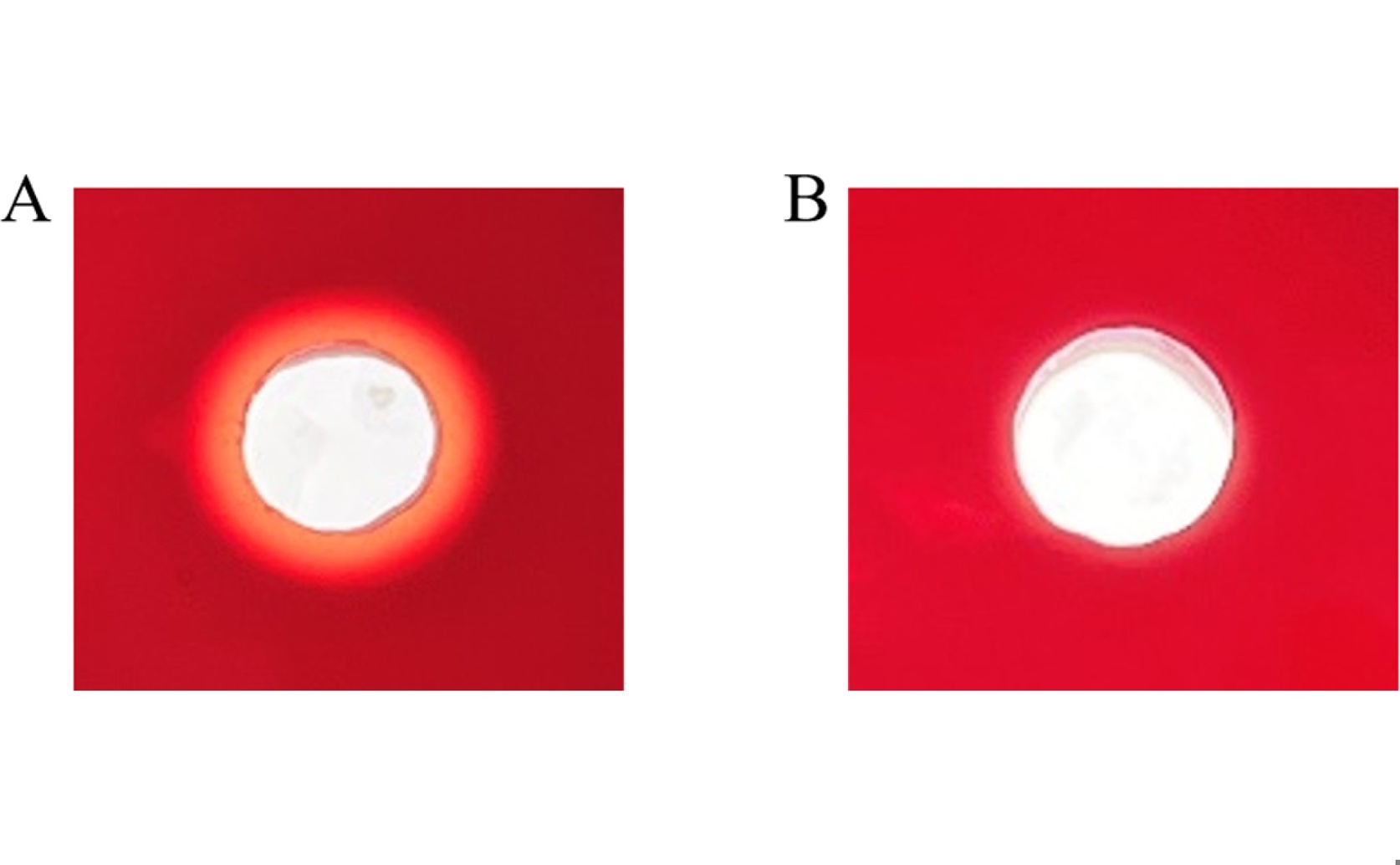
Hemolysis testing on blood agar plates distinguished Bacillus sp. isolates with hemolytic activity (a) from non-hemolytic strains (b), enabling initial safety screening that identified 55 of 120 isolates as non-pathogenic candidates for subsequent denitrification evaluation.

Image adapted from: Zhang et al. / CC BY (Source)

Key Findings

  • In China’s aquaculture farms, scientists identified safe Bacillus bacteria that can reduce harmful nitrogen pollutants in water
  • The strain Bacillus subtilis B24 successfully removed up to 92% ammonium and significantly lowered other nitrogen compounds
  • These bacteria provide an eco-friendly solution for cleaner water, promoting sustainable and healthier fish farming
Excess nitrogen compounds in aquatic environments pose significant challenges for the aquaculture industry, leading to environmental degradation and economic losses. These nitrogenous substances, which include ammonium (NH₄⁺-N), nitrite (NO₂⁻-N), nitrate (NO₃⁻-N), and total nitrogen (TN), can accumulate due to intensive farming practices, disrupting water quality and harming aquatic life. Addressing this issue is crucial for sustainable aquaculture and environmental protection. A recent study conducted by researchers at Qingdao Agricultural University[1] has made significant strides in mitigating nitrogen pollution in mariculture wastewater. The research focused on isolating and evaluating Bacillus species, a group of beneficial bacteria known for their denitrification capabilities, which is the process of converting nitrogen compounds into harmless nitrogen gas. The goal was to identify strains that not only effectively remove nitrogen but also ensure ecological safety by exhibiting no harmful traits such as hemolytic activity, which can damage red blood cells. The researchers began by isolating 120 Bacillus strains from various marine environments. These isolates were subjected to hemolysis testing to ensure their safety, resulting in 55 strains that showed no hemolytic activity. Hemolysis testing is crucial as it helps in identifying bacteria that are safe for use in environmental applications without posing risks to other organisms. From these safe strains, 34 exhibited strong denitrification abilities when tested using selective media and colorimetric reagents. This screening ensured that only the most effective and safe strains were considered for further analysis. Further examination of these 34 Bacillus strains revealed that 27 met the criteria for denitrification functionality and ecological safety. Among these, eight strains demonstrated notable denitrification effects in treating nitrogen-containing wastewater. Particularly, Bacillus subtilis B24 stood out, achieving removal rates of 92% for ammonium, 62% for nitrite, 68% for nitrate, and 30% for total nitrogen in simulated wastewater conditions. These impressive results indicate that B. subtilis B24 is highly effective in reducing various forms of nitrogen pollutants, making it a promising candidate for practical wastewater treatment applications. The study also delved into the drug resistance profiles of the Bacillus strains, an important factor considering the global concerns about antimicrobial resistance (AMR). Previous research has highlighted the role of aquaculture in the dissemination of AMR due to the extensive use of antibiotics in shrimp farming and other marine cultures[2][3]. In this context, evaluating the drug resistance of the Bacillus strains was essential. The analysis revealed a multi-antibiotic resistance index (MARI) ranging from 0.00 to 0.25, with a 17.6% rate of multi-drug resistance. Specific resistance genes such as tetB, blaTEM, and cfr were detected, alongside denitrification genes like nap, nor, and narG. The presence of these genes underscores the potential of these Bacillus strains to thrive in environments where antibiotics are prevalent, yet they remain effective in denitrification without posing additional risks of spreading resistance. The methodologies employed in this study build upon previous advancements in nitrogen removal technologies. For instance, the use of microbial fuel cells (MFCs) with multi-anode systems has been shown to enhance nitrogen removal and energy generation[4]. While MFCs primarily focus on harnessing electrical energy alongside treating wastewater, the Bacillus-based approach offers a biological solution that can complement such technologies by specifically targeting nitrogen compounds through microbial activity. Additionally, earlier studies utilizing microalgae like Ettlia sp. in recirculating aquaculture systems (RAS) demonstrated substantial reductions in nitrogenous compounds and highlighted the importance of microbial communities in maintaining water quality[5]. The current study expands on these findings by introducing Bacillus species as effective denitrifiers, potentially offering a more targeted and scalable solution for nitrogen management in aquaculture. Environmental safety and ecological balance are paramount when introducing microbial solutions into aquatic systems. The identification of non-hemolytic Bacillus strains ensures that the introduced bacteria do not harm other aquatic organisms, aligning with sustainable aquaculture practices. Moreover, the ability of these strains to efficiently remove nitrogen compounds reduces the reliance on chemical treatments, thereby minimizing the environmental footprint of aquaculture operations. Implementing Bacillus-based denitrification systems could also address regulatory and public health concerns associated with antibiotic misuse in aquaculture. As highlighted in studies[2][3], the overuse of antibiotics in shrimp farming and other aquaculture practices has led to significant antibiotic residues and the emergence of resistant bacteria, posing threats to both environmental and human health. By providing an effective biological method for nitrogen removal, the reliance on antibiotics could be reduced, thereby mitigating the risks of AMR dissemination. The practical applications of this research are promising. Bacillus subtilis B24, with its high denitrification rates, can be integrated into existing wastewater treatment systems within aquaculture facilities. Its effectiveness in both simulated and practical settings suggests that it can adapt to various operational conditions, providing a reliable means of maintaining water quality. Furthermore, the study's comprehensive approach—evaluating safety, efficacy, and resistance profiles—ensures that the selected strains are not only effective but also sustainable and safe for long-term use. In conclusion, the study from Qingdao Agricultural University offers a significant advancement in the management of nitrogen pollution in mariculture wastewater. By identifying and validating Bacillus strains capable of efficient denitrification without compromising ecological safety, the research provides a viable solution for sustainable aquaculture. This approach not only enhances water quality but also addresses broader environmental and public health concerns related to antibiotic resistance. Future research could explore the synergistic use of Bacillus strains with other nitrogen removal technologies, such as microalgae or MFCs, to further optimize wastewater treatment processes in aquaculture systems.

EnvironmentEcologyMarine Biology

References

Main Study

1) The nitrogen removal characterization and ecological risk assessment of Bacillus sp. isolated from mariculture systems in China with spatiotemporal difference

Published 20th March, 2025

https://doi.org/10.1371/journal.pone.0319344


Related Studies

2) Evaluating antimicrobial resistance in the global shrimp industry.

https://doi.org/10.1111/raq.12367


3) A systematic review on antibiotics misuse in livestock and aquaculture and regulation implications in China.

https://doi.org/10.1016/j.scitotenv.2021.149205


4) The relationship between energy production and simultaneous nitrification and denitrification via bioelectric derivation of microbial fuel cells at different anode numbers.

https://doi.org/10.1016/j.envres.2020.109247


5) Improving water quality using settleable microalga Ettlia sp. and the bacterial community in freshwater recirculating aquaculture system of Danio rerio.

https://doi.org/10.1016/j.watres.2018.02.007


Related Articles

An unhandled error has occurred. Reload 🗙