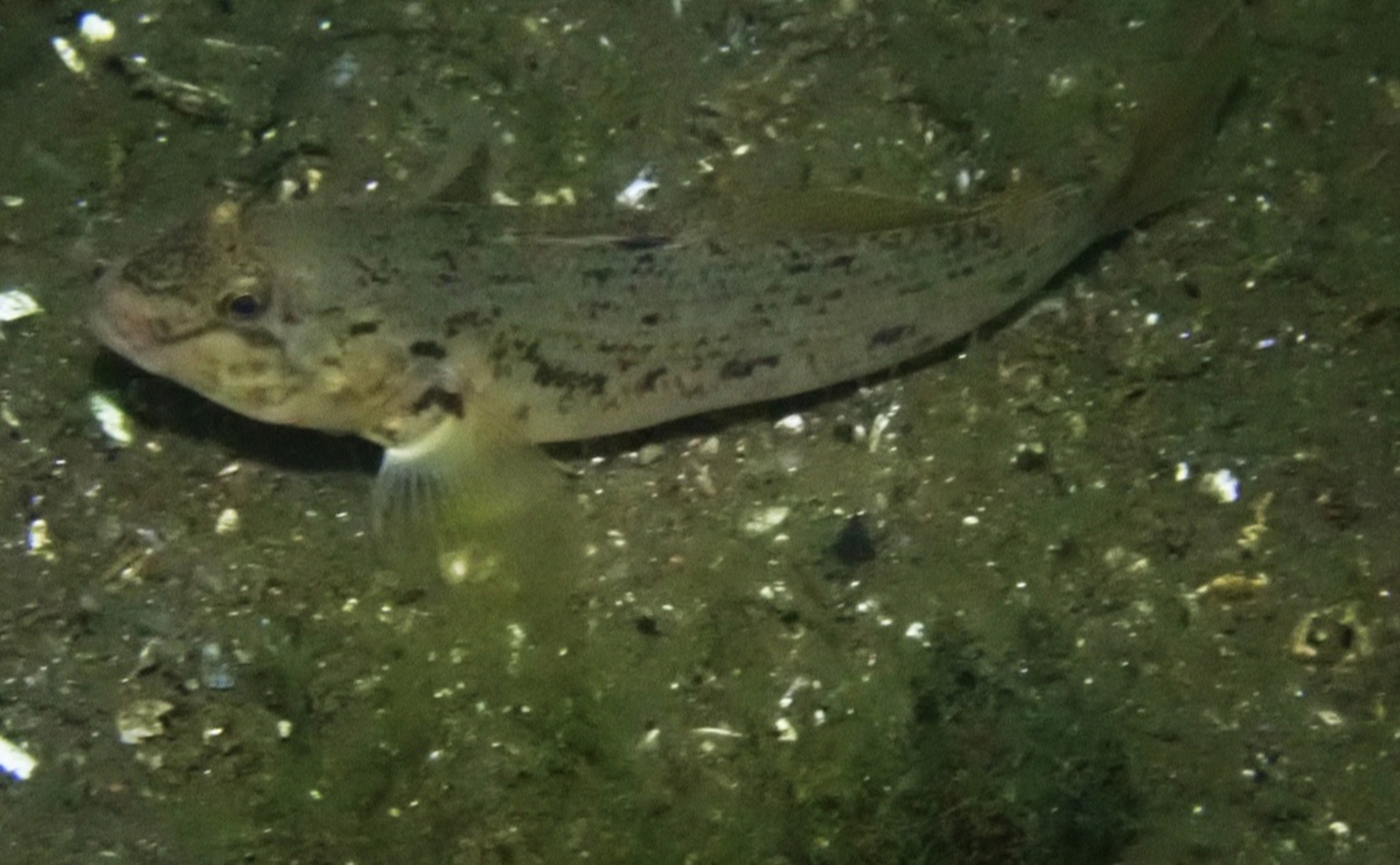
How the Invasive Round Goby Affects Fish Populations in the Baltic Coast

Jenn Hoskins
26th February, 2025

How the Invasive Round Goby Affects Fish Populations in the Baltic Coast

Round Goby (Neogobius melanostomus)

Photo adapted from: Micha Baum / CC BY SA (Source)

Key Findings

  • In Sweden’s Baltic Sea, the invasive round goby has led to more perch, cyprinids, and predatory fish like cod
  • Meanwhile, native whitefish and flounder populations have decreased due to the round goby’s presence
  • The numbers of sprat and herring remain largely unaffected by this invasive species
The introduction of non-native species into new environments poses significant challenges for ecosystems worldwide. One such species, the round goby (Neogobius melanostomus), originating from the Ponto-Caspian region, has become a prevalent invasive fish in the Baltic Sea. Understanding the impact of its invasion on native fish populations is crucial for effective ecosystem management. A recent study conducted by researchers from the Swedish University of Agricultural Sciences and the University of Tehran[1] provides valuable insights into how the round goby affects coastal fish abundance in the Baltic Sea. Using extensive monitoring data spanning 17 to 23 years across four coastal areas in Sweden, the study employed a generalized additive mixed model to analyze changes in fish populations associated with the round goby invasion. The findings reveal a complex interplay between the invasive round goby and various native fish species. Specifically, the invasion has been linked to increases in the abundance of perch, cyprinids (a family of freshwater fishes), piscivores (fish that eat other fish), and ruffe. Conversely, there has been a noticeable decline in the populations of whitefish and flounder, while the abundance of sprat and herring appears unaffected. These changes can be partly explained by the physiological and behavioral traits of the round goby highlighted in earlier studies. For instance, research has shown that the round goby maintains a high aerobic scope, which is the capacity to increase metabolic rate during activities, across a broad range of temperatures[2]. This trait, along with high thermal resilience, allows the round goby to thrive in varying environmental conditions, giving it a competitive edge over native species. Additionally, the ability of round gobies to survive in different salinity levels, albeit with some physiological stress at higher salinities, enables their spread through the Baltic Sea[3]. The increase in perch and other piscivorous species observed in the study may be linked to their role in preying on the round goby. However, previous research indicates that predation by perch on round goby is limited. A study examining the diets of European perch found only a weak relationship between round goby densities and their presence in perch stomachs, suggesting that perch predation alone may not effectively control round goby populations[4]. This aligns with the current study's recommendation that reinforcing piscivore populations could help regulate round goby numbers locally, complementing other management strategies. Furthermore, the decline in whitefish and flounder populations could be a result of increased competition for resources and habitat changes induced by the round goby. The round goby is known to alter the benthic environment, which affects the availability of food and shelter for native species. Another study on western Baltic cod diets revealed a shift towards invertebrate prey like the common shore crab and the introduction of the round goby as a new food source[5]. Such dietary changes indicate that the round goby influences the entire food web, potentially leading to reduced growth and reproductive success in native fish due to altered prey availability. Environmental factors also play a significant role in shaping fish populations. The main study found that water temperature positively influences the abundance of species like perch, cyprinids, flounder, and cod, while greater water depth and wave exposure tend to reduce their numbers. In contrast, whitefish, sprat, and herring populations decrease with rising temperatures and shallower waters. These patterns are consistent with the physiological responses of round goby to environmental conditions, as previous research has demonstrated their high thermal tolerance and adaptability[2]. As climate change continues to alter water temperatures and other physical parameters, the competitive advantage of the round goby may further disrupt native fish communities. The implications of these findings are significant for ecosystem management in the Baltic Sea. The study suggests that maintaining or increasing populations of native piscivorous fish could help keep round goby numbers in check, thereby mitigating their negative impact on other species. Additionally, managing environmental factors such as habitat structure and water quality could provide further support to native fish populations struggling against the invasive round goby. In conclusion, the invasion of the round goby in the Baltic Sea has led to notable shifts in the abundance of various coastal fish species. By leveraging long-term monitoring data and sophisticated modeling techniques, the study from the Swedish University of Agricultural Sciences and the University of Tehran has elucidated the complex dynamics between an invasive species and native fish communities. Integrating these insights with previous research on the physiological and behavioral traits of the round goby offers a comprehensive understanding of its ecological impact and informs effective management strategies to preserve the biodiversity and functionality of the Baltic Sea ecosystem.

EnvironmentEcologyMarine Biology

References

Main Study

1) How does round goby (Neogobius melanostomus) affect fish abundance in the Swedish coastal areas of the Baltic Sea?

Published 24th February, 2025

https://doi.org/10.1371/journal.pone.0316546


Related Studies

2) Effects of temperature on physiological performance and behavioral thermoregulation in an invasive fish, the round goby.

https://doi.org/10.1242/jeb.237669


3) Evaluating dispersal potential of an invasive fish by the use of aerobic scope and osmoregulation capacity.

https://doi.org/10.1371/journal.pone.0176038


4) Environmental heterogeneity associated with European perch (Perca fluviatilis) predation on invasive round goby (Neogobius melanostomus).

https://doi.org/10.1016/j.marenvres.2017.10.017


5) The forgotten feeding ground: patterns in seasonal and depth-specific food intake of adult cod Gadus morhua in the western Baltic Sea.

https://doi.org/10.1111/jfb.14615


Related Articles

An unhandled error has occurred. Reload 🗙