Genetic Factors in Lung Disease Resistance of Young Dairy Calves

Greg Howard
22nd March, 2025

Genetic Factors in Lung Disease Resistance of Young Dairy Calves

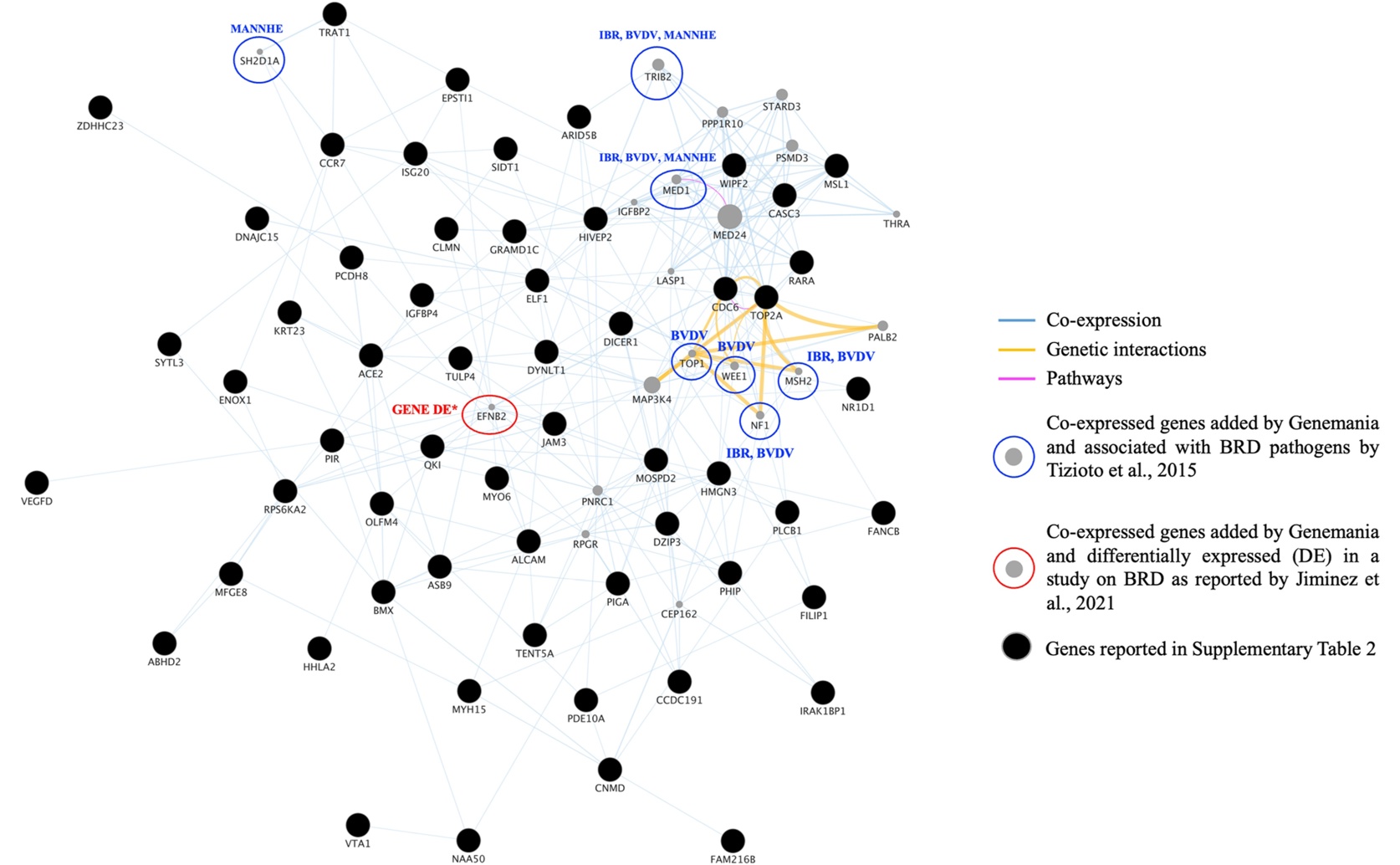
Gene network analysis reveals that 58 of the 61 candidate genes identified within QTL regions for bovine respiratory disease resistance in preweaned dairy calves interact with 20 predicted partner genes, eight of which were previously reported as differentially expressed in BRD challenge studies, supporting the biological relevance of the identified genomic regions.

Image adapted from: Strillacci et al. / CC BY (Source)

Key Findings

  • Researchers in Italy and the USA discovered genetic markers that help dairy calves resist a common respiratory disease
  • They identified 141 specific genes linked to disease resistance, enabling farmers to selectively breed healthier cattle
  • These findings can lead to better prevention and treatment methods, reducing economic losses in the dairy industry
Bovine respiratory disease (BRD) remains a significant challenge in the dairy industry, particularly affecting young dairy heifers. This disease not only compromises the health of the animals but also incurs substantial economic losses for farmers. BRD is commonly diagnosed in young calves, and its impact varies based on factors such as detection accuracy, treatment effectiveness, and management practices on farms[2]. Consequences of BRD include reduced weight gain, increased risk of culling, delayed reproductive milestones, and potentially lower future milk production, making it a critical area of concern for dairy operations. Understanding the factors that contribute to BRD is essential for developing effective prevention and treatment strategies. Previous studies have highlighted various aspects of BRD, including its prevalence, associated risks, and the importance of management practices. For instance, research involving over 100,000 dairy replacement heifers in the USA found that more than one-third were diagnosed with BRD within the first 120 days of age, with the highest risk occurring before weaning[2]. Additionally, another study examined morbidity and mortality in preweaned dairy calves, identifying factors such as birth weight, serum IgG concentration, ventilation type, and environmental conditions as significant contributors to disease outcomes[3]. These findings underscore the multifaceted nature of BRD and the need for comprehensive approaches to address it. Advancements in diagnostic techniques have also played a role in better understanding and managing BRD. Thoracic ultrasonography (TUS) has emerged as a valuable tool for assessing lung lesions associated with BRD, providing a more objective measure of disease severity[4]. However, the reliability of TUS can vary among different raters, emphasizing the need for standardized assessment protocols to ensure consistent and accurate diagnoses. Building on this foundation, a recent study conducted by researchers at the Università degli Studi di Milano and Michigan State University[1] has made significant strides in identifying genetic factors that contribute to BRD resistance in dairy calves. This study is particularly noteworthy as it utilizes genome-wide association studies (GWAS) to uncover genetic regions associated with susceptibility and resistance to BRD, a method that had been previously underexplored in this context. The researchers employed a robust phenotyping approach by combining TUS with the Wisconsin respiratory score (WISC) to accurately classify 240 calves as either BRD resistant or susceptible. This dual diagnostic method ensured a more precise classification, which is crucial for the subsequent genetic analysis. Out of the 240 calves, 47 were identified as BRD resistant and another 47 as BRD susceptible based on their TUS and WISC scores. These calves were then genotyped using NEOGEN’s GGP Bovine 100K SNP chip, allowing the researchers to perform a selective genotyping GWAS aimed at identifying Quantitative Trait Loci (QTL) associated with BRD resistance. The study identified 28 QTL regions containing 141 genes that could influence BRD resistance. These genes were grouped into four main functional categories: regulation of systemic arterial blood pressure, fertility, immune function, and filament cytoskeleton. Notably, 61 of these genes had been previously associated with BRD resistance in other GWAS studies in dairy cattle, reinforcing the validity of the findings. Genes such as ASB9, BMX, EPSTI1, and OLFM4 were identified across multiple studies, highlighting their potential role in conferring resistance to BRD. This research not only identifies specific genetic markers associated with BRD resistance but also paves the way for future studies to explore the genetic basis of respiratory diseases in cattle more deeply. By integrating accurate phenotyping methods with advanced genetic analysis, the study offers a comprehensive approach to understanding and potentially mitigating the impact of BRD in dairy herds. The implications of these findings are significant for both breeders and veterinarians. For breeders, the identification of genetic markers linked to BRD resistance can inform selective breeding programs aimed at enhancing the overall health and resilience of dairy herds. This could lead to reduced incidence of BRD, lower culling rates, and improved productivity and profitability. For veterinarians, understanding the genetic factors that contribute to disease susceptibility can aid in developing more targeted and effective prevention and treatment strategies. Moreover, the study highlights the importance of considering multiple factors when addressing BRD. While genetic resistance is a critical component, factors such as birth weight, serum IgG concentration, and environmental conditions also play vital roles in determining the health outcomes of calves[2][3]. This underscores the need for a holistic approach that combines genetic selection with optimal management practices to effectively combat BRD. In conclusion, the study conducted by Università degli Studi di Milano and Michigan State University represents a significant advancement in the fight against BRD in dairy calves. By leveraging GWAS and precise diagnostic methods, the researchers have identified key genetic factors that could be instrumental in breeding more resilient cattle. As the dairy industry continues to evolve, such research will be essential in ensuring the sustainability and profitability of dairy operations while maintaining animal welfare.

AgricultureGeneticsAnimal Science

References

Main Study

1) Genomic analysis of bovine respiratory disease resistance in preweaned dairy calves diagnosed by a combination of clinical signs and thoracic ultrasonography

Published 21st March, 2025

https://doi.org/10.1371/journal.pone.0318520


Related Studies

2) Economics of respiratory disease in dairy replacement heifers.

https://doi.org/10.1017/S1466252320000250


3) Preweaned heifer management on US dairy operations: Part V. Factors associated with morbidity and mortality in preweaned dairy heifer calves.

https://doi.org/10.3168/jds.2017-14019


4) Inter-rater agreement and reliability of thoracic ultrasonographic findings in feedlot calves, with or without naturally occurring bronchopneumonia.

https://doi.org/10.1111/jvim.15257


Related Articles

An unhandled error has occurred. Reload 🗙