Different Weaning Approaches and Their Effect on Stress Levels

Greg Howard
19th March, 2025

Different Weaning Approaches and Their Effect on Stress Levels

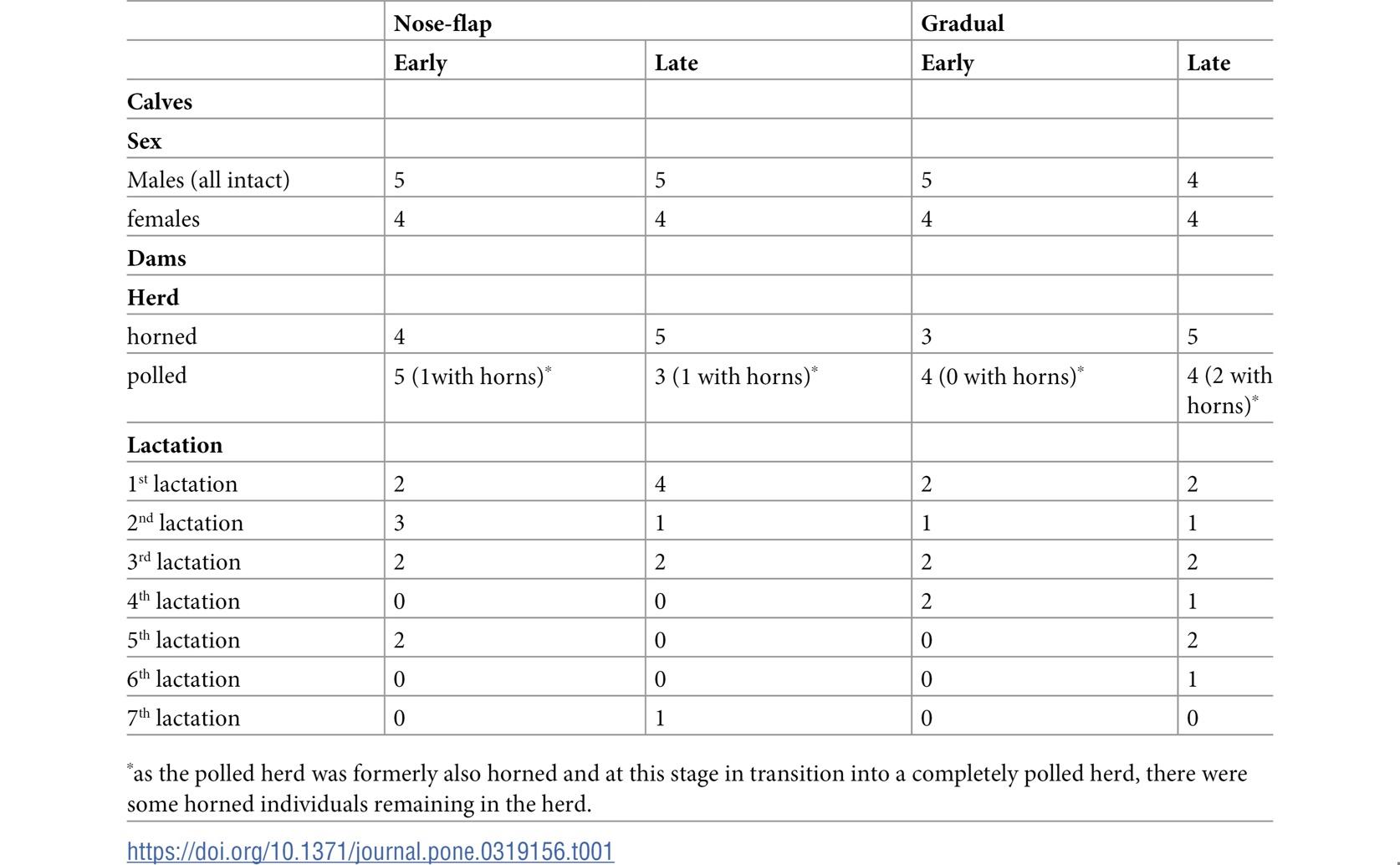
The study included 33 dairy cow-calf pairs distributed across nose-flap and gradual separation methods, with each method further divided into early and late separation timing groups within horned and polled herds..

Image adapted from: Sirovnik et al. / CC BY (Source)

Key Findings

  • *Vienna Study Context:* Researchers in Vienna examined how different methods of separating dairy cows from their calves affect stress levels
  • *Mother Cows' Stress:* Gradual separation tended to shorten telomeres in mother cows more than using nose-flaps, suggesting higher stress with gradual weaning
  • *Calves' Telomeres Unaffected:* The separation method did not significantly impact the telomere length of the calves after weaning
Telomere Length as a Marker of Stress in Dairy Cows Undergoing Separation Telomeres, the protective caps at the ends of chromosomes, play a crucial role in maintaining cellular integrity. Their length is considered a promising indicator of overall stress in organisms. Shorter telomeres are associated with aging and reduced lifespan, making them an important biomarker for studying the impacts of stress on health and survival[2]. In dairy farming, the separation of calves from their mothers is a common practice that can induce significant stress in both cows and calves. This study, conducted by researchers at the University of Veterinary Medicine in Vienna, Austria[1], aimed to investigate how different separation methods affect telomere length in dairy calves and their mothers. The separation process in dairy farming typically involves weaning calves from their dams, and the method of separation can vary. In this study, two methods were compared: gradual separation and nose-flap separation. Gradual separation allows for a more natural and less abrupt transition, while nose-flap separation involves a more immediate and controlled separation using a device that prevents physical contact. These methods were chosen because they have been shown to differently impact behavior, stress hormone levels, and physical development in cows and calves[3]. The researchers measured relative telomere length (RTL) in dairy calves multiple times across their lifespan. Previous studies have established that telomere length is predictive of health and survival across vertebrate species, including dairy cattle[4]. However, it was unclear whether telomere length differences were determined by genetics, early-life environmental conditions, or the rate of telomere attrition over time. By closely monitoring a research population of dairy cattle, the study sought to determine if telomere attrition could serve as a reliable biomarker for stress and overall health. The study involved 109 dairy cows and their calves, all monitored for health and milk production. The calves were either subjected to gradual separation or nose-flap separation after three months of dam-calf contact. The researchers also included a control group where cows were allowed continued contact with their calves, with some able to suckle and others prevented from doing so. This setup was informed by previous research indicating that uninterrupted maternal bonds are crucial for the well-being of cows and calves[3]. After the separation procedures, the researchers measured the RTL of both dams and calves. They found no significant effect of the separation method on RTL in dairy calves after weaning and separation from their mothers. However, there was a tendency for shorter RTL in gradually separated dams compared to those separated using the nose-flap method. This suggests that gradual separation might impose more prolonged stress on the mothers, potentially leading to greater telomere attrition over time. Interestingly, the study did not find correlations between behavioral indicators of stress, other physiological stress markers, and RTL. This lack of correlation could be due to the short interval between the two RTL measurement points, which may not have captured the long-term effects of stress on telomere length. Previous research has shown that telomere attrition is linked to health and survival traits, with faster attrition rates predicting shorter productive lifespans in dairy cattle[4]. Therefore, longer-term studies are needed to fully understand the relationship between separation-induced stress and telomere dynamics. The findings of this study build on earlier research that has established a connection between stressors and telomere shortening across various vertebrate species[2]. By focusing specifically on dairy cattle, the study provides valuable insights into how common farming practices can impact animal welfare at a cellular level. The tendency for shorter telomeres in gradually separated dams highlights the importance of considering the long-term effects of separation methods on both cows and calves. Moreover, this research aligns with previous studies showing that environmental stressors, such as harsh separation practices, can lead to increased oxidative stress and telomere shortening[2]. The lack of significant findings in calves may indicate that the three-month contact period was sufficient to buffer the initial stress of separation, or that calves may have different telomere dynamics compared to adults. Future research should explore these possibilities by extending the monitoring period and including a non-separation control group to better isolate the effects of separation methods on telomere length. The study also underscores the potential of using telomere length as a biomarker in animal welfare studies. By providing an objective measure of stress that correlates with health and survival, telomeres can help in assessing the long-term impacts of farming practices on animal well-being. This approach complements behavioral and physiological indicators, offering a more comprehensive understanding of how stress affects dairy cattle over their lifespans. In conclusion, the research conducted by the University of Veterinary Medicine in Vienna suggests that the method of dam-calf separation may influence telomere dynamics in dairy cows, with gradual separation possibly leading to increased telomere shortening. While no significant effects were observed in calves, the trend in dams highlights the need for further investigation into the long-term consequences of separation practices. By integrating telomere length measurements with behavioral and physiological data, future studies can enhance our understanding of animal welfare and inform practices that promote healthier, longer-lived dairy cattle.

AgricultureGeneticsAnimal Science

References

Main Study

1) Relative telomere length in dairy calves and dams undergoing two different methods of weaning and separation after three months of contact

Published 17th March, 2025

https://doi.org/10.1371/journal.pone.0319156


Related Studies

2) The association between stressors and telomeres in non-human vertebrates: a meta-analysis.

https://doi.org/10.1111/ele.13426


3) Effect of cow-calf contact on cow motivation to reunite with their calf.

https://doi.org/10.1038/s41598-020-70927-w


4) Telomere attrition rates are associated with weather conditions and predict productive lifespan in dairy cattle.

https://doi.org/10.1038/s41598-021-84984-2


Related Articles

An unhandled error has occurred. Reload 🗙