How Touching Different Plant Leaves Affects Your Mind and Body

Jenn Hoskins
2nd March, 2025

How Touching Different Plant Leaves Affects Your Mind and Body

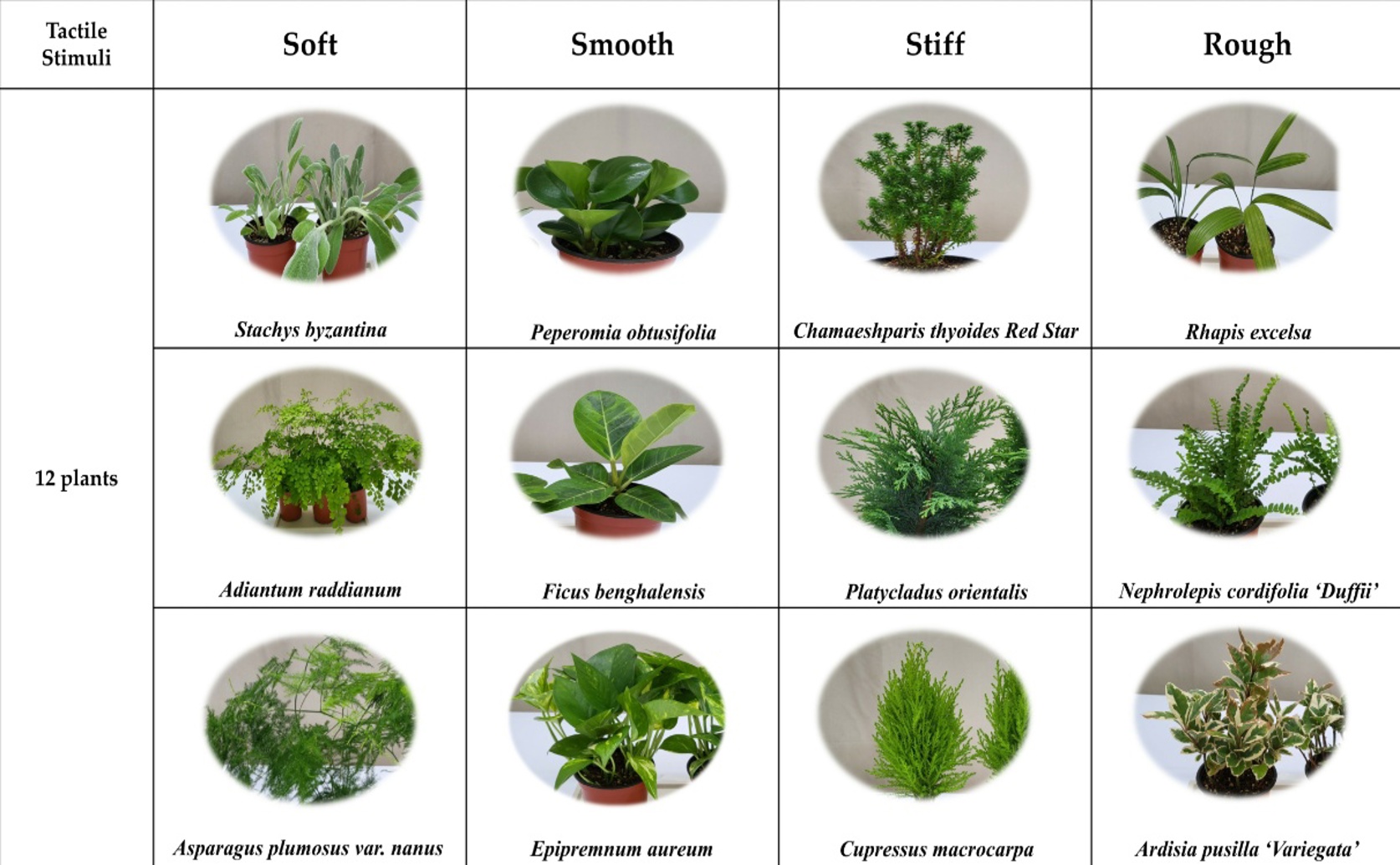
The twelve plant species used in the experiment were classified into four distinct tactile groups—soft, smooth, stiff, and rough—to investigate how foliage texture influences psychophysiological and psychological responses.

Image adapted from: Kim et al. / CC BY (Source)

Key Findings

  • A South Korean study found that touching smooth and soft plants significantly reduces stress and enhances relaxation
  • Smooth plant textures lowered brain activity linked to stress, while soft textures provided extra comfort, especially for women
  • Men and women responded differently to plant textures, suggesting that plant-based therapies might be more effective when tailored by gender
Urbanization has significantly transformed human environments, leading to increased stress levels among city dwellers. As modern lifestyles become more artificial and disconnected from nature, the search for effective natural therapies has intensified. Horticultural therapy, which involves engaging with plants through various senses, has emerged as a promising approach to enhance well-being by leveraging physical, psychological, and cognitive benefits. A recent study conducted by Konkuk University in South Korea[1] explored how different types of plant foliage affect psychophysiological and psychological responses. The research focused on tactile stimulation, examining how touching plants with varying textures—soft, smooth, stiff, and rough—impacts individuals' stress levels and overall mental state. Thirty adults participated in the study, with their prefrontal cortex (PFC) activity measured using functional near-infrared spectroscopy (fNIRS), a technique that assesses brain activity by detecting changes in blood flow. Additionally, participants' psychological responses were evaluated using the semantic differential method (SDM), which gauges feelings such as relaxation and comfort. The findings revealed that tactile interaction with plants significantly influences both brain activity and psychological well-being. Specifically, touching smooth plants resulted in the lowest concentration of oxyhemoglobin (oxy-Hb) in the PFC, indicating reduced brain activity associated with stress. Conversely, soft plants led to the highest oxy-Hb concentrations. Participants reported that soft and smooth plants provided the most relaxation and comfort, with smooth plants particularly enhancing feelings of psychological stability. These results align with earlier research highlighting the multifaceted benefits of nature exposure. Study[2] emphasized that while most research has focused on visual interactions with nature, non-visual senses like touch, sound, and smell also play crucial roles in delivering health benefits. The current study expands on this by demonstrating that tactile experiences, depending on the texture of plant foliage, can differentially affect physiological and psychological states. This underscores the importance of considering multiple sensory pathways in nature-based therapies. Moreover, the study by Konkuk University builds on the foundation laid by research on Shinrin-Yoku, or forest bathing, which has been shown to reduce stress and improve mental health[3][4]. Shinrin-Yoku typically involves various sensory engagements with the forest environment, including walking, listening to natural sounds, and touching plants. The current study’s focus on tactile stimulation provides a more nuanced understanding of how specific sensory interactions contribute to the overall therapeutic effects of nature. Interestingly, the research also found significant differences in responses based on gender. Males exhibited higher oxy-Hb concentrations across all plant texture groups compared to females, particularly when interacting with soft plants. This suggests that men and women may experience nature-based therapies differently, potentially informing more tailored approaches in horticultural therapy programs. Additionally, incorporating the findings from study[5], which demonstrated that care farming programs improved communication skills and psychological health in families, the current research highlights the broader implications of plant interactions. Engaging with plants not only affects individual well-being but can also enhance social and familial relationships, further contributing to overall health. The methods used in the Konkuk University study were robust, involving controlled tactile interactions and precise measurements of physiological responses. By categorizing plants into distinct foliage types and systematically assessing participants' responses, the researchers provided clear evidence of how specific plant textures influence stress and relaxation. This methodological approach allows for a deeper exploration of which aspects of nature are most beneficial, paving the way for more effective nature-based interventions. Furthermore, the study acknowledges that while the evidence supporting non-visual sensory pathways is growing, it remains relatively weak and often correlational[2]. The Konkuk University research contributes to strengthening this evidence by offering experimental data that directly links tactile stimulation with measurable changes in brain activity and psychological states. However, the authors note the need for further research to explore these pathways more comprehensively and to establish causality. Incorporating insights from previous studies, the current research by Konkuk University not only reinforces the benefits of nature exposure but also broadens the understanding of how different sensory experiences contribute to these benefits. The findings suggest that horticultural therapy can be optimized by selecting plant types that elicit the most favorable psychophysiological responses, such as smooth foliage for enhanced relaxation and reduced stress. Overall, this study adds valuable knowledge to the field of nature-based therapies, demonstrating that the texture of plant foliage plays a significant role in influencing human well-being. By highlighting the importance of tactile interactions and their differential effects based on plant type and gender, the research provides actionable insights for developing more effective horticultural therapy programs. As urbanization continues to challenge mental health, such evidence-based approaches offer practical solutions for mitigating stress and promoting psychological resilience through simple yet profound interactions with nature.

HealthMental HealthPlant Science

References

Main Study

1) Psychophysiological and psychological responses of touching plant behavior by tactile stimulation according to the foliage type

Published 28th February, 2025

https://doi.org/10.1371/journal.pone.0316660


Related Studies

2) A Review of the Benefits of Nature Experiences: More Than Meets the Eye.

https://doi.org/10.3390/ijerph14080864


3) Shinrin-Yoku (Forest Bathing) and Nature Therapy: A State-of-the-Art Review.

https://doi.org/10.3390/ijerph14080851


4) Physiological Effects of Nature Therapy: A Review of the Research in Japan.

https://doi.org/10.3390/ijerph13080781


5) Care Farming Program for Family Health: A Pilot Study with Mothers and Children.

https://doi.org/10.3390/ijerph17010027


Related Articles

An unhandled error has occurred. Reload 🗙