Immune-Boosting Compounds Found in Green Algae

Jim Crocker
10th February, 2025

Immune-Boosting Compounds Found in Green Algae

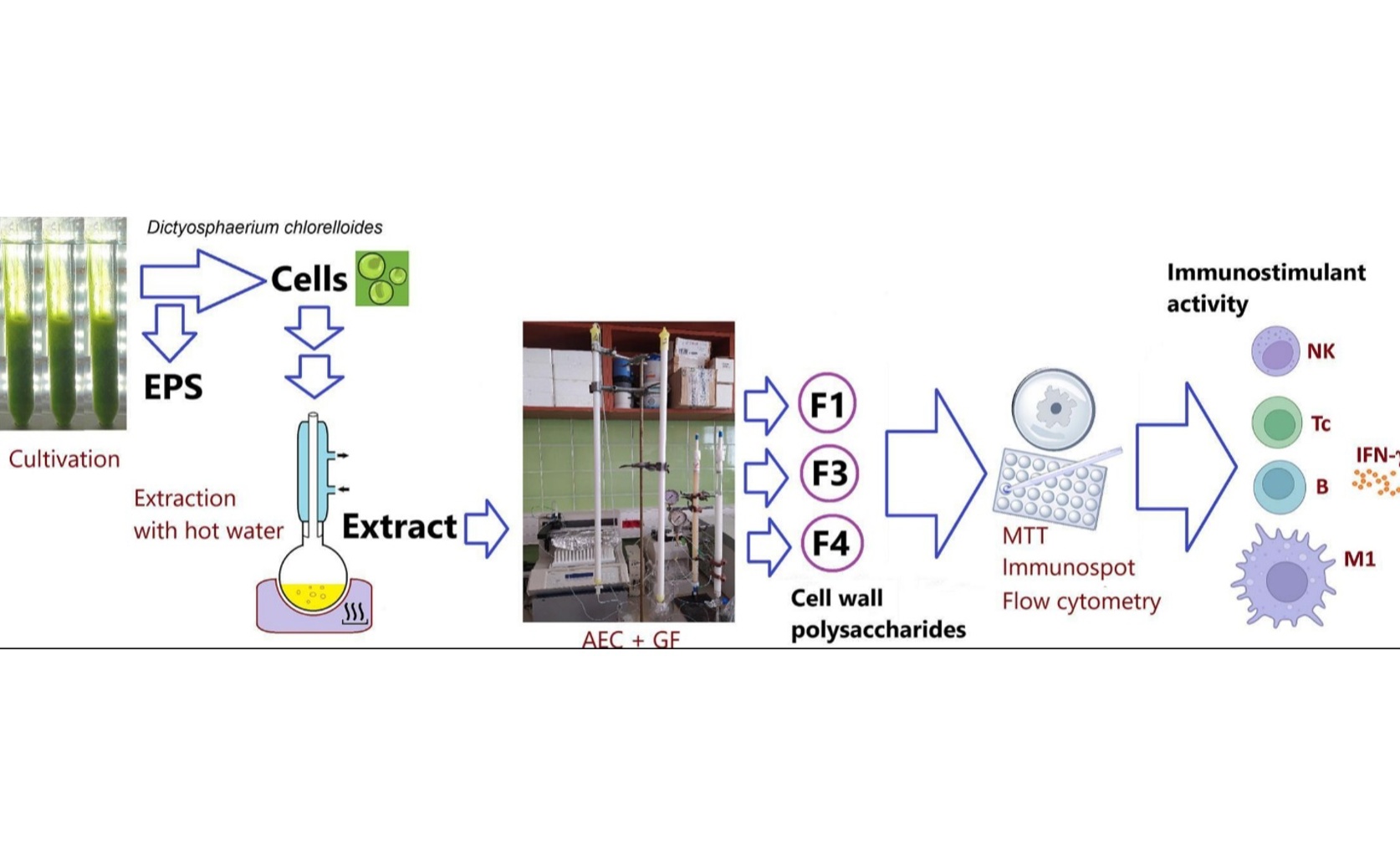
Water-soluble cell wall polysaccharides isolated from the green microalga Dictyosphaerium chlorelloides exhibit potent immunostimulatory activity by activating innate immune cells and promoting a Th1-type immune response.

Image adapted from: Sushytskyi et al. / CC BY (Source)

Key Findings

  • Researchers in Prague studied polysaccharides from the green microalga Dictyosphaerium chlorelloides for their immune-boosting potential
  • They identified five polysaccharide fractions, with F1, F3, and F4 showing strong immune-activating effects, especially enhancing defense against pathogens and cancer
  • The study highlights microalgae as a sustainable source for functional foods, addressing challenges like extraction and bioactivity to develop immune-boosting ingredients
Microalgae have emerged as a promising resource for developing functional foods that go beyond basic nutrition, offering potential health benefits such as cardiovascular protection, anti-obesity effects, and immune system enhancement. However, challenges such as species diversity, inefficient processing techniques, and sensory issues like fishy odor have limited their large-scale commercialization[2]. A recent study led by researchers at the University of Chemistry and Technology in Prague and the Czech Academy of Sciences investigates the immunostimulatory properties of polysaccharides derived from Dictyosphaerium chlorelloides, a green microalga from the Chlorella clade. This study provides new insights into the bioactive potential of microalgae and addresses some of the challenges associated with their use in functional foods[1]. The researchers focused on extracting and characterizing water-soluble polysaccharides from the biomass of D. chlorelloides. Polysaccharides are long carbohydrate molecules composed of sugar units linked together, and they are known for their diverse biological activities, including immune system modulation. Using hot water extraction and preparative chromatography, the team isolated and purified five polysaccharide fractions, labeled F1 through F5. These fractions were analyzed for their composition, structural features, and molecular masses. The high-yield fractions F1, F3, and F4 were found to primarily consist of galactopyranosyl, 2-O-methyl-galactopyranosyl, rhamnopyranosyl, and mannopyranosyl sugar units, while F2 was glucose-rich. To evaluate their biological activity, the polysaccharide fractions were tested on immune cells derived from mouse spleens. The researchers employed flow cytometry, MTT assays (which measure cell metabolic activity), and Immunospot assays (used to detect cytokine secretion) to assess the immunoactivity of the fractions. The results revealed that all fractions, except for F2, exhibited selective immunostimulant activity. Among them, the F1 fraction demonstrated the most potent effect, followed closely by F3 and F4. These fractions were shown to activate innate immunity and promote a Th1-type immune response, which is associated with enhanced defense against intracellular pathogens and cancer. This study builds on earlier findings that highlight the potential of microalgae as a sustainable source of bioactive compounds for functional food development[2]. The high growth rate and renewable nature of microalgae make them an attractive option for addressing the growing global demand for nutrient-dense and health-promoting foods. However, as previously noted, challenges such as variations in biomass composition, bioavailability concerns, and sensory issues have hindered their widespread acceptance in the food industry[2]. The current research addresses some of these limitations by identifying specific polysaccharide fractions with immunostimulatory properties, thus paving the way for their potential application in immune-boosting functional foods. The findings also underscore the importance of detailed characterization and purification processes in unlocking the health benefits of microalgal compounds. By isolating and studying individual fractions, the researchers were able to pinpoint the most bioactive components, such as the F1 fraction, which could be further developed into targeted functional food ingredients. Moreover, the study provides a clearer understanding of the mechanism of action of these polysaccharides, demonstrating their ability to activate innate immune cells and shape adaptive immune responses. While this research represents a significant step forward, further studies are needed to address the remaining challenges. For instance, optimizing cultivation and extraction methods to improve yield and consistency, as well as conducting human clinical trials to confirm safety and efficacy, will be crucial for translating these findings into commercial applications. Additionally, strategies to mitigate sensory issues, such as the fishy odor and taste associated with some microalgal products, will be essential for consumer acceptance[2]. In conclusion, the study by the University of Chemistry and Technology in Prague and the Czech Academy of Sciences highlights the potential of D. chlorelloides polysaccharides as immunostimulatory agents. By addressing key challenges in extraction, purification, and functional characterization, this research contributes to the growing body of evidence supporting the use of microalgae as a sustainable and versatile resource for health-promoting functional foods. These findings offer a promising avenue for developing innovative solutions to meet the nutritional and health needs of a growing global population.

BiotechBiochemPlant Science

References

Main Study

1) Immunologically active cell wall polysaccharides of green microalga Dictyosphaerium chlorelloides (Chlorellacea).

Published 1st April, 2025 (future Journal edition)

https://doi.org/10.1016/j.carbpol.2025.123242


Related Studies

2) Microalgae: Bioactive Composition, Health Benefits, Safety and Prospects as Potential High-Value Ingredients for the Functional Food Industry.

https://doi.org/10.3390/foods11121744


Related Articles

An unhandled error has occurred. Reload 🗙