Smart Greenhouse System for Saffron Cultivation Using the Internet of Things

Jenn Hoskins
1st October, 2024

Smart Greenhouse System for Saffron Cultivation Using the Internet of Things

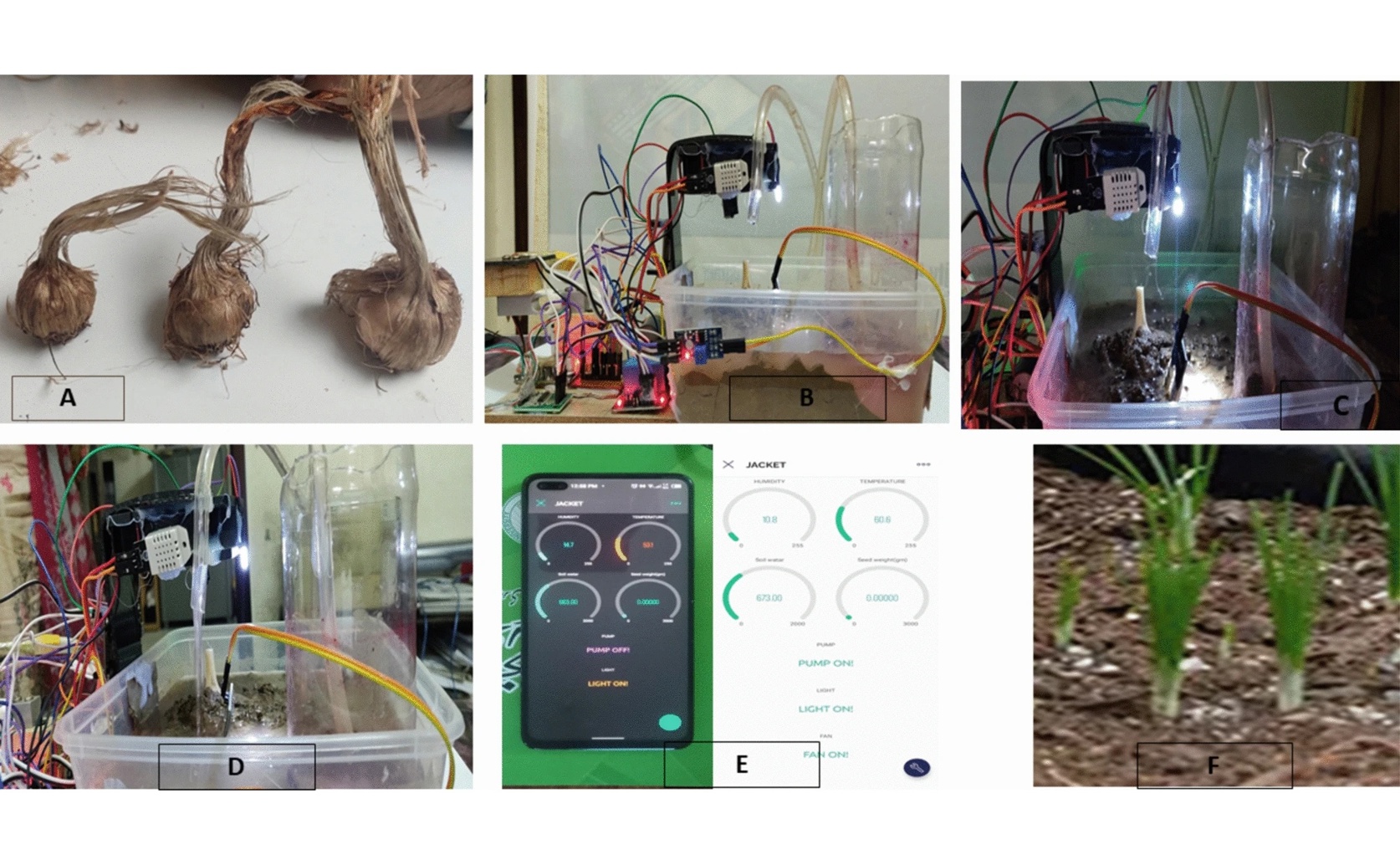
The developed IoT-based greenhouse system, showing the initial saffron (Crocus sativus) corms (a), hardware components (b), the complete operational setup (c, d), and monitoring app (e), successfully resulted in sprouting (f), demonstrating the system's effectiveness for cultivation.

Image adapted from: Khan et al. / CC BY (Source)

Key Findings

  • Researchers at the University of Management and Technology, Lahore, developed an IoT-based system for greenhouse cultivation of saffron
  • The system monitors and adjusts environmental factors like temperature, humidity, pH, and soil moisture to optimize saffron growth
  • Experimental results show that this system effectively maximizes saffron production by maintaining optimal conditions
Saffron, known for its culinary, medicinal, and cosmetic applications, is the world's most expensive spice. The global demand for saffron is continually increasing, yet its cultivation has significantly decreased and is restricted to a few countries. Saffron is highly sensitive to environmental factors such as climate change, light intensity, pH levels, soil moisture, salinity, and improper cultivation techniques. Traditional farming methods struggle to control these variables, leading to inconsistent yields. Although technologies like Artificial Intelligence (AI) and the Internet of Things (IoT) have been employed to enhance saffron growth, there remains a need for a more comprehensive system to address these challenges. A recent study conducted by researchers at the University of Management and Technology, Lahore, proposes an IoT-based system for greenhouse cultivation of saffron to control various agronomical variables[1]. This system aims to optimize environmental conditions such as corm size, temperature, humidity, pH level, soil moisture, salinity, and water availability to maximize saffron production. The proposed IoT-based architecture monitors and automatically adjusts these environmental factors. Real-time data is collected from the greenhouse and sent to a microcontroller. The sensed values of various agronomical variables are compared with predefined threshold values and stored in the cloud. This data is then sent to the farm owner for efficient management. The study's experimental results indicate that the proposed system effectively maximizes saffron production by maintaining optimal environmental conditions. This innovative approach aligns with previous research that highlights the sensitivity of saffron to environmental factors. For instance, a study on the cultivation of saffron using semi-saline water found that proper planting dates, adequate leaching, and accurate irrigation management are crucial for successful cultivation[2]. The IoT-based system can automate these processes, ensuring that saffron receives the ideal conditions for growth. Moreover, the bioactive compounds in saffron, such as safranal, crocin, and picrocrocin, have been extensively studied for their therapeutic effects on the nervous system[3]. These compounds have high bioavailability and can cross the blood-brain barrier, making saffron a valuable medicinal ingredient. The proposed IoT-based system can enhance the quality and yield of saffron, thereby increasing the availability of these beneficial compounds. Saffron also has significant cardiovascular health benefits. Previous studies have shown that saffron exhibits antioxidant, anti-inflammatory, anti-atherogenic, anti-apoptotic, anti-hypertensive, and hypolipidemic effects[4]. By optimizing saffron cultivation, the IoT-based system can contribute to the production of high-quality saffron, which can be used in the development of new drugs for cardiovascular diseases. Additionally, saffron is used as a functional food ingredient, natural colorant, shelf-life enhancer, and fortifying agent[5]. The IoT-based system can ensure that saffron is grown under optimal conditions, thereby improving its nutritional value and protective properties against various disorders. In conclusion, the IoT-based system proposed by the researchers at the University of Management and Technology, Lahore, offers a promising solution to the challenges faced in saffron cultivation. By automating the control of environmental factors, this system can maximize saffron production and enhance its quality. This innovation not only addresses the increasing global demand for saffron but also supports its medicinal and nutritional applications, as evidenced by previous studies[2][3][4][5].

AgricultureBiotechPlant Science

References

Main Study

1) Internet of things (IoT) based saffron cultivation system in greenhouse.

Published 29th September, 2024

https://doi.org/10.1038/s41598-024-69513-1


Related Studies

2) Feasibility study of saffron cultivation using a semi-saline water by managing planting date, a new statement.

https://doi.org/10.1016/j.envres.2021.111853


3) Nutritional and health beneficial properties of saffron (Crocus sativus L): a comprehensive review.

https://doi.org/10.1080/10408398.2020.1857682


4) Saffron; An updated review on biological properties with special focus on cardiovascular effects.

https://doi.org/10.1016/j.biopha.2018.10.031


5) Potential Role of Phytochemical Extract from Saffron in Development of Functional Foods and Protection of Brain-Related Disorders.

https://doi.org/10.1155/2022/6480590


Related Articles

An unhandled error has occurred. Reload 🗙