How Garlic Could Help Treat Alcohol-Related Liver Disease: A Comprehensive Study

Jim Crocker
24th July, 2024

How Garlic Could Help Treat Alcohol-Related Liver Disease: A Comprehensive Study

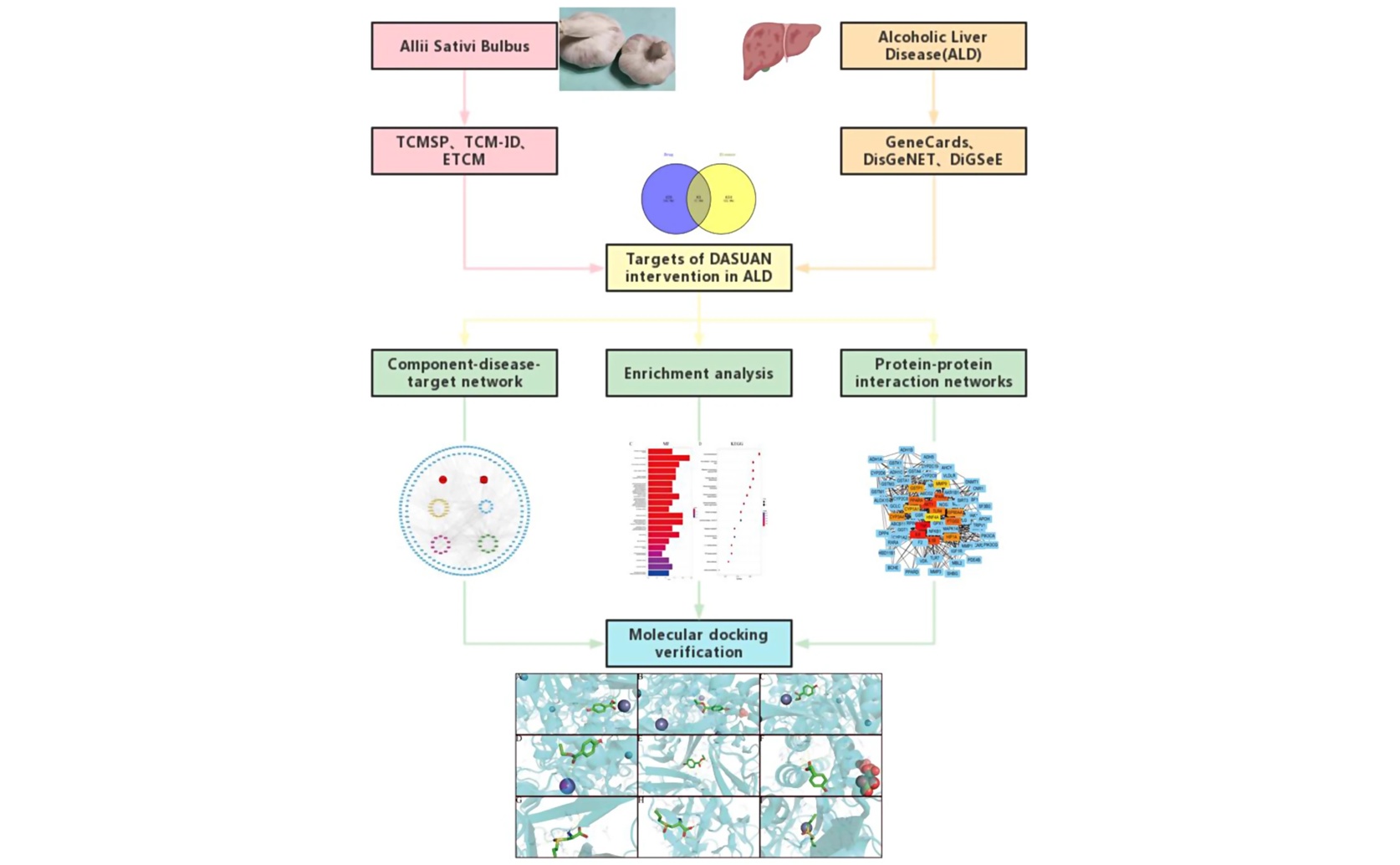
This study's integrative workflow combined network pharmacology with experimental validation to reveal how active compounds in Garlic (Allium sativum) can treat alcoholic liver disease by mitigating inflammation and promoting ethanol metabolism.

Image adapted from: Gao et al. / CC BY (Source)

Key Findings

  • Researchers at Shanxi Medical University, China, found that garlic can help treat alcoholic liver disease (ALD)
  • Garlic's active ingredients can reduce inflammation and promote alcohol metabolism, protecting the liver
  • The study identified 83 target genes that garlic's compounds interact with, potentially explaining its therapeutic effects on ALD
Alcoholic liver disease (ALD) is a serious global health issue that can progress from fatty liver to more severe conditions such as hepatitis, fibrosis, cirrhosis, and even hepatocellular carcinoma (HCC)[2][3]. Despite its prevalence, current treatments for ALD are limited and often ineffective, highlighting the need for new therapeutic strategies[2]. Recent research conducted by Shanxi Medical University, China, aimed to explore the potential of garlic (Allium sativum) in inhibiting the development of ALD using network pharmacology and molecular docking techniques[1]. Garlic has long been recognized for its medicinal properties and has been studied for its beneficial effects against ALD[2]. The study identified the main active ingredients and targets of garlic through comprehensive database screening. Targets related to ALD were sourced from multiple databases, and the intersection of these targets with garlic's components was analyzed. This integration identified 83 target genes potentially involved in the therapeutic effects of garlic on ALD. To understand the interactions between these target genes, the researchers constructed protein interaction networks using the STRING platform. They performed Gene Ontology (GO) and Kyoto Encyclopedia of Genes and Genomes (KEGG) pathway enrichment analyses with R software to decipher the biological processes and pathways influenced by garlic. The garlic component-disease-target network was visualized using Cytoscape software, which provided a detailed map of how garlic's active compounds might interact with ALD-related targets. One of the key findings was that garlic could mitigate the inflammatory response and promote ethanol metabolism. This was validated through molecular docking simulations, which showed how active ingredients in garlic could bind to core ALD targets. Further validation came from human sequencing data of ALD obtained from the GEO database, and an alcohol-induced ALD mouse model supported these network pharmacology findings. Previous studies have also highlighted the importance of addressing oxidative stress and inflammation in ALD. For instance, hydroxytyrosol (HT), a polyphenol, has been shown to reduce oxidative damage and inflammation in ALD by promoting alcohol metabolism and suppressing inflammatory pathways[4]. Similar to HT, garlic's active compounds appear to exert their effects by targeting oxidative stress and inflammatory responses, thus providing a complementary approach to ALD treatment. Moreover, the study aligns with earlier research emphasizing the role of alcohol metabolism in ALD progression. Alcohol metabolism involves both oxidative and non-oxidative pathways, which produce toxic metabolites that contribute to liver damage[5]. By promoting ethanol metabolism, garlic could potentially reduce the accumulation of these harmful metabolites, thereby protecting the liver. In summary, the study from Shanxi Medical University offers promising insights into the therapeutic mechanisms of garlic in inhibiting ALD development. By identifying active compounds and their targets, the research paves the way for further investigation and development of botanical remedies for liver disease management. This study underscores the potential of garlic as a natural therapeutic agent in combating ALD, providing a valuable addition to the arsenal of treatments for this debilitating condition.

MedicineHealthBiochem

References

Main Study

1) Exploring the therapeutic potential of garlic in alcoholic liver disease: a network pharmacology and experimental validation study.

Published 23rd July, 2024

https://doi.org/10.1186/s12263-024-00748-3


Related Studies

2) Hepatoprotective effects of garlic against ethanol-induced liver injury: A mini-review.

https://doi.org/10.1016/j.fct.2017.11.059


4) Hydroxytyrosol attenuates ethanol-induced liver injury by ameliorating steatosis, oxidative stress and hepatic inflammation by interfering STAT3/iNOS pathway.

https://doi.org/10.1080/13510002.2023.2187564


5) Alcoholic liver disease: a new insight into the pathogenesis of liver disease.

https://doi.org/10.1007/s12272-022-01392-4


Related Articles

An unhandled error has occurred. Reload 🗙