Biopesticide Impact on Crops Using Extracts from Marigold Plants

Jenn Hoskins
19th July, 2024

Biopesticide Impact on Crops Using Extracts from Marigold Plants

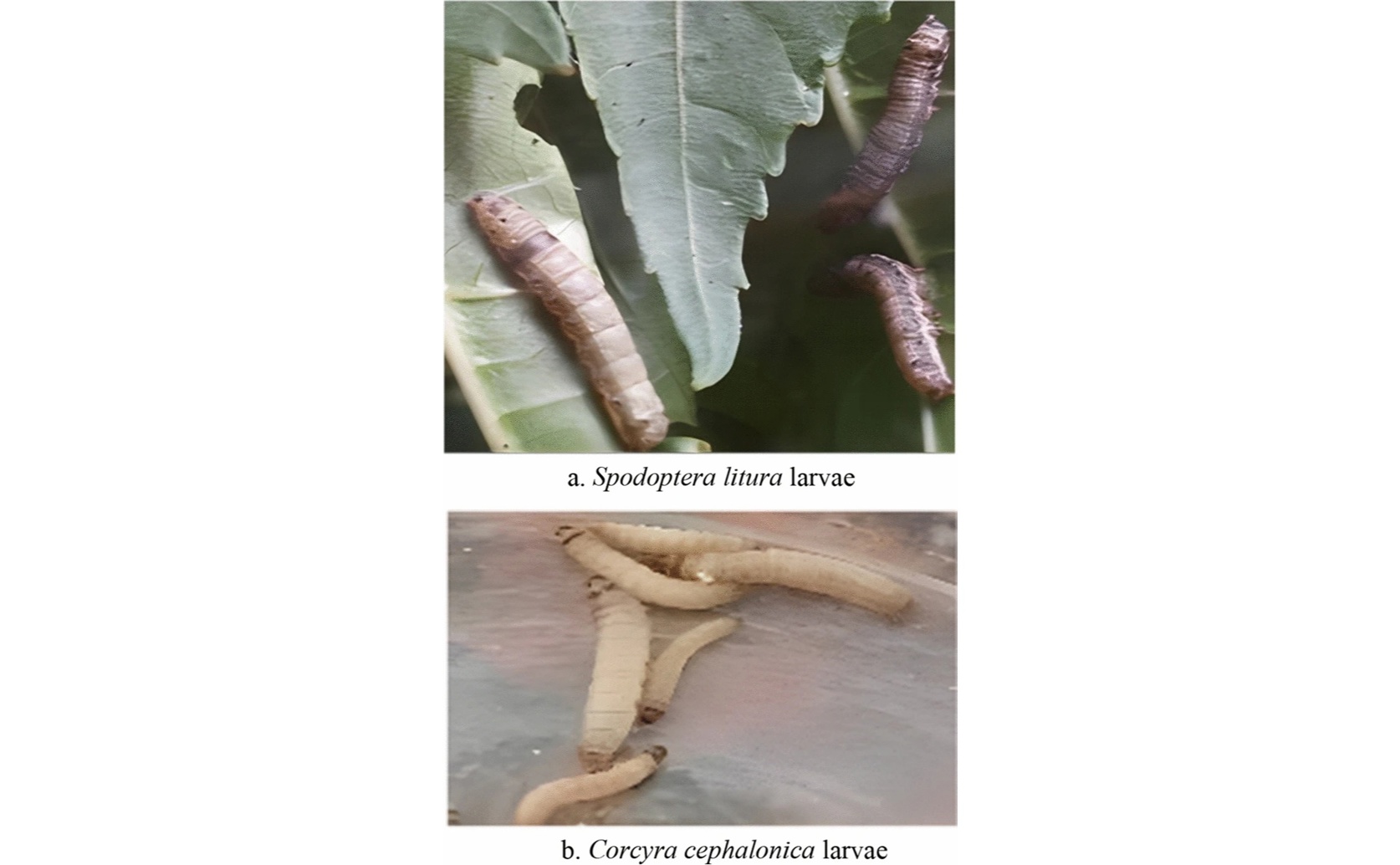
This study evaluated the biopesticidal effects of marigold extracts on the larvae of two major crop pests, Spodoptera litura (a) and the Rice-moth (Corcyra cephalonica) (b).

Image adapted from: Kannan et al. / CC BY (Source)

Key Findings

  • The study by PES University in Bangalore focused on the biocidal properties of marigold extracts against crop pests
  • Marigold extracts from T. erecta and T. patula were found to be effective in killing larvae of S. litura and C. cephalonica
  • T. erecta extracts achieved 100% larval mortality within 24 hours, while T. patula extracts took 48 hours to kill 50% of the larvae
Botanicals from plants such as marigold, chrysanthemum, basil, and rosemary are increasingly being studied as potential replacements for chemical pesticides due to their effectiveness and environmental safety. A recent study conducted by PES University focused on the bioactive components found in Tagetes erecta and Tagetes patula, commonly known as marigolds, which have shown promising biocidal properties against two major crop pests, Spodoptera litura and Corcyra cephalonica[1]. In this study, researchers extracted crude compounds from different parts of T. erecta and T. patula using the Soxhlet extraction method. The leaf extracts were then analyzed using Gas Chromatography-Mass Spectrometry (GC-MS) to identify their components and confirm the presence of thiophenes, compounds known for their broad-spectrum biocidal properties. The study aimed to evaluate the larvicidal effects of these extracts on S. litura and C. cephalonica larvae through both direct and indirect application methods. The indirect method involved coating castor leaves with various concentrations of methanolic extracts and allowing S. litura larvae to feed on them. In the direct method, larvae of both pest species were sprayed with different concentrations of the crude extracts. The results were significant: within 24 to 48 hours, there was a marked decrease in larval activity and survival rates. Specifically, 25 µl of T. erecta root and stem extracts achieved 100% larval mortality within 24 hours, whereas 50 µl of T. patula flower, root, and stem extracts killed 50% of the larvae in 48 hours. Additionally, a mini nursery evaluation showed that direct spraying of 25 µl of T. erecta leaf and flower extracts, as well as T. patula flower extract, resulted in 100% larval mortality within 24 hours on jowar saplings. These findings align with previous studies that have demonstrated the effectiveness of botanical extracts in pest control. For instance, an earlier study showed that matrine, a naturally occurring compound, enhanced the pathogenicity of the fungus Beauveria brongniartii against S. litura, leading to high antifeedant activity and inhibition of pupation and emergence in the larvae[2]. Similarly, azadirachtin, another botanical pesticide, has been shown to inhibit the growth of S. litura larvae by causing structural damage and apoptosis in the midgut[3]. The current study expands on these earlier findings by demonstrating the potent larvicidal effects of marigold extracts against both S. litura and C. cephalonica. The significant reduction in larval activity and survival rates observed in this study suggests that marigold extracts could serve as effective, environmentally friendly alternatives to synthetic pesticides. By incorporating these botanical pesticides into integrated pest management strategies, we can reduce the reliance on chemical pesticides, thereby minimizing their adverse environmental impacts. In conclusion, the research conducted by PES University highlights the potential of marigold extracts as effective larvicides against major crop pests. The study's findings are consistent with previous research on the biocidal properties of botanical compounds, further supporting the use of plant-based pesticides in sustainable agriculture.

AgricultureBiochemPlant Science

References

Main Study

1) Biopesticide effect on crops for the bioactive components extracted from Tagetes erecta and Tagetes patula

Published 18th July, 2024

https://doi.org/10.1007/s44279-024-00045-y


Related Studies

2) Biological Impact and Enzyme Activities of Spodoptera litura (Lepidoptera: Noctuidae) in Response to Synergistic Action of Matrine and Beauveria brongniartii.

https://doi.org/10.3389/fphys.2020.584405


3) Azadirachtin Affects the Growth of Spodoptera litura Fabricius by Inducing Apoptosis in Larval Midgut.

https://doi.org/10.3389/fphys.2018.00137


Related Articles

An unhandled error has occurred. Reload 🗙