Unique Plant Shows Dual Metabolism in Seedlings and Leaves, Study Finds

Jenn Hoskins
14th July, 2024

Unique Plant Shows Dual Metabolism in Seedlings and Leaves, Study Finds

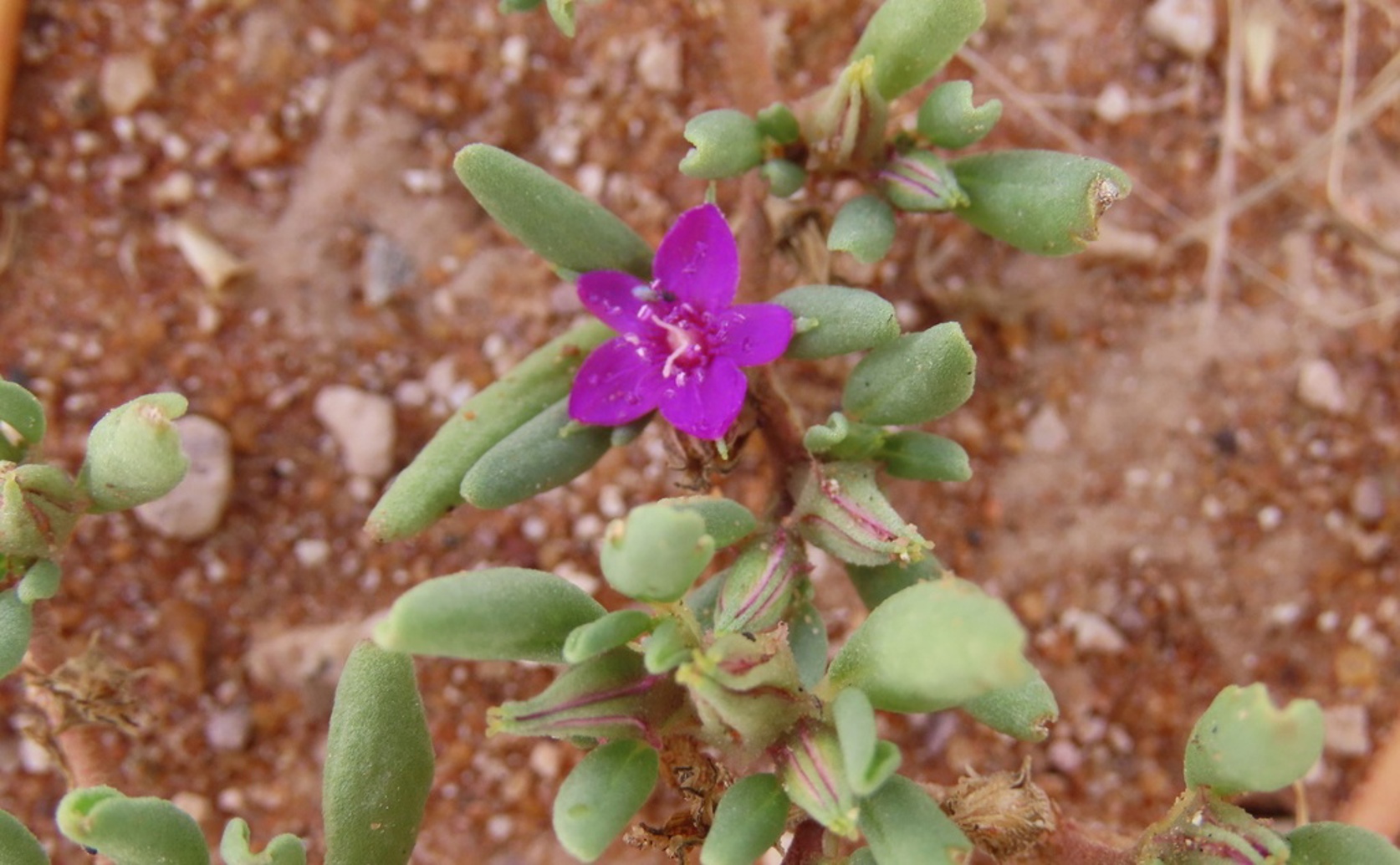
Oukraal Seapurslane (Sesuvium sesuvioides)

Public Domain Photograph

Key Findings

  • Researchers from Ludwig-Maximilians-Universität München studied the plant Sesuvium sesuvioides to understand how it uses both C4 and CAM photosynthesis
  • In leaves, genes related to C4 photosynthesis were highly active, making the plant efficient in hot, sunny conditions
  • In cotyledons, genes involved in CAM photosynthesis were upregulated, allowing the plant to fix CO2 at night and conserve water
  • Some genes were co-expressed in both leaves and cotyledons, suggesting a shared regulatory mechanism for switching between or combining C4 and CAM pathways
The study of photosynthesis has revealed a fascinating diversity of mechanisms by which plants adapt to their environments. Among these, C4 and CAM (Crassulacean Acid Metabolism) photosynthesis are particularly intriguing due to their efficiency in specific conditions. C4 photosynthesis is known for its high efficiency in hot, sunny environments, while CAM is adapted to arid conditions, allowing plants to fix CO2 at night to minimize water loss. The co-occurrence of these two pathways in a single species is rare and presents a unique challenge in understanding how these mechanisms are regulated together. Researchers from Ludwig-Maximilians-Universität München have conducted a comparative transcriptomic analysis of leaves and cotyledons of the C4-like species Sesuvium sesuvioides (Aizoaceae) using RNA sequencing (RNA-seq) to explore this unusual co-occurrence[1]. Their findings provide new insights into the regulation and coexistence of these two photosynthetic pathways. Previous studies have shown that certain species can exhibit both C4 and CAM photosynthesis under specific conditions. For example, Portulaca oleracea, a C4 dicot, displays CAM-like acid fluctuations under water stress or short photoperiods[2]. Similarly, Trianthema portulacastrum, a C4 annual herb, has been found to exhibit low-level nocturnal acidification, indicative of weak CAM activity[3]. These studies highlight the potential for flexibility in photosynthetic pathways, but the underlying regulatory mechanisms remain unclear. The current study on Sesuvium sesuvioides delves deeper into this phenomenon by analyzing gene expression profiles in different tissues. RNA-seq allows for a comprehensive examination of the transcriptome, the complete set of RNA transcripts produced by the genome under specific circumstances. By comparing the transcriptomes of leaves and cotyledons, the researchers aimed to identify genes that are differentially expressed and potentially involved in the regulation of both C4 and CAM pathways. Their analysis revealed distinct expression patterns for genes associated with C4 and CAM photosynthesis. In leaves, which primarily perform C4 photosynthesis, genes related to the C4 pathway were highly expressed. These include genes encoding enzymes such as phosphoenolpyruvate carboxylase (PEPC) and NADP-malic enzyme (NADP-ME), which are crucial for the C4 cycle. This finding is consistent with previous studies that have identified NADP-ME as a predominant enzyme in many C4 eudicots[4]. In cotyledons, which exhibited characteristics of CAM photosynthesis, there was an upregulation of genes involved in nocturnal acidification and CO2 fixation. These include genes encoding enzymes like pyruvate orthophosphate dikinase (PPDK) and malate dehydrogenase, which play key roles in the CAM pathway. The presence of these CAM-related genes in cotyledons suggests a functional differentiation within the plant, allowing it to optimize photosynthesis under varying environmental conditions. This study also provides evidence for the co-regulation of C4 and CAM pathways at the transcriptomic level. Some genes were found to be co-expressed in both leaves and cotyledons, indicating a shared regulatory mechanism that allows the plant to switch between or simultaneously use both pathways. This co-regulation might be facilitated by transcription factors that respond to environmental cues such as light and water availability. The findings from this study build on earlier research by demonstrating that the co-occurrence of C4 and CAM photosynthesis is not just a rare curiosity but a complex adaptation that involves intricate regulatory networks. The ability to switch between or combine these pathways provides a significant advantage in fluctuating environments, allowing plants like Sesuvium sesuvioides to thrive in conditions that might otherwise be challenging. In conclusion, the research conducted by Ludwig-Maximilians-Universität München on Sesuvium sesuvioides advances our understanding of the co-regulation of C4 and CAM photosynthesis. By leveraging transcriptomic analysis, the study uncovers the genetic basis for this dual capability, shedding light on the evolutionary and ecological significance of this adaptation. These insights not only enhance our knowledge of plant physiology but also have potential applications in agriculture, where optimizing photosynthetic efficiency could lead to more resilient crop species.

GeneticsBiochemPlant Science

References

Main Study

1) C4-like Sesuvium sesuvioides (Aizoaceae) exhibits CAM in cotyledons and putative C4-like + CAM metabolism in adult leaves as revealed by transcriptome analysis

Published 13th July, 2024

https://doi.org/10.1186/s12864-024-10553-2


Related Studies

2) Characteristics of Crassulacean Acid Metabolism in the Succulent C(4) Dicot, Portulaca oleracea L.

Journal: Plant physiology, Issue: Vol 65, Issue 2, Feb 1980


3) Does the C4 plant Trianthema portulacastrum (Aizoaceae) exhibit weakly expressed crassulacean acid metabolism (CAM)?

https://doi.org/10.1071/FP20247


4) Diversity of Kranz anatomy and biochemistry in C4 eudicots.

https://doi.org/10.3732/ajb.94.3.362


Related Articles

An unhandled error has occurred. Reload 🗙