Potential of Linalool in Reducing Salt Stress on Onion Plants

Jenn Hoskins
14th July, 2024

Potential of Linalool in Reducing Salt Stress on Onion Plants

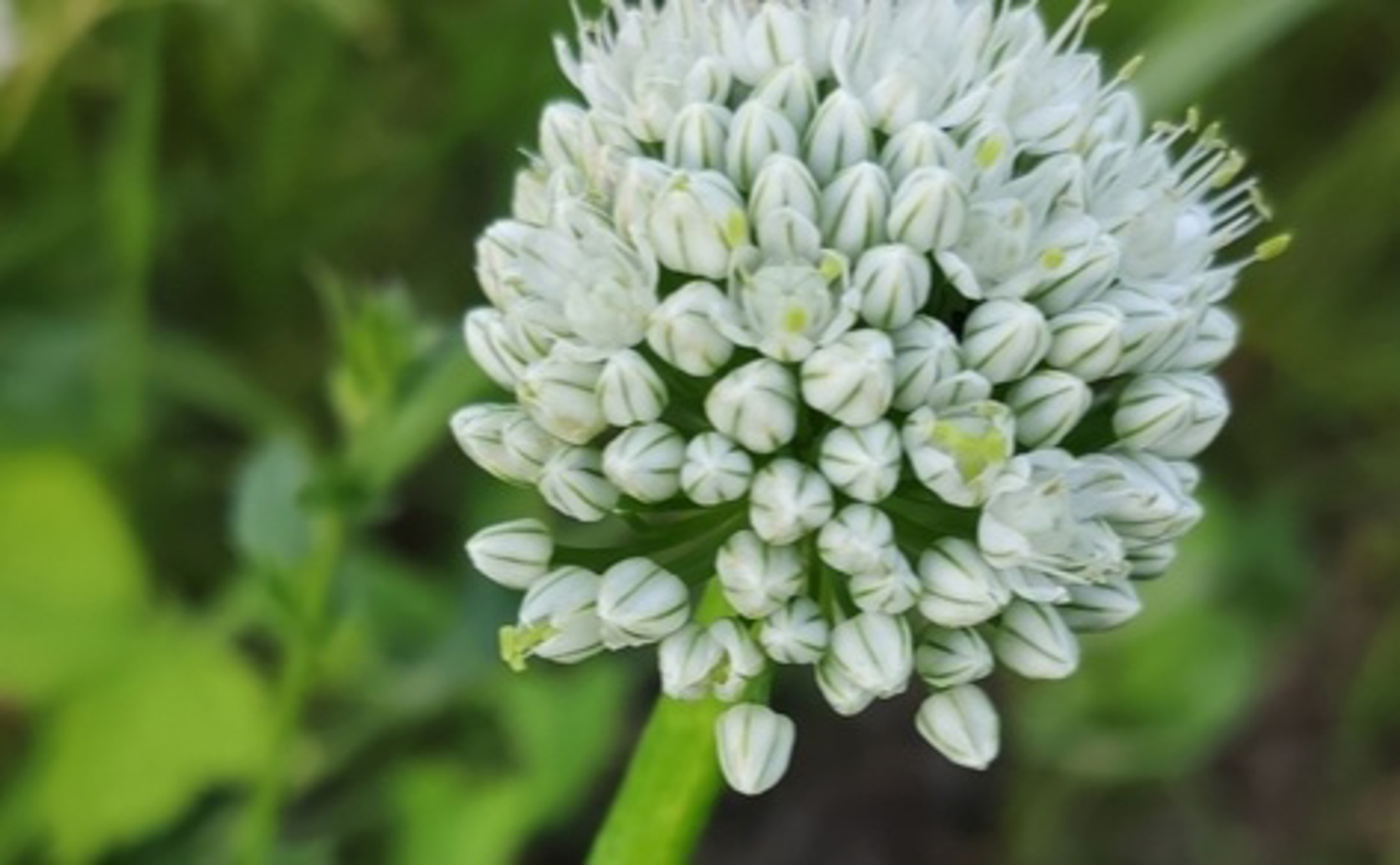
Onion plant (Allium cepa)

Photo adapted from: Denis Ibaev / CC BY (Source)

Key Findings

  • The study by the Regional University of Cariri (URCA) found that salt stress from NaCl significantly reduces onion seed emergence, root and leaf growth, and increases oxidative stress
  • Treating onion plants with linalool at 300 and 500 μg/mL improved leaf and root length even under salt stress conditions
  • Linalool reduced oxidative stress in onion plants by activating enzymes that combat oxidative damage, rather than through direct chemical reduction
Salt stress, primarily caused by sodium chloride (NaCl), is a significant challenge in agriculture, affecting plant growth and productivity. Onions (Allium cepa L.), a staple in global cuisine, are no exception to this problem. A recent study conducted by the Regional University of Cariri (URCA) explored how linalool, a naturally occurring compound, could mitigate the adverse effects of NaCl on onion plants[1]. The study aimed to understand the impact of NaCl on onion seed emergence, root and leaf growth, and the potential of linalool to counteract these effects. The researchers also examined the antioxidant properties of linalool both in vivo (within living organisms) and in vitro (outside a living organism), as well as its ability to chelate Fe2+ (bind iron ions) and reduce Fe3+. Initial soil analysis revealed that sulfur (S) was the most abundant element, followed by calcium (Ca), potassium (K), magnesium (Mg), and sodium (Na). When onion seeds were exposed to 150 mM NaCl, there was a significant reduction in the emergence speed index (ESI), leaf and root length, and an increase in oxidative stress markers like peroxidation content. This indicates that NaCl not only hinders physical growth but also induces oxidative damage in plants. To counter these effects, the researchers treated the plants with linalool at concentrations of 300 and 500 μg/mL. Remarkably, linalool significantly improved the length of leaves and roots, indicating its potential to promote growth even under salt stress conditions. This improvement in growth was accompanied by a reduction in oxidative stress, as evidenced by lower peroxidation content. The study found that linalool's protective effects might be due to its ability to activate certain enzymes that combat oxidative stress. This aligns with findings from earlier research on coriander (Coriandrum sativum) and its major component, linalool, which showed hepatoprotective activity against liver damage by reducing oxidative stress markers and enhancing antioxidant parameters[2]. This suggests that linalool's beneficial properties are not limited to a single plant species or type of stress. Interestingly, the study also observed that NaCl treatment led to a negative correlation between seed emergence and K+ concentration, which was reversed by linalool treatment. This is consistent with previous findings that NaCl-induced stress involves both osmotic and ionic effects, disrupting cellular homeostasis and leading to oxidative damage[3]. Moreover, the study's findings on the antioxidant properties of linalool are noteworthy. While linalool significantly reduced oxidative stress and increased Fe2+ concentration, it did not show potential to reduce Fe3+. This suggests that linalool's antioxidant effect is likely due to an enzymatic activation process rather than direct chemical reduction. The implications of this study are significant for agricultural practices, especially in regions affected by soil salinity. By demonstrating the efficacy of linalool in mitigating NaCl-induced stress, the research offers a potential natural remedy to enhance crop resilience and productivity. Additionally, the study underscores the importance of understanding the complex interactions between soil chemistry, plant physiology, and natural compounds in developing effective agricultural interventions. In conclusion, the URCA study provides compelling evidence that linalool can mitigate the adverse effects of NaCl on onion plants by promoting growth and reducing oxidative stress through enzymatic activation. This research not only expands our understanding of plant stress responses but also opens new avenues for using natural compounds to enhance crop resilience in saline environments.

MedicineBiochemPlant Science

References

Main Study

1) Exploring the therapeutic potential of the oxygenated monoterpene linalool in alleviating saline stress effects on Allium cepa L.

Published 13th July, 2024

https://doi.org/10.1007/s11356-024-34285-8


Related Studies

2) Hepatoprotective Activity of Linalool in Rats Against Liver Injury Induced by Carbon Tetrachloride.

https://doi.org/10.1024/0300-9831/a000581


3) Ionic and osmotic effects of NaCl-induced inactivation of photosystems I and II in Synechococcus sp.

Journal: Plant physiology, Issue: Vol 123, Issue 3, Jul 2000


Related Articles

An unhandled error has occurred. Reload 🗙