How Salt-Tolerant Alfalfa Reacts to Salinity and Beneficial Bacteria

Jenn Hoskins
7th July, 2024

How Salt-Tolerant Alfalfa Reacts to Salinity and Beneficial Bacteria

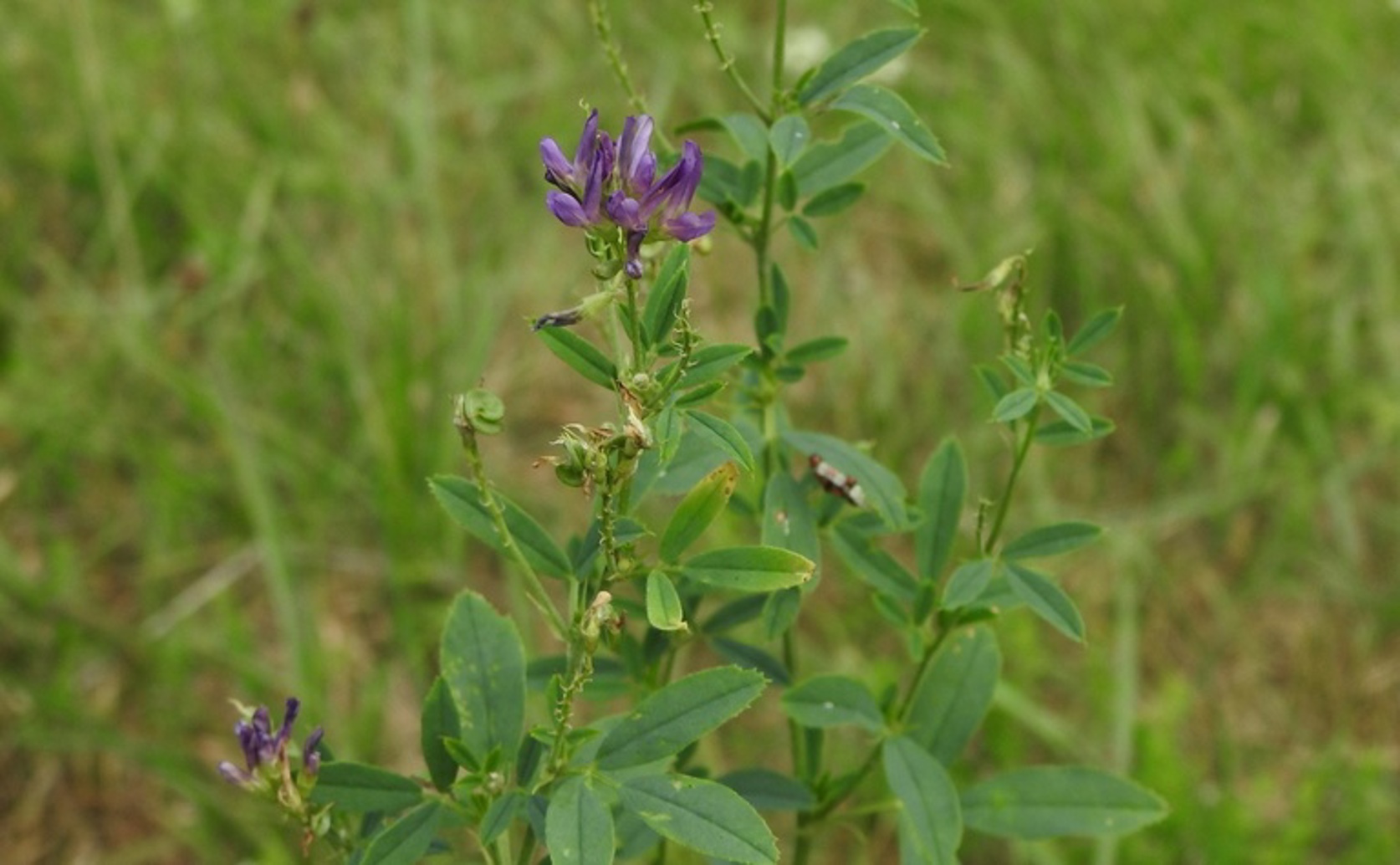
Alfalfa (Medicago sativa)

Photographer: Yann Kemper

Key Findings

  • Researchers at the University of Saskatchewan studied how recurrent selection can help alfalfa tolerate salinity stress
  • Salt-tolerant alfalfa varieties showed better growth and more nodule formation under saline conditions than salt-sensitive varieties
  • These salt-tolerant varieties maintained an efficient symbiotic relationship with rhizobium, ensuring effective nitrogen fixation even under salt stress
Alfalfa (Medicago sativa L.) is a crucial crop for agriculture, known for its high nutritional value and role in soil improvement. However, its productivity is severely hindered by salinity stress. Researchers at the University of Saskatchewan have conducted a study to explore how recurrent selection can mediate the negative effects of salinity on alfalfa and how salt-tolerant alfalfa may display unique adaptations in association with rhizobium under such stress[1]. Salinity stress is a significant challenge in agriculture, affecting plant growth and yield. It disrupts various physiological and biochemical processes, leading to reduced productivity. Alfalfa, like many legumes, relies on a symbiotic relationship with rhizobia bacteria to fix atmospheric nitrogen, which is crucial for its growth and development. This relationship results in the formation of nodules on the roots, where nitrogen fixation occurs. However, this symbiosis is highly sensitive to environmental stressors like salinity[2][3]. The study by the University of Saskatchewan aimed to investigate whether recurrent selection could produce alfalfa varieties that are more tolerant to salinity stress. Recurrent selection is a method where plants are repeatedly selected and bred for desirable traits over multiple generations. The researchers hypothesized that salt-tolerant alfalfa might develop unique adaptations in their symbiotic relationship with rhizobium under salt stress. To test this hypothesis, the researchers conducted experiments on different alfalfa varieties, subjecting them to saline conditions and observing their growth, nodulation, and nitrogen fixation capabilities. They compared these parameters with those of non-selected, salt-sensitive varieties. The findings revealed that salt-tolerant alfalfa varieties showed several unique adaptations. These varieties maintained better growth and higher nodule formation under saline conditions compared to their salt-sensitive counterparts. This suggests that recurrent selection can indeed enhance the salinity tolerance of alfalfa. One of the key observations was that the salt-tolerant alfalfa had a more efficient symbiotic relationship with rhizobium under salt stress. This is particularly significant because the symbiotic nitrogen fixation process is highly sensitive to salinity. Previous studies have shown that salinity can impair the early stages of rhizobium-legume symbiosis, leading to reduced nodule formation and nitrogen fixation[3]. The salt-tolerant alfalfa, however, seemed to mitigate these effects, maintaining effective nitrogen fixation even under stress. The study also delved into the molecular mechanisms behind this enhanced tolerance. It was found that the salt-tolerant alfalfa varieties had higher expression levels of genes involved in stress response and nitrogen fixation. This aligns with earlier findings that plants use a variety of molecular mechanisms to regulate nodulation and optimize resource use under stressful conditions[2]. Moreover, the research highlighted the role of amino acid transport in the symbiotic relationship. Effective nitrogen fixation by rhizobia requires the transport of specific amino acids between the plant and the bacteria. Previous studies have shown that rhizobia depend on the plant for certain amino acids, which are critical for their development and persistence[4]. The salt-tolerant alfalfa appeared to manage this metabolic exchange more efficiently under saline conditions, ensuring a steady supply of necessary amino acids to the rhizobia. In conclusion, the study by the University of Saskatchewan demonstrates that recurrent selection can produce alfalfa varieties with enhanced tolerance to salinity stress. These varieties exhibit unique adaptations in their symbiotic relationship with rhizobium, maintaining effective nitrogen fixation and better growth under saline conditions. This research not only provides insights into the mechanisms of salinity tolerance but also offers practical implications for developing salt-tolerant legume crops, contributing to agricultural sustainability and food security.

GeneticsBiochemPlant Science

References

Main Study

1) Differential gene expression of salt-tolerant alfalfa in response to salinity and inoculation by Ensifer meliloti

Published 6th July, 2024

https://doi.org/10.1186/s12870-024-05337-5


Related Studies

2) Legume nodulation: The host controls the party.

https://doi.org/10.1111/pce.13348


3) At the Crossroads of Salinity and Rhizobium-Legume Symbiosis.

https://doi.org/10.1094/MPMI-09-21-0231-FI


4) Legumes regulate Rhizobium bacteroid development and persistence by the supply of branched-chain amino acids.

https://doi.org/10.1073/pnas.0903653106


Related Articles

An unhandled error has occurred. Reload 🗙