How Sugar Beets Respond to Stress: A Study on Key Genes

Greg Howard
6th July, 2024

How Sugar Beets Respond to Stress: A Study on Key Genes

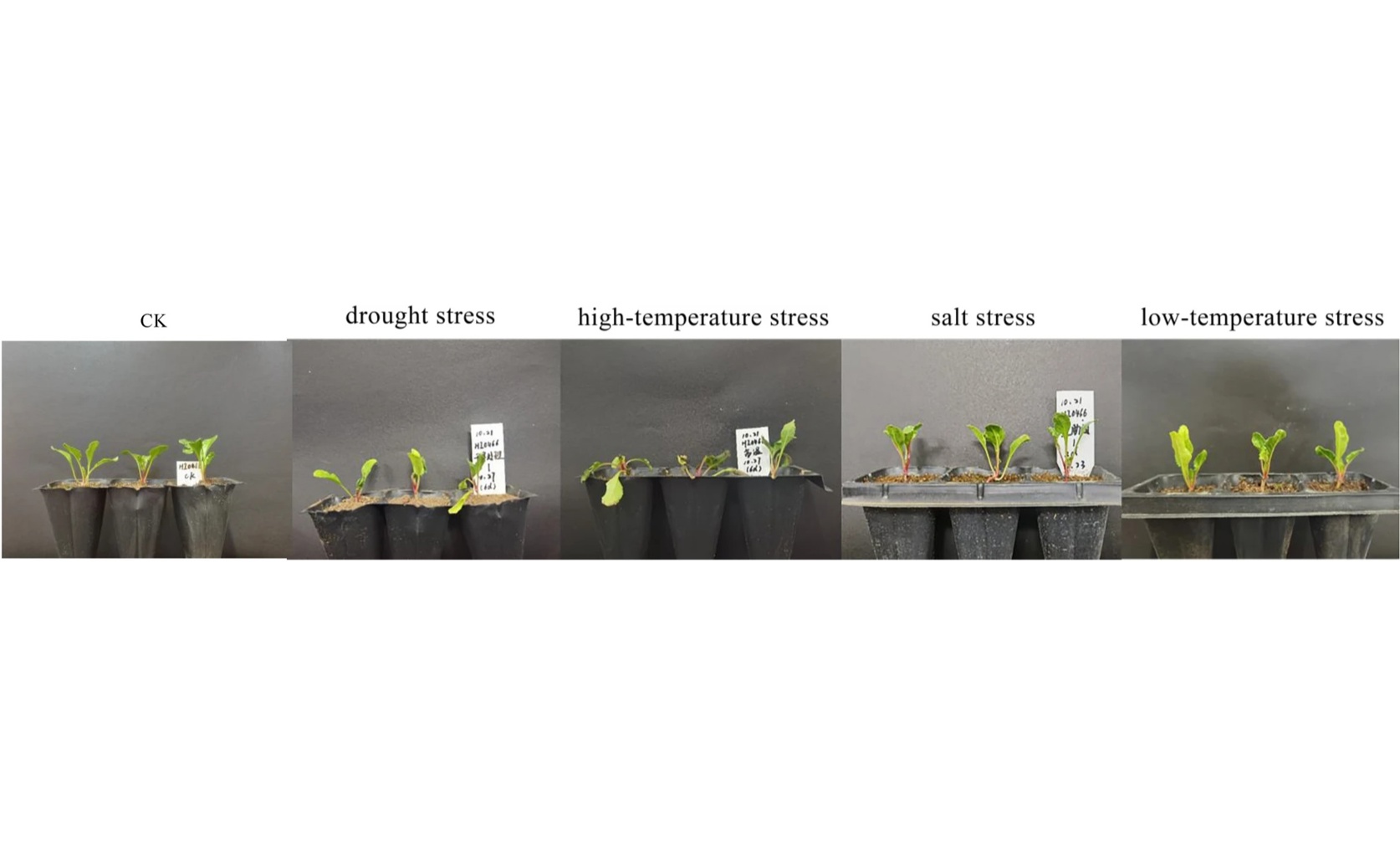
Phenotypic changes under long-term treatment with different abiotic stresses.

Image adapted from: Sun et al. / CC BY (Source)

Key Findings

  • The study focused on sugar beets in Inner Mongolia, China, and analyzed 52 NAC transcription factor genes
  • 18 NAC genes in sugar beet leaves and 17 in roots showed specific responses to abiotic stresses like drought, heat, and salinity
  • These findings help in understanding how sugar beets manage stress and can aid in developing stress-resistant varieties
Abiotic stresses, such as drought, heat, and salinity, are significant challenges that hinder the growth and quality of sugar beet (Beta vulgaris L.), a crucial sugar crop in China, particularly in the Inner Mongolia Autonomous Region. Recent research conducted by Inner Mongolia Agricultural University aimed to address this issue by focusing on the role of NAC transcription factors in sugar beet's response to various abiotic stresses[1]. NAC transcription factors are a large family of proteins that regulate various biological processes in plants, including growth, development, and stress responses[2]. In sugar beet, 52 NAC transcription factor genes were systematically analyzed to determine their specific expression in different organs under abiotic stress conditions. The study utilized reverse transcription polymerase chain reaction (RT-PCR) to assess the expression patterns of these genes in sugar beet leaves and roots. The findings revealed that 18 NAC transcription factor genes responded specifically to abiotic stress in sugar beet leaves, while 17 genes showed a specific response in the roots. This differential expression indicates that NAC transcription factors play a vital role in helping sugar beets adapt to adverse environmental conditions by regulating stress-responsive genes in a tissue-specific manner. Previous studies have highlighted the importance of NAC transcription factors in plant stress responses. For instance, NAC proteins are involved in cell expansion, differentiation, and hormone signaling under biotic and abiotic stresses[2]. In Arabidopsis thaliana, the NAC transcription factor NTL4 has been shown to facilitate reactive oxygen species (ROS) production in response to drought stress, playing a crucial role in programmed cell death (PCD) under heat stress conditions[3]. This process helps plants adapt to extreme environmental conditions by modulating cell death and survival mechanisms. The current study expands on these findings by demonstrating the specific roles of NAC transcription factors in sugar beet's response to abiotic stress. By identifying the NAC genes that are differentially expressed in leaves and roots, researchers can better understand how sugar beets manage stress at the molecular level. This knowledge provides a reference for developing stress-resistant sugar beet varieties through genetic engineering or selective breeding. Furthermore, the study's results align with previous research on the CUP-SHAPED COTYLEDON (CUC) genes in Arabidopsis, which are crucial for shoot organ boundary and meristem formation throughout the plant's life cycle[4]. Although the focus of the current study is on NAC transcription factors, the underlying principle of specific gene expression in response to environmental cues remains consistent. Both CUC and NAC genes exhibit tissue-specific functions that contribute to the plant's overall adaptability and resilience. In summary, the research conducted by Inner Mongolia Agricultural University provides valuable insights into the role of NAC transcription factors in sugar beet's response to abiotic stresses. By identifying specific NAC genes that are differentially expressed in leaves and roots, the study offers a foundation for developing stress-resistant sugar beet varieties, ultimately contributing to the high-quality development of the sugar beet industry in China. This work also ties together previous findings on the importance of transcription factors in plant stress responses, highlighting the potential for future research and applications in crop improvement.

GeneticsBiochemPlant Science

References

Main Study

1) Construction of Gene Expression Profiles of the NAC Transcription Factor Family in Sugar Beet Under Abiotic Stress

Published 4th July, 2024

https://doi.org/10.1007/s12355-024-01436-7


Related Studies

2) Genome-wide characterization and expression profiling of NAC transcription factor genes under abiotic stresses in radish (Raphanus sativus L.).

https://doi.org/10.7717/peerj.4172


3) The Arabidopsis NAC transcription factor NTL4 participates in a positive feedback loop that induces programmed cell death under heat stress conditions.

https://doi.org/10.1016/j.plantsci.2014.07.003


4) Arabidopsis CUP-SHAPED COTYLEDON3 regulates postembryonic shoot meristem and organ boundary formation.

Journal: The Plant cell, Issue: Vol 18, Issue 11, Nov 2006


Related Articles

An unhandled error has occurred. Reload 🗙