Understanding Toxin Production in Mold Found on Apples

Jenn Hoskins
25th June, 2024

Understanding Toxin Production in Mold Found on Apples

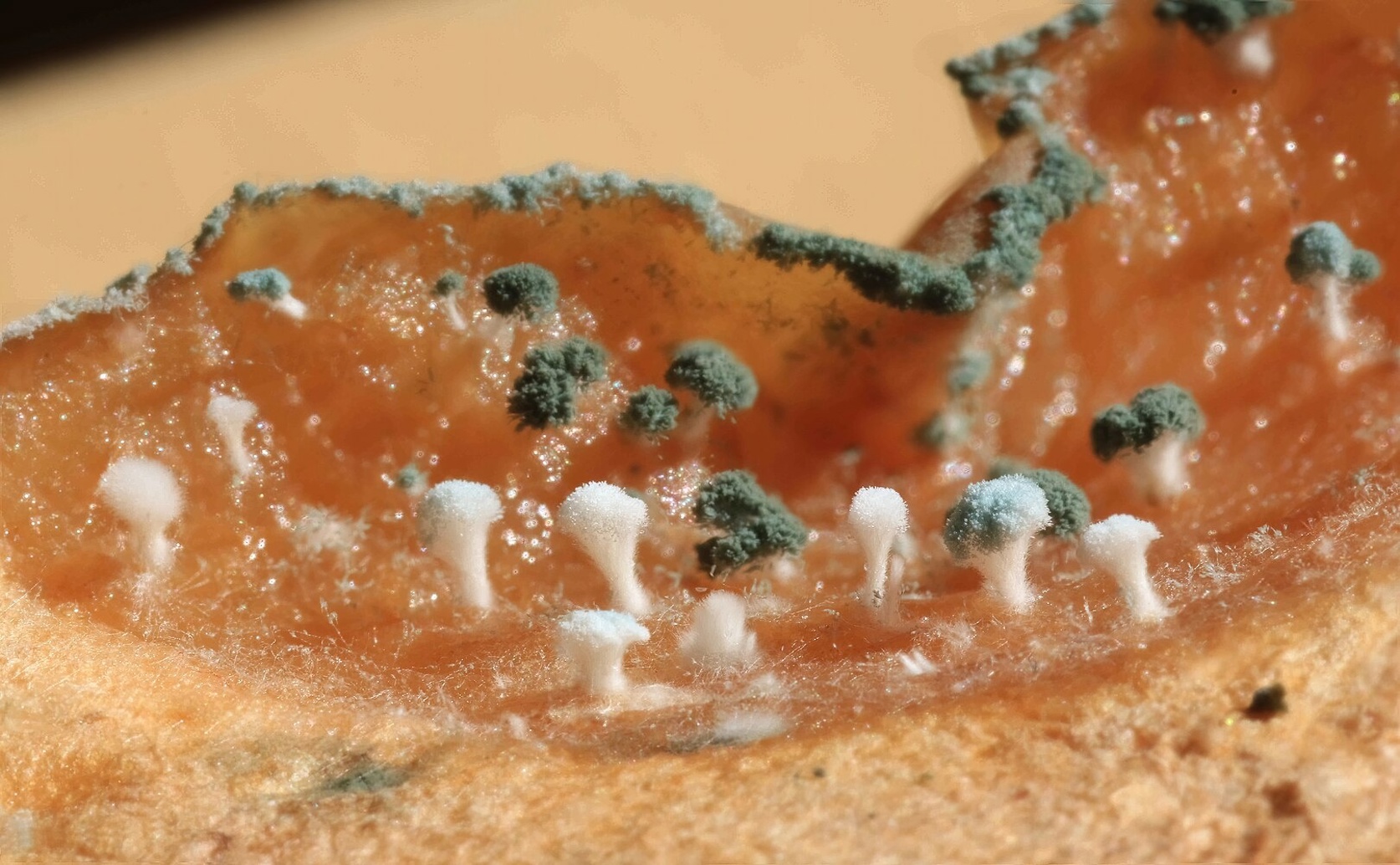
Mold growing on an apple.

Photo adapted from: Wikimedia Commons / CC BY (Source)

Key Findings

  • Researchers in Hungary studied apples from seven locations to find patulin-producing moulds
  • They found that geographical location influenced mould distribution more than farming methods
  • Aspergillus clavatus and a Penicillium strain (now identified as Talaromyces pinophilus) were confirmed as patulin producers
Mycotoxins are harmful secondary metabolites produced by fungi, posing significant health risks to humans and animals. Patulin (PAT) is a mycotoxin frequently found in apples and apple-derived products. The primary fungi responsible for patulin production are Aspergillus clavatus and Penicillium expansum. Conditions such as water and nutrient availability, UV exposure, and the presence of antagonistic organisms can influence patulin production. Understanding these environmental factors is crucial in addressing patulin contamination. A recent study conducted by researchers at Eszterházy Eger, Hungary, aimed to investigate the prevalence and distribution of patulin-producing moulds in apples from various locations in Hungary[1]. The study involved isolating moulds from 40 apple samples collected from seven locations: Csenger, Damak, Pallag, Lövőpetri, Nagykálló, and Újfehértó. A total of 183 moulds were identified, with 67 isolates belonging to Alternaria, 45 to Aspergillus, and 13 to Penicillium. The study revealed that the geographical location had a more significant impact on mould distribution than farming methods. For instance, Aspergillus species, which require higher temperatures, dominated the region of Újfehértó, accounting for approximately 50% of the isolates. In contrast, Alternaria species were prevalent in Csenger, Debrecen-Pallag, Nyírtass, and Nagykálló. To determine the patulin production capability, researchers tested all Aspergillus and Penicillium isolates for the presence of the isoepoxidone dehydrogenase (idh) gene, essential in the patulin metabolic pathway. Thin-layer chromatography (TLC) assays were conducted to confirm patulin production. The study identified Aspergillus clavatus B9/6 from Debrecen-Pallag and a Penicillium strain, B10/6, as patulin producers. Further sequencing revealed that the Penicillium strain should be classified as Talaromyces pinophilus. This study aligns with previous findings on the sources and detection of mycotoxins in fruits[2]. The identification of patulin-producing fungi and their distribution provides valuable insights for developing strategies to mitigate patulin contamination in apples. Moreover, the study's focus on environmental factors influencing patulin production underscores the importance of considering climate and location in managing mycotoxin risks. Understanding the diversity and toxigenic potential of fungi in fruit crops is crucial for consumer safety. For instance, research on fruitlet core rot (FCR) in pineapple identified Fusarium and Talaromyces genera as significant mycotoxin producers[3]. Similarly, the current study highlights the need for continuous monitoring and identification of mycotoxin-producing fungi in apples to ensure safe consumption. In conclusion, the study conducted by Eszterházy Eger researchers provides critical insights into the prevalence and distribution of patulin-producing fungi in apples across Hungary. By identifying key environmental factors and specific fungal strains responsible for patulin production, this research contributes to developing effective strategies for managing mycotoxin contamination in apple products.

FruitsBiochemMycology

References

Main Study

1) Molecular and chemical evaluation of patulin production of Aspergillus and Penicillium-like species isolated from Hungarian apples.

Published 24th June, 2024

https://doi.org/10.1080/19440049.2024.2364364


Related Studies

2) Comprehensive review on patulin and Alternaria toxins in fruit and derived products.

https://doi.org/10.3389/fpls.2023.1139757


3) Diversity and Toxigenicity of Fungi that Cause Pineapple Fruitlet Core Rot.

https://doi.org/10.3390/toxins12050339


Related Articles

An unhandled error has occurred. Reload 🗙