Discovering Fungal Variety and Chemical Processes on Black Apples

Jim Crocker
21st June, 2024

Discovering Fungal Variety and Chemical Processes on Black Apples

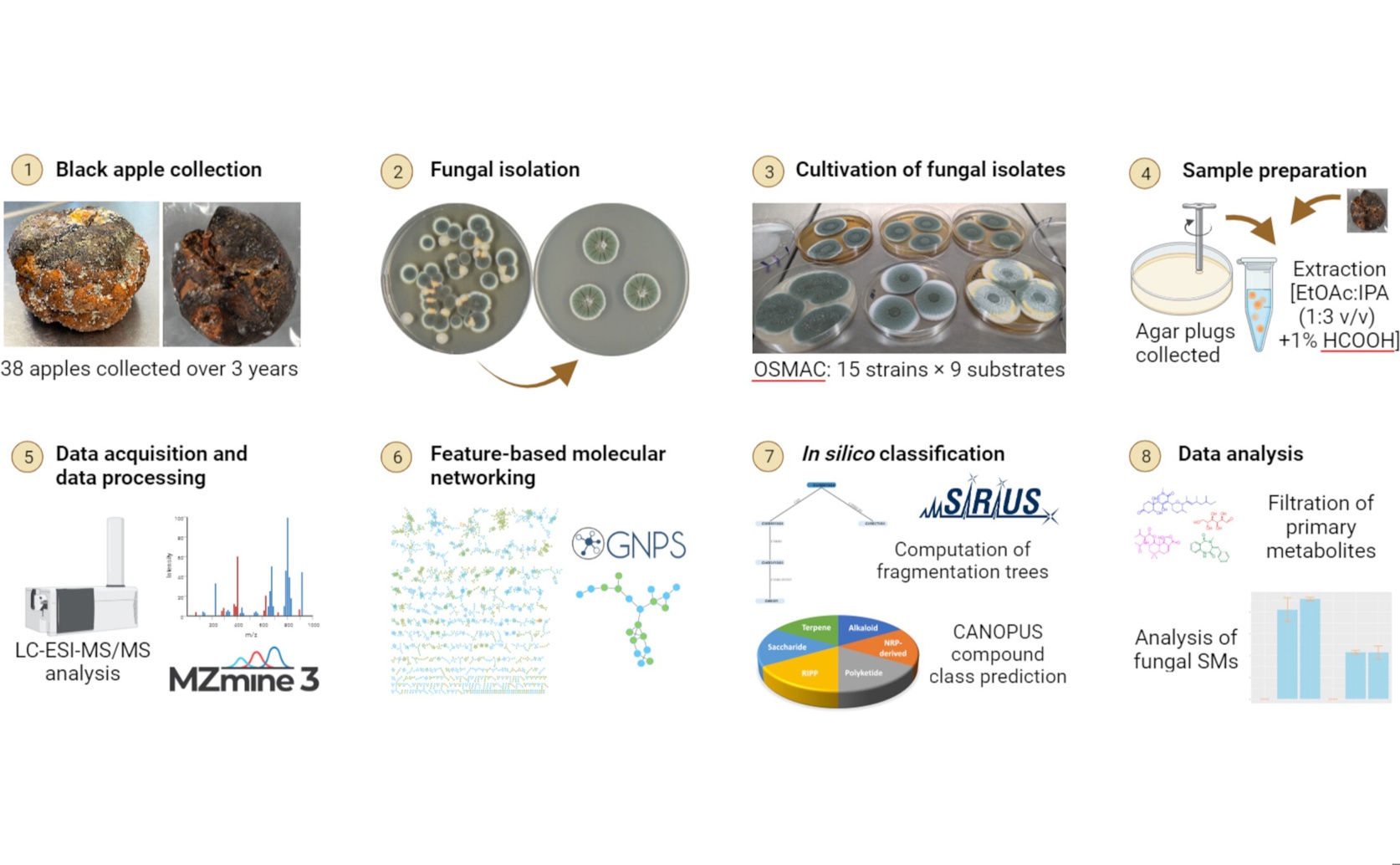
This study's metabolomics workflow integrates fungal isolation and cultivation (1–3) with chemical extraction and advanced mass spectrometry (4–5), followed by computational networking and annotation (6–8), to identify and compare the secondary metabolites produced by fungi on black apples versus in laboratory settings.

Image adapted from: Cowled et al. / CC BY (Source)

Key Findings

  • Researchers from the Technical University of Denmark studied black apples to understand their chemical diversity and microbial interactions
  • They found 3,319 unique chemical features in black apples, with only 6.4% being known compounds
  • 32% of the detected features were fungal-derived, including several antifungal compounds that help microbes compete on apples
Black apples are a result of late-stage microbial decomposition after falling to the ground, primarily invaded by the filamentous fungus Monilinia fructigena, followed by Penicillium expansum. Researchers from the Technical University of Denmark set out to investigate the chemical diversity and ecological roles of secondary metabolites (SMs) in these black apples[1]. This study is significant because the chemistry of apple microbiomes has been underexplored, despite the known economic and health impacts of fungal pathogens like P. expansum[2]. The researchers conducted metabolomics analyses on 38 black apples, examining both whole apples and small excisions of fungal biomass. They utilized a One Strain Many Compounds (OSMAC) approach by cultivating 15 fungal strains on nine different substrates. This led to the identification of 3,319 unique chemical features, with only 6.4% attributable to known compounds based on high-performance liquid chromatography-high-resolution mass spectrometry (HPLC-HRMS/MS) data. This finding underscores the vast chemical diversity present in black apples. Among the 1,606 features detected in black apple extracts, 32% were identified as fungal-derived, thanks to the OSMAC-based training data set. Notably, several antifungal compounds were detected, indicating their role in microbial competition on apples. This aligns with previous findings where P. expansum was shown to produce a range of mycotoxins, such as patulin, citrinin, and chaetoglobosins, which contribute to its pathogenicity and competitive edge[2][3]. Interestingly, the study found a succession of fungal growth following the initial invasion by M. fructigena, highlighting the dynamic nature of microbial interactions on decomposing apples. This is consistent with earlier research showing that P. expansum requires wounds or natural openings to infect, often following initial damage by other pathogens[2]. Moreover, the detection of antifungal compounds suggests that these metabolites play crucial roles in the ecological interactions between different microbial species. The study also revealed a surprisingly low incidence of known secondary metabolites in black apples, emphasizing the need for further research into the functionality of these compounds in microbial interactions and complex microbiomes. This finding is particularly relevant given the challenges in managing blue mold in storage, as traditional fungicides are becoming less effective due to resistance[2]. In conclusion, the research conducted by the Technical University of Denmark highlights the rich chemical diversity and complex ecological roles of secondary metabolites in black apples. By uncovering the interplay between these metabolites, other microbes, and the apple host, the study provides valuable insights into microbial ecology and potential new avenues for managing fungal pathogens in the pome fruit industry.

FruitsBiochemMycology

References

Main Study

1) Unveiling the fungal diversity and associated secondary metabolism on black apples.

Published 20th June, 2024

https://doi.org/10.1128/aem.00342-24


Related Studies

2) Penicillium expansum: biology, omics, and management tools for a global postharvest pathogen causing blue mould of pome fruit.

https://doi.org/10.1111/mpp.12990


3) Penicillium expansum: consistent production of patulin, chaetoglobosins, and other secondary metabolites in culture and their natural occurrence in fruit products.

Journal: Journal of agricultural and food chemistry, Issue: Vol 52, Issue 8, Apr 2004


Related Articles

An unhandled error has occurred. Reload 🗙