Genes Linked to Disease Found in Rice Leaf and Panicle Infections

Greg Howard
21st June, 2024

Genes Linked to Disease Found in Rice Leaf and Panicle Infections

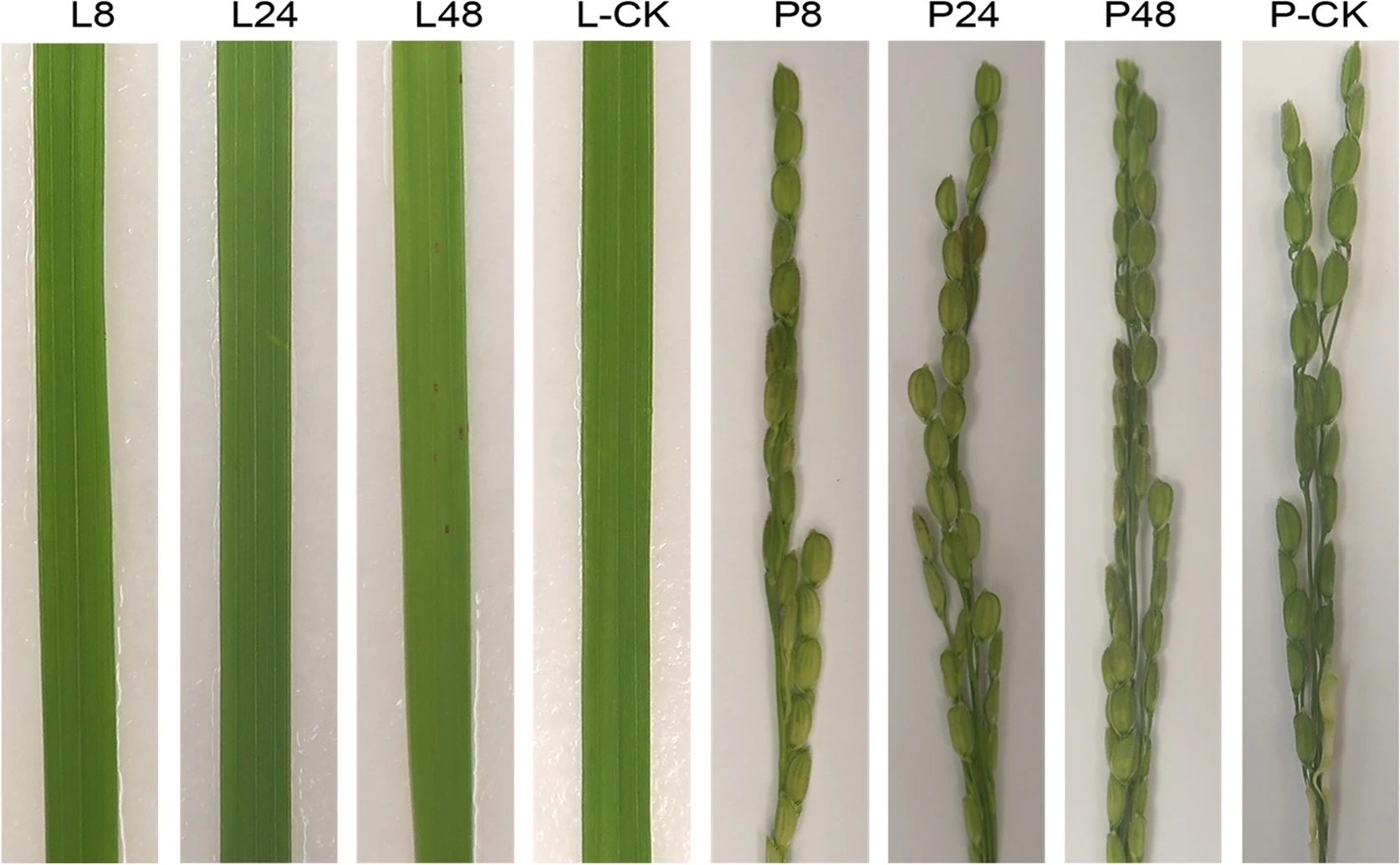
To compare the different infection mechanisms of rice blast, leaf and panicle tissues were inoculated with Magnaporthe oryzae conidia, with samples collected at 8, 24, and 48 hours post-inoculation alongside water-treated controls.

Image adapted from: Du et al. / CC BY (Source)

Key Findings

  • The study, conducted by the Jiangsu Academy of Agricultural Science, examined how the rice blast fungus Magnaporthe oryzae infects rice leaves and panicles
  • Different sets of genes are activated in the fungus during leaf and panicle infections, indicating distinct infection strategies
  • Carbohydrate-active enzymes (CAZymes) are crucial for infection, with different types playing key roles at the leaf and panicle stages
Rice is a staple food for more than half of the world's population, and its production is constantly threatened by various pathogens. One of the most destructive among these is Magnaporthe oryzae, which causes rice blast disease. This pathogen can infect rice at different growth stages, including the leaf and panicle stages, leading to significant yield losses. While much research has focused on understanding the mechanisms of M. oryzae infection at the leaf stage, the pathogenic mechanisms during panicle infection remain less understood. A recent study conducted by the Jiangsu Academy of Agricultural Science aims to fill this knowledge gap by examining gene expression patterns of M. oryzae during infection at both the leaf and panicle stages[1]. The researchers employed RNA sequencing (RNA-seq) to analyze differentially expressed genes (DEGs) in M. oryzae during its infection of rice leaves and panicles. This approach allowed them to identify specific genes and pathways that are activated at different stages of infection. Gene Ontology (GO) enrichment analysis revealed that the biological processes in which M. oryzae genes are involved differ between the leaf and panicle stages. Additionally, Kyoto Encyclopedia of Genes and Genomes (KEGG) analysis indicated that individual and significant pathways are active at different infection stages. One of the key findings is the role of carbohydrate-active enzymes (CAZymes) during infection. At the leaf stage, carbohydrate esterases (CEs), carbohydrate-binding modules (CBMs), and glycoside hydrolases (GHs) were found to be crucial. In contrast, glycosyltransferases (GTs) and GHs play more important roles during panicle infection. These enzymes are essential for breaking down plant cell walls and facilitating the pathogen's entry and spread within the host plant. The study also identified several effector proteins, such as BAS3, BAS113, BAS162, MoCDIP4, and MoHEG13, which are involved in suppressing the host's defense mechanisms. These effectors and their homologous genes help the pathogen evade the plant's immune response, allowing it to establish a successful infection. Previous studies have laid the groundwork for understanding the pathogenicity of M. oryzae. For instance, the draft genome sequence of M. grisea, a close relative of M. oryzae, revealed a large and diverse set of secreted proteins and G-protein-coupled receptors that are involved in fungal disease[2]. Another study focused on the genetic variations among different isolates of M. oryzae and identified novel effector proteins that suppress plant defense mechanisms[3]. Additionally, the role of amino acid biosynthesis in fungal pathogenicity has been highlighted, with specific genes being crucial for maintaining the balance of intracellular amino acid levels and contributing to fungal virulence[4]. The current study builds on these earlier findings by providing a more detailed understanding of how M. oryzae adapts its infection strategies at different stages of rice growth. By identifying stage-specific DEGs and pathways, the researchers have uncovered new targets for developing disease-resistant rice varieties and more effective management strategies. In summary, the study conducted by the Jiangsu Academy of Agricultural Science provides valuable insights into the pathogenic mechanisms of M. oryzae during rice leaf and panicle infections. By leveraging RNA-seq technology and comprehensive gene analysis, the researchers have identified critical enzymes and effector proteins that play distinct roles at different stages of infection. These findings not only enhance our understanding of rice blast disease but also offer potential avenues for developing targeted interventions to protect rice crops from this devastating pathogen.

GeneticsBiochemPlant Science

References

Main Study

1) Transcriptome and differential expression analysis revealed the pathogenic-related genes in Magnaporthe oryzae during leaf and panicle infection

Published 20th June, 2024

https://doi.org/10.1186/s42483-024-00248-7


Related Studies

2) The genome sequence of the rice blast fungus Magnaporthe grisea.

Journal: Nature, Issue: Vol 434, Issue 7036, Apr 2005


3) Global genome and transcriptome analyses of Magnaporthe oryzae epidemic isolate 98-06 uncover novel effectors and pathogenicity-related genes, revealing gene gain and lose dynamics in genome evolution.

https://doi.org/10.1371/journal.ppat.1004801


4) Acetolactate synthases MoIlv2 and MoIlv6 are required for infection-related morphogenesis in Magnaporthe oryzae.

https://doi.org/10.1111/mpp.12053


Related Articles

An unhandled error has occurred. Reload 🗙