Studying Helpful Bacteria Living Inside Vanilla Plants

Jenn Hoskins
21st June, 2024

Studying Helpful Bacteria Living Inside Vanilla Plants

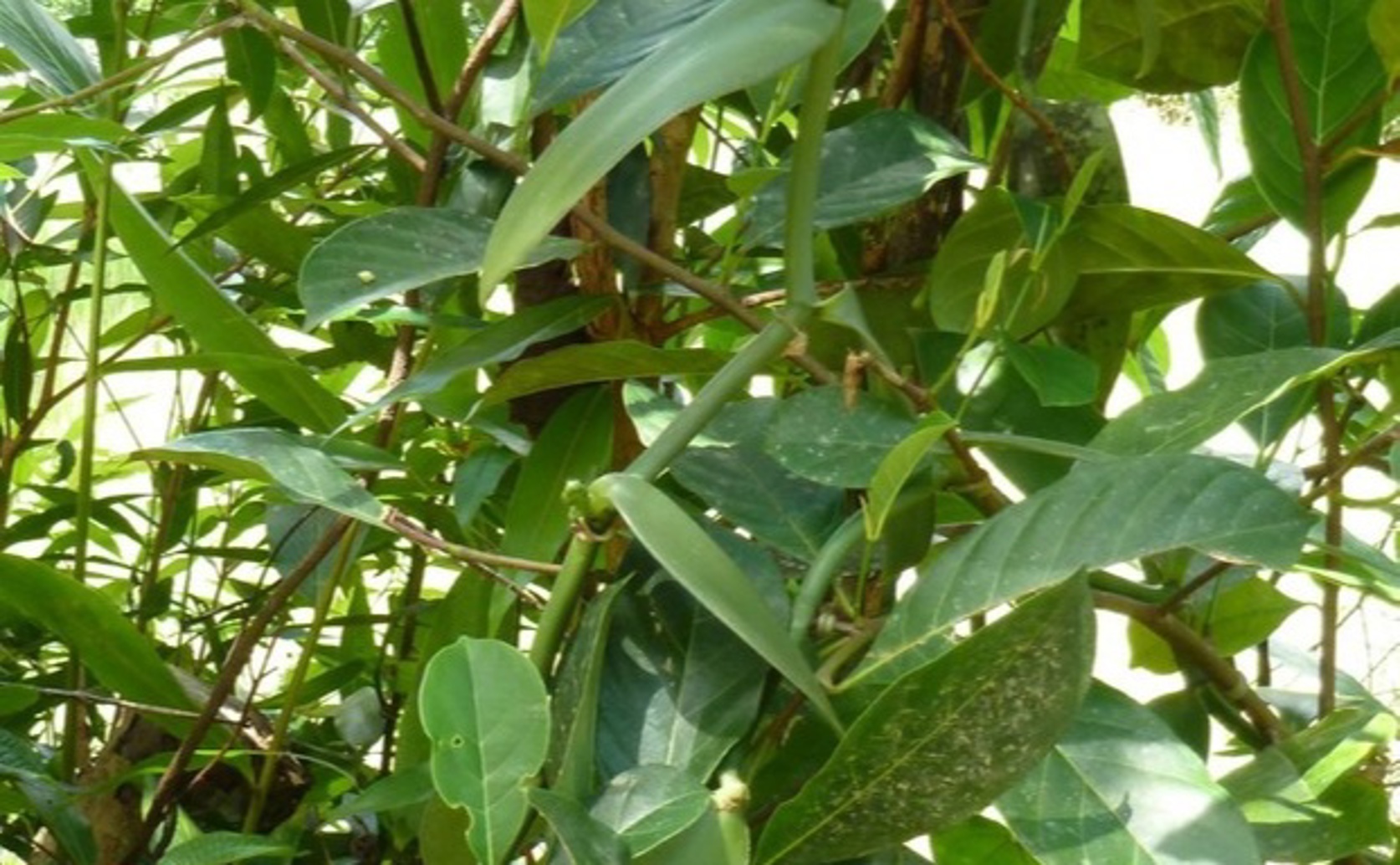
Flat-leaved Vanilla (Vanilla planifolia)

Photo adapted from: Micha Baum / CC BY SA (Source)

Key Findings

  • Researchers from Université de la Réunion studied the endophytic bacterial communities in Vanilla planifolia to explore their diversity and benefits
  • They found a diverse array of beneficial bacteria within the vanilla plants that can promote growth and enhance stress resistance
  • Specific bacteria identified could potentially improve the aromatic quality of vanilla, offering a sustainable solution to the vanilla crisis
The increasing demand for natural vanilla combined with a dwindling global supply has led to what is known as the vanilla crisis. This crisis is exacerbated by the limited genetic diversity of commercial vanilla crops, making them highly susceptible to climate change and diseases[2]. In response to this challenge, researchers from Université de la Réunion have conducted a study to explore the diversity and potential benefits of endophytic bacterial communities in Vanilla planifolia, the primary source of commercial vanilla[1]. Endophytes are bacteria that live inside plant tissues without causing harm. These microorganisms can significantly influence plant health and stress responses. Despite their potential, very few studies have delved into the endophytic bacterial communities of Vanilla planifolia and how they might promote plant growth or enhance aromatic quality. To address this gap, the researchers employed advanced techniques to profile the endophytic bacterial communities within Vanilla planifolia. They aimed to understand the diversity of these communities and identify specific bacteria that could promote plant growth or contribute to the plant's aromatic properties. This approach aligns with previous research showing that microbes, particularly those in the rhizosphere (the soil region close to plant roots), can significantly benefit plant growth[3]. The study found a diverse array of endophytic bacteria within Vanilla planifolia. Some of these bacteria are known to be plant-growth-promoting rhizobacteria (PGPR), which can enhance plant growth directly by solubilizing nutrients, stimulating root growth, and controlling plant stress[3]. The presence of such beneficial bacteria within the plant tissues suggests that Vanilla planifolia could be naturally equipped with microbial allies that help it thrive under various environmental conditions. Moreover, the researchers identified specific bacteria that could potentially improve the aromatic quality of vanilla. This finding is particularly relevant given the ongoing quest to discover new Vanilla species with desirable flavor profiles[2]. By harnessing these endophytic bacteria, it may be possible to enhance the flavor and quality of vanilla, providing a more sustainable solution to the vanilla crisis. The study's methodology involved isolating and characterizing the bacterial communities from different parts of the Vanilla planifolia plant. Advanced sequencing techniques were used to identify the bacterial species present. The researchers also conducted experiments to assess the plant-growth-promoting properties of these bacteria. For example, they tested the ability of the bacteria to solubilize nutrients, produce growth hormones, and enhance root development. Their findings are consistent with previous studies that have demonstrated the benefits of co-inoculating plants with multiple beneficial microbes at specific growth stages[4]. By applying a combination of bacteria with distinct properties, the researchers were able to enhance plant performance, leading to increased biomass and yield. This approach could be particularly valuable for vanilla cultivation, where maximizing plant health and productivity is crucial. Additionally, the study highlights the potential of using endophytic bacteria to improve plant resilience to environmental stresses. This is in line with research showing that PGPR can induce physiological and biochemical changes in plants that enhance their tolerance to stress conditions, such as drought[5]. By leveraging these microbial allies, it may be possible to develop more resilient vanilla crops that can withstand the challenges posed by climate change and disease. In summary, the research conducted by Université de la Réunion provides valuable insights into the endophytic bacterial communities of Vanilla planifolia and their potential roles in promoting plant growth and enhancing aromatic quality. By harnessing these beneficial microbes, we can develop more resilient and productive vanilla crops, offering a sustainable solution to the vanilla crisis. This study builds on previous findings about the benefits of PGPR and microbial co-inoculation, demonstrating the significant impact that endophytic bacteria can have on plant health and productivity[3][4][5].

GeneticsBiochemPlant Science

References

Main Study

1) Exploring endophytic bacteria communities of Vanilla planifolia

Published 20th June, 2024

https://doi.org/10.1186/s12866-024-03362-w


Related Studies

2) Vanilla flavor: Species from the Atlantic forest as natural alternatives.

https://doi.org/10.1016/j.foodchem.2021.131891


3) Plant-growth-promoting rhizobacteria.

https://doi.org/10.1146/annurev.micro.62.081307.162918


4) Co-inoculation of Bacillus sp. and Pseudomonas putida at different development stages acts as a biostimulant to promote growth, yield and nutrient uptake of tomato.

https://doi.org/10.1111/jam.14273


5) Comparative Physiological and Metabolic Analysis Reveals a Complex Mechanism Involved in Drought Tolerance in Chickpea (Cicer arietinum L.) Induced by PGPR and PGRs.

https://doi.org/10.1038/s41598-019-38702-8


Related Articles

An unhandled error has occurred. Reload 🗙