New Sorghum Varieties Show Resistance to Grain Mold

Jim Crocker
15th June, 2024

New Sorghum Varieties Show Resistance to Grain Mold

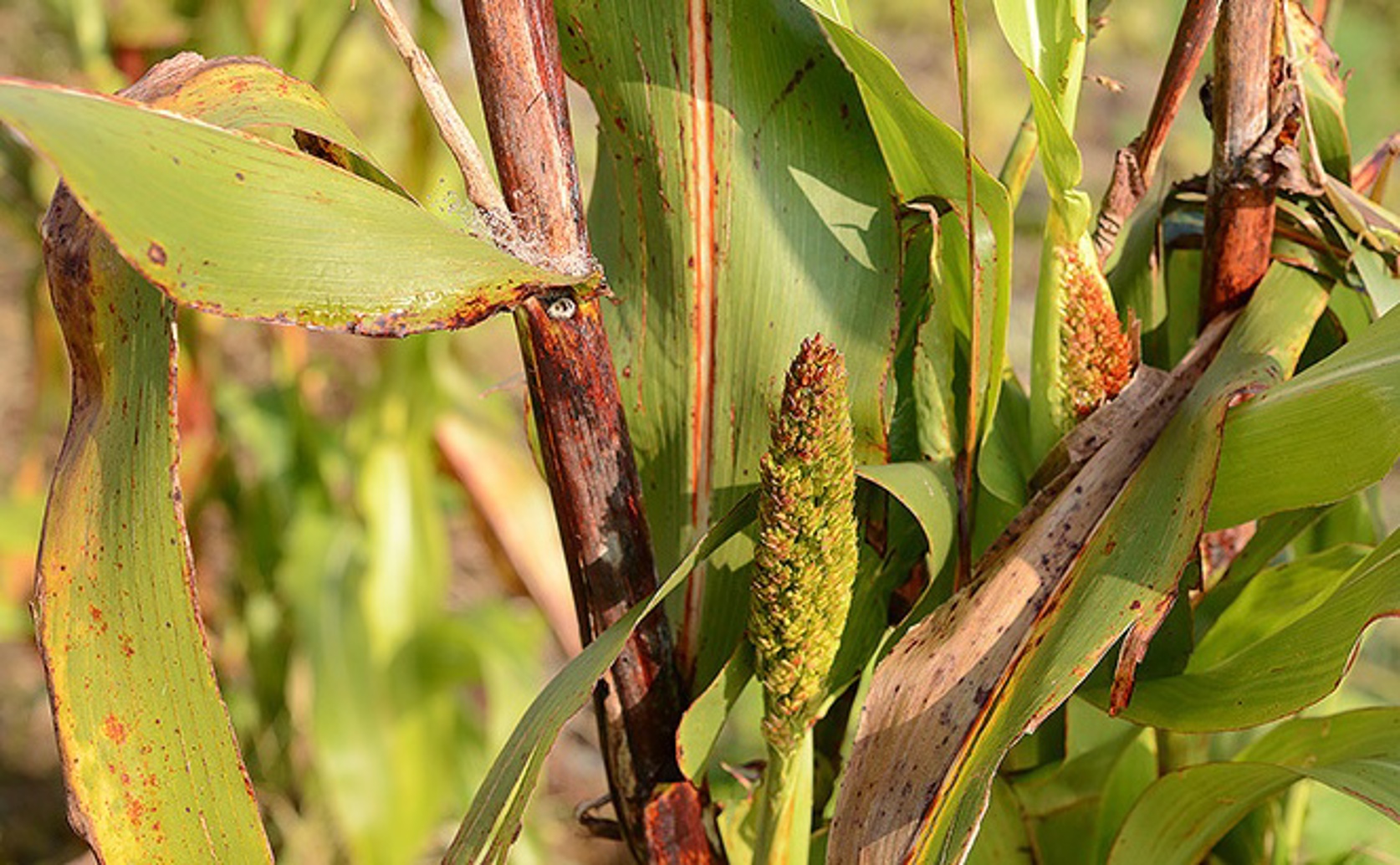
Sorghums (Sorghum bicolor)

Photo adapted from: Kim, Hyun-tae / CC BY (Source)

Key Findings

  • The USDA study in Sudan identified 39 sorghum accessions resistant to grain mold
  • Seven of these accessions showed high seedling emergence (>82%) and low seed deterioration (<2.15%)
  • Two genomic regions on chromosomes 2 and 3 were linked to seedling emergence and seed deterioration, respectively, revealing genes involved in plant defense
Grain mold is a significant disease affecting sorghum, a vital crop used for both human food and livestock feed. This disease damages the endosperm and pericarp tissue of the grain, leading to reduced quality and safety. Current sorghum breeding programs have limited sources of resistance to combat this issue, making it crucial to identify new resistant germplasm. A recent study conducted by the USDA-Agriculture Research Service, National Plant Germplasm System, assessed the Sudan core collection to identify new sources of grain mold resistance[1]. This study evaluated 246 accessions over two years, followed by an additional two-year evaluation of 46 resistant accessions and 11 breeding lines from the sorghum association panel. The results identified 39 accessions with resistance to grain mold, including seven with high seedling emergence (>82%) and low seed deterioration (<2.15%). Phylogenetic analysis showed that five accessions (PI 570382, PI 570776, PI 570330, PI 570702, and PI 570348) clustered distantly from reference sets, indicating they are new sources of resistance. Genome-wide association analysis using 147,069 SNPs identified two genomic regions on chromosomes 2 and 3 associated with seedling emergence rate and seed deterioration, respectively. Further analysis of these regions revealed two genes of interest linked to the phenylpropanoid metabolic process and phosphorylase kinase. The phenylpropanoid metabolic process is known for its role in plant defense mechanisms[2]. Phenylpropanoid compounds act as physical and chemical barriers against infections and are involved in signaling for defense gene induction. The identification of genes associated with this process in the new resistant accessions provides valuable insights into the defense responses against grain mold. This study builds on earlier research that highlighted the importance of understanding the genetic and biochemical interactions between sorghum and its pathogens[3]. Previous studies have shown that sorghum germplasm from West and Central Africa, particularly from regions with high humidity, is a valuable source of resistance genes to fungal diseases[4]. The current study's findings align with this, as the identified resistant accessions from Sudan offer new genetically diverse germplasm for breeding programs. In summary, the USDA's recent study successfully identified new sources of grain mold resistance in sorghum, providing valuable genetic resources for breeding programs. The discovery of genes associated with the phenylpropanoid metabolic process and phosphorylase kinase offers new insights into the plant's defense mechanisms, contributing to the development of more resilient sorghum cultivars.

AgricultureGeneticsPlant Science

References

Main Study

1) The NPGS Sudanese sorghum core collection encloses novel grain mold resistant germplasm

Published 14th June, 2024

https://doi.org/10.1007/s10722-024-02039-7


Related Studies

2) The phenylpropanoid pathway and plant defence-a genomics perspective.

https://doi.org/10.1046/j.1364-3703.2002.00131.x


3) The Sorghum Grain Mold Disease Complex: Pathogens, Host Responses, and the Bioactive Metabolites at Play.

https://doi.org/10.3389/fpls.2021.660171


4) Population structure of the NPGS Senegalese sorghum collection and its evaluation to identify new disease resistant genes.

https://doi.org/10.1371/journal.pone.0191877


Related Articles

An unhandled error has occurred. Reload 🗙