
Ancient crocodile fossil challenges Europe’s landmass history
Jenn Hoskins
26th January, 2026


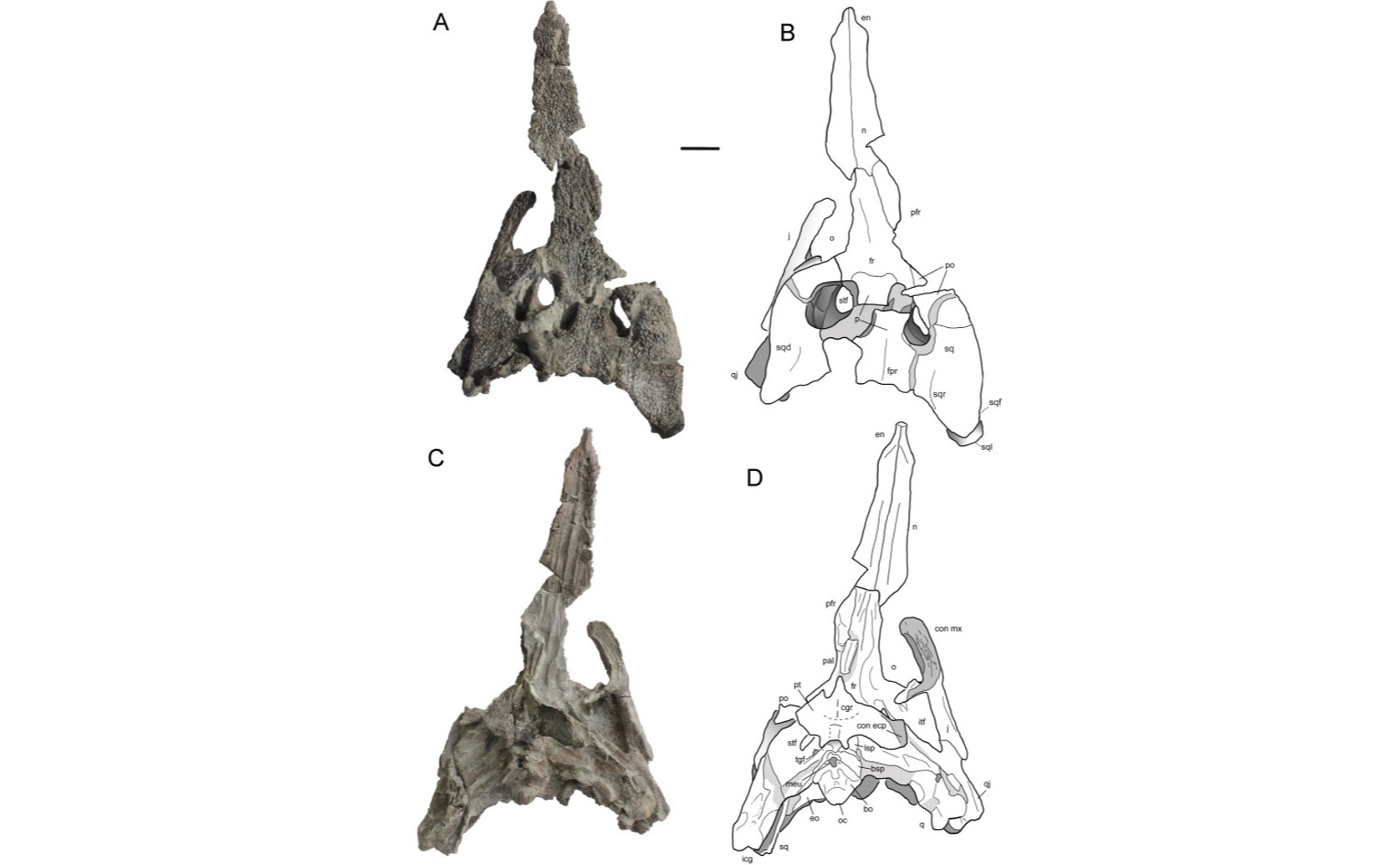
This partial skull of Doratodon carcharidens, shown in dorsal (a, b) and ventral (c, d) views, provides the critical anatomical evidence to reclassify the species as a Laurasian paralligatorid, thereby challenging the "Eurogondwana" hypothesis that was based on its supposed Gondwanan ancestry.
Key Findings
- A study in Europe challenged the idea that the continent remained connected to Africa for a long time after the supercontinent Pangaea broke apart
- Detailed analysis of a crocodyliform fossil, Doratodon carcharidens, revealed it’s more closely related to species from North America and Asia, not Africa
- Similarities between Doratodon and African species are likely due to them evolving similar features independently in similar environments, not shared ancestry
References
Main Study
1) Cretaceous crocodyliform reconciles conflicting evidence on the Mesozoic paleogeography of Europe during the Gondwana-Laurasia split
Published 22nd January, 2026
https://doi.org/10.1038/s41598-025-28504-6
Related Studies
2) First spinosaurid dinosaur from Australia and the cosmopolitanism of Cretaceous dinosaur faunas.
3) A new global palaeobiogeographical model for the late Mesozoic and early Tertiary.
4) A new small duckbilled dinosaur (Hadrosauridae: Lambeosaurinae) from Morocco and dinosaur diversity in the late Maastrichtian of North Africa.
Related Articles
 29th December, 2025 | Jim Crocker