Magnetic beads boost enzyme and microbe recycling for energy and food production

Jim Crocker
24th December, 2025

Magnetic beads boost enzyme and microbe recycling for energy and food production

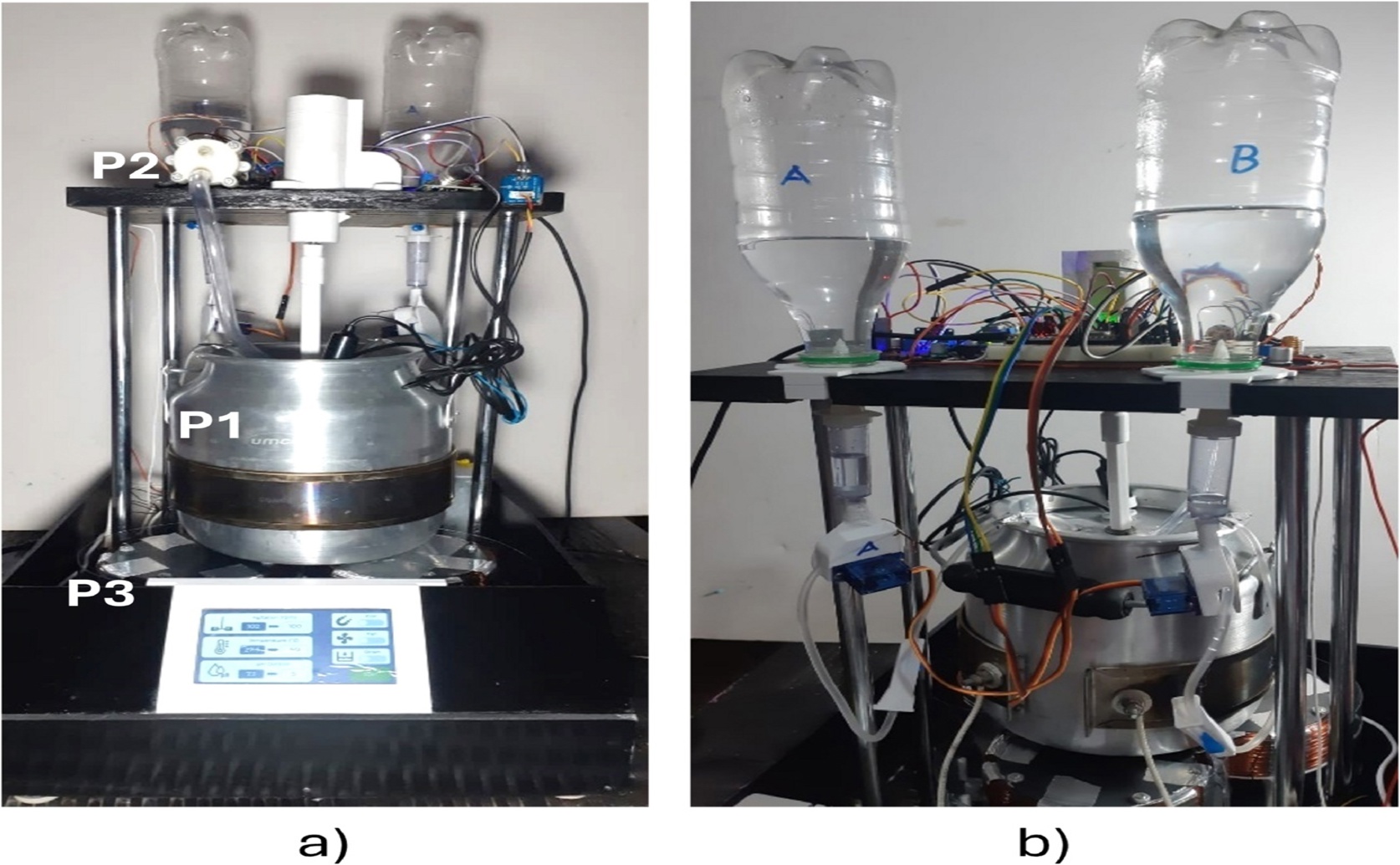
The BioMag 1 prototype, shown in front (a) and back (b) views, is an open-source bioreactor designed to automate the magnetic reuse of enzymes and microorganisms during biochemical processes.

Image adapted from: Sánchez-Orozco et al. / CC BY (Source)

Key Findings

  • Researchers developed an automated system for reusing enzymes and microorganisms in food production and biofuel processes, potentially reducing costs
  • The system uses magnetic nanoparticles to easily recover and recycle enzymes and microorganisms after each production cycle, achieving 99.5% recovery rates
  • This open-source prototype, costing approximately $1080, offers a significantly more affordable alternative to commercial bioreactors, which can cost upwards of $20,000
Biofuel and food production rely heavily on processes like hydrolysis – breaking down complex molecules with water – and fermentation, where microorganisms convert substances into useful products. These processes are often expensive, primarily due to the continuous need for fresh enzymes (biological catalysts) and microorganisms. The high cost of specialized laboratory equipment further hinders technological advancements in these industries. Researchers at ESPOL, Autonomous University of Coahuila, UNEMI, and Adani University[1] have developed an automated system designed to address these challenges by enabling the reuse of enzymes and microorganisms, a key step towards reducing production costs. The core idea revolves around immobilizing these biological components – enzymes and microorganisms – onto magnetic nanoparticles. This allows for easy recovery of these valuable resources after each production cycle using magnets, rather than discarding them. This concept isn’t entirely new; enzyme immobilization has been explored as a cost-saving measure for some time[2]. However, the automation aspect and the focus on simultaneous saccharification, detoxification, and fermentation (SSDF) processes represent a significant improvement. The system, as designed by the research team, features a reservoir with controlled inputs and outputs to manage the bioengineering process. A crucial component is the electromagnet array, designed using a mathematical model to optimize the magnetic flux behavior. This model determined the necessary magnetic density and dimensions to effectively capture the magnetic nanoparticles, and thus the attached enzymes and microorganisms, from the fluid. Simultaneously, the system incorporates controllers for temperature, pH, and mixing speed, all critical parameters for successful hydrolysis and fermentation. A user-friendly interface was developed to monitor and control these variables in real-time, while also recording data throughout the experiment. The prototype successfully demonstrated the ability to use a magnetic field to pull down ferromagnetic particles within a fluid, proving the feasibility of the enzyme and microorganism recovery process. The use of open-source technologies was central to the project’s success. Open hardware solutions are becoming increasingly popular in biology research, particularly in regions with limited funding[3]. This approach reduces dependence on expensive, imported equipment and fosters knowledge transfer, allowing laboratories to build and modify tools tailored to their specific needs. The affordability of the prototype highlights the potential of open-source technologies to democratize access to advanced bioengineering capabilities. The benefits of this system extend beyond cost reduction. Fermented foods, for example, have a long history of use and are increasingly recognized for their positive impact on human health, partly due to the bioactive compounds and microbial metabolites they contain[4]. Understanding how these foods affect the gut microbiome is a growing area of research. The ability to efficiently study fermentation processes, as enabled by this automated system, could accelerate the identification of beneficial strains and compounds. Furthermore, the system addresses a key challenge in lignocellulose hydrolysis, a process used to break down plant biomass for biofuel production. The cost of enzymes is a major limiting factor in this process[2], and the ability to recycle them efficiently is crucial for economic viability. The research team’s model demonstrated that, with current efficiencies, enzyme immobilization could reduce costs by around 60% compared to traditional methods. The study also highlighted the importance of optimizing both enzyme activity and recovery efficiency. While the current prototype achieves high recovery rates (99.5%), further improvements in these areas are needed to make the process truly economically competitive. The research team also noted that lower enzyme prices would reduce the percentage of savings from immobilization, but overall costs would still decrease significantly. The protein stability observed in chick pea β-galactosidase under varying environmental conditions[5] is also relevant, as maintaining enzyme activity during immobilization and reuse is crucial for the system’s effectiveness.

AgricultureBiotechBiochem

References

Main Study

1) BioMag 1: A magnetic approach for efficient enzyme and microorganism reuse in biochemical processes for energy and food industries

Published 22nd December, 2025

https://doi.org/10.1371/journal.pone.0338444


Related Studies

2) Of enzyme use in cost-effective high solid simultaneous saccharification and fermentation processes.

https://doi.org/10.1016/j.jbiotec.2018.01.020


3) Open hardware: From DIY trend to global transformation in access to laboratory equipment.

https://doi.org/10.1371/journal.pbio.3001931


4) Fermented Foods, Health and the Gut Microbiome.

https://doi.org/10.3390/nu14071527


5) Thermal, chemical and pH induced denaturation of a multimeric β-galactosidase reveals multiple unfolding pathways.

https://doi.org/10.1371/journal.pone.0050380


Related Articles

An unhandled error has occurred. Reload 🗙