Iron Oxide and Silver Nanoparticles Fight Bacterial Wilt Disease

Greg Howard
26th September, 2025

Iron Oxide and Silver Nanoparticles Fight Bacterial Wilt Disease

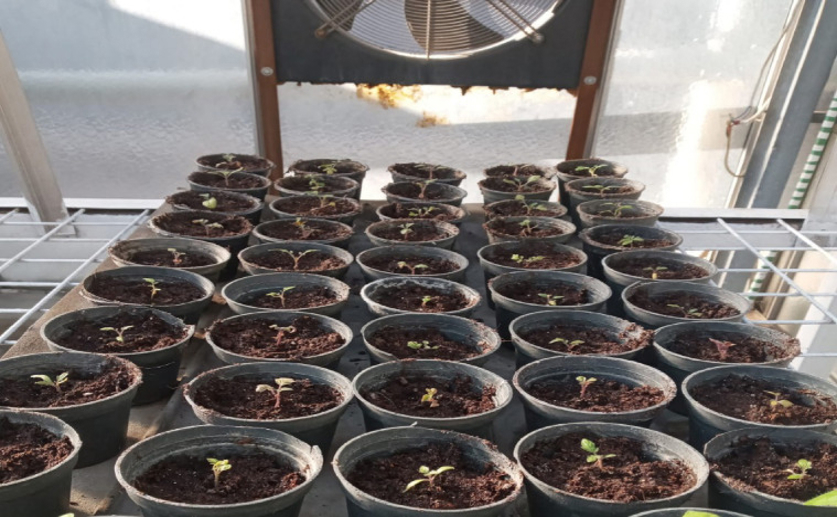
The first stage of tomato plant growth.

Image adapted from: El-Lakkany et al. / CC BY (Source)

Key Findings

  • Researchers at Cairo University developed iron oxide and silver nanoparticles as a potential alternative to traditional pesticides for controlling bacterial wilt in tomato plants
  • Both iron oxide and silver nanoparticles effectively reduced disease severity in tomato plants infected with Ralstonia solanacearum by 27% and 67% respectively, compared to untreated plants
  • Nanoparticles directly attach to bacterial cells, damaging their membranes and disrupting their function, ultimately inhibiting bacterial growth and promoting plant health
Bacterial wilt, a devastating disease affecting vegetable plants globally, poses a significant threat to food security. Caused by the bacterium Ralstonia solanacearum, the disease is notoriously infectious and spreads through the soil, making eradication difficult. Traditional methods of control, relying on bactericides and antibiotics, have led to the development of pesticide resistance and harmful effects on beneficial soil organisms. Researchers at Cairo University[1] have been investigating nanoparticles as a potential alternative – offering a safer, more environmentally friendly, and effective solution. Ralstonia solanacearum is a complex pathogen with sophisticated mechanisms for infecting plants. It invades the xylem, the plant’s vascular system responsible for water transport, and multiplies, ultimately blocking water flow and causing wilting[2]. The bacterium’s virulence – its ability to cause disease – is regulated by intricate signal transduction pathways, responding to both its own growth status and signals from the plant itself[2]. Understanding these pathways is crucial for developing effective control strategies, as they represent potential targets for intervention. The study focused on iron oxide nanoparticles (IONPs) and silver nanoparticles (AgNPs), synthesized using simple chemical methods designed to be environmentally friendly. These nanoparticles were thoroughly characterized using techniques like transmission electron microscopy (TEM) – which provides detailed images of their structure – and X-ray diffraction (XRD), which identifies their composition. The core aim was to evaluate their ability to combat R. solanacearum both in laboratory settings (in vitro) and within living tomato plants (in vivo). Testing revealed that both IONPs and AgNPs exhibited strong antibacterial properties, with effectiveness varying depending on the concentration used. When applied in a greenhouse setting to tomato plants infected with R. solanacearum, the nanoparticles significantly reduced disease severity. Plants treated with IONPs saw a 27% reduction in wilting compared to untreated infected plants, while AgNPs provided even greater protection, reducing disease severity by 67%. Untreated infected plants, for comparison, experienced 100% mortality. Furthermore, the nanoparticles promoted plant growth, increasing shoot and root length, fresh and dry weight, and chlorophyll content by two to five times compared to the infected controls. To understand how the nanoparticles were achieving this effect, researchers used TEM again, this time to examine the interaction between the nanoparticles and the bacterial cells. The images revealed that the nanoparticles were directly attaching to the surface of R. solanacearum, physically damaging the cell membranes. This disruption of the cell membrane is believed to be the primary mechanism of antibacterial action. Interestingly, these findings align with and expand upon previous research demonstrating the cytotoxic and genotoxic effects of AgNPs against Ehrlich carcinoma cells[3]. While the target organism differs (cancer cells versus bacterial cells), the underlying principle of nanoparticle-mediated cell damage remains consistent. Similarly, another study highlighted the potential of iron oxide nanoparticles, and iron-silver bimetallic nanoparticles to enhance the effectiveness of radiotherapy and reduce harm to healthy tissue[4]. This suggests a broader potential for metal-based nanoparticles in biomedical and agricultural applications. The study provides compelling evidence for the use of IONPs and AgNPs as an effective and environmentally responsible strategy for preventing and controlling bacterial wilt disease. The enhanced nutritional value of vegetable plants due to the iron content of IONPs is an added benefit. The research offers a promising alternative to conventional pesticides, addressing concerns about resistance and environmental impact.

AgricultureBiotechBiochem

References

Main Study

1) Antibacterial efficacy of iron oxide and silver nanoparticles against bacterial wilt pathogen Ralstonia solanacearum

Published 23rd September, 2025

https://doi.org/10.1038/s41598-025-19871-1


Related Studies

2) Control of Virulence and Pathogenicity Genes of Ralstonia Solanacearum by an Elaborate Sensory Network.

https://doi.org/10.1146/annurev.phyto.38.1.263


3) Antitumor activity of silver nanoparticles in Ehrlich carcinoma-bearing mice.

https://doi.org/10.1007/s00210-018-1558-5


4) Efficacy of iron-silver bimetallic nanoparticles to enhance radiotherapy.

https://doi.org/10.1007/s00210-023-02556-9


Related Articles

An unhandled error has occurred. Reload 🗙