Heavy metal pollution in dry soils poses health risks

Jenn Hoskins
12th November, 2025

Heavy metal pollution in dry soils poses health risks

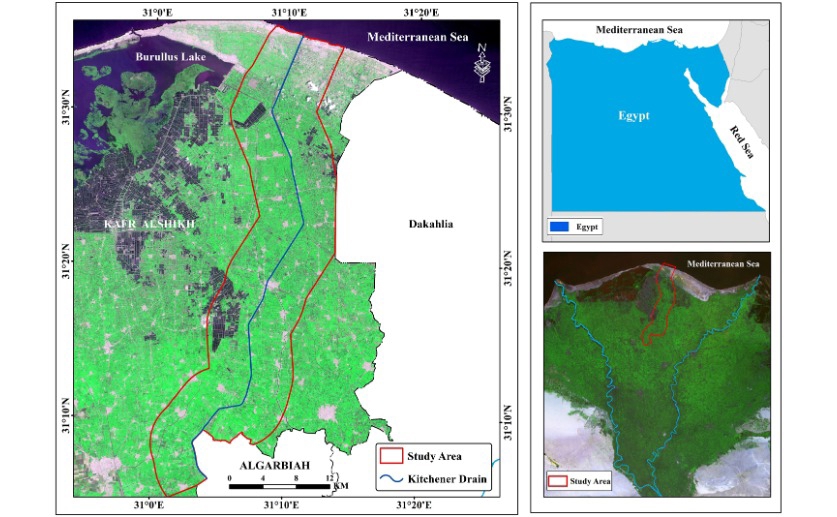
Research area location.

Image adapted from: Hendawy et al. / CC BY (Source)

Key Findings

  • This study in Egypt’s Nile Delta found soils were contaminated with heavy metals like arsenic, cadmium, and lead, largely from agricultural sources such as pesticides and fertilizers
  • While most metals posed a low non-cancer health risk, children faced a potentially high cancer risk primarily from lead exposure through soil ingestion
  • The research mapped contamination levels and identified areas of highest concern, highlighting the need for sustainable farming practices and pollution control to protect local health
Environmental contamination from heavy metals is a growing global concern, impacting both ecosystems and human health. A recent study conducted by researchers from the National Authority for Remote Sensing & Space Sciences, Ain Shams University, RUDN University, Tanta University, Ain Shams University, Ain Shams University, and Makerere University[1] investigated the extent of heavy metal pollution in the Kafr El-Sheikh Governorate, a region within the Nile Delta in Egypt, and assessed the associated health risks. The study focused on nine heavy metals – arsenic (As), cadmium (Cd), cobalt (Co), copper (Cu), iron (Fe), manganese (Mn), nickel (Ni), lead (Pb), and zinc (Zn) – analyzing soil samples collected from 27 different locations. These metals can accumulate in soil through various sources, including industrial activities, agricultural practices like fertilizer use, and even natural geological processes. The research aimed to determine the levels of these metals and evaluate the potential dangers they pose to the local population. To quantify the pollution levels, researchers employed several indices. The enrichment factor (EF), contamination factor (CF), and geoaccumulation index (Igeo) were used to determine the degree to which the soil was contaminated with each metal. These indices provide a standardized way to compare pollution levels across different locations and metals. The results indicated that the soils in the study area were indeed contaminated with heavy metals. A risk index was also calculated, revealing moderate to very high ecological risk, suggesting potential harm to the environment. The study went beyond simply identifying the presence of metals; it also sought to understand the sources of this contamination. Using statistical techniques like Pearson’s bivariate correlation, principal component analysis (PCA), and hierarchical cluster analysis, the researchers identified potential origins. The PCA results suggested that most of the metals likely originated from human activities, specifically pesticides and chemical fertilizers used in agriculture, with the exception of manganese, which appeared to come from natural sources within the earth (geogenic sources). This finding aligns with concerns raised in other studies about the contribution of agricultural practices to heavy metal accumulation in soils[2]. Assessing human health risks involved calculating both non-carcinogenic and carcinogenic (cancer-causing) risks through three main exposure pathways: ingestion (eating contaminated food or accidentally swallowing soil), inhalation (breathing in contaminated dust), and dermal contact (skin contact with contaminated soil). For both adults and children, the hazard quotient and hazard index values were generally below one for all exposure pathways, except for arsenic ingestion in children. This suggests a relatively low risk of non-cancer health effects from most metals. However, the carcinogenic risk assessment revealed a more concerning picture. The total cancer risk was highest for children, with lead (Pb) being the primary contributor, followed by arsenic (As) and nickel (Ni). This is particularly noteworthy as children are generally more vulnerable to the effects of toxins due to their developing bodies and behaviors (like hand-to-mouth activity). The findings regarding lead are particularly alarming, as it was identified as the most significant cancer risk factor in this region. This echoes concerns highlighted in previous research[3][4] regarding the health risks associated with lead exposure, particularly for children. The study[3] specifically noted that children face both non-carcinogenic and carcinogenic risks from trace metals, and the current study reinforces this finding within the context of the Nile Delta. The researchers utilized Geographic Information Systems (GIS) to map the distribution of heavy metals and associated risks, providing a visual representation of the problem and helping to identify areas of highest concern. This spatial analysis is crucial for targeted intervention strategies. The integration of GIS with statistical analyses represents a robust approach to environmental risk assessment, building upon earlier work that focused on assessing ecological and human health risks using models like the BROWSE model[2]. While the BROWSE model focused on pesticide exposure, the approach of combining exposure assessment with risk modeling is similar. The study’s findings underscore the urgent need for mitigation strategies to reduce heavy metal pollution in the Nile Delta and protect the health of the local population. This includes promoting sustainable agricultural practices, regulating industrial discharge, and implementing public health initiatives to minimize exposure.

AgricultureEnvironmentHealth

References

Main Study

1) Health risk assessment of heavy metals in arid soils of the Nile Delta, Egypt using GIS and multivariate statistical analyses

Published 10th November, 2025

https://doi.org/10.1371/journal.pone.0335394


Related Studies

2) Modelling human health risks from pesticide use in innovative legume-cereal intercropping systems in Mediterranean conditions.

https://doi.org/10.1016/j.ecoenv.2022.113590


3) Distribution and Health Risk Assessment of Trace Metals in Soils in the Golden Triangle of Southern Fujian Province, China.

https://doi.org/10.3390/ijerph16010097


4) Health risk assessment of heavy metals in agricultural soils and identification of main influencing factors in a typical industrial park in northwest China.

https://doi.org/10.1016/j.chemosphere.2020.126591


Related Articles

An unhandled error has occurred. Reload 🗙