New material shows promise for breaking down antibiotics in water

Greg Howard
13th October, 2025

New material shows promise for breaking down antibiotics in water

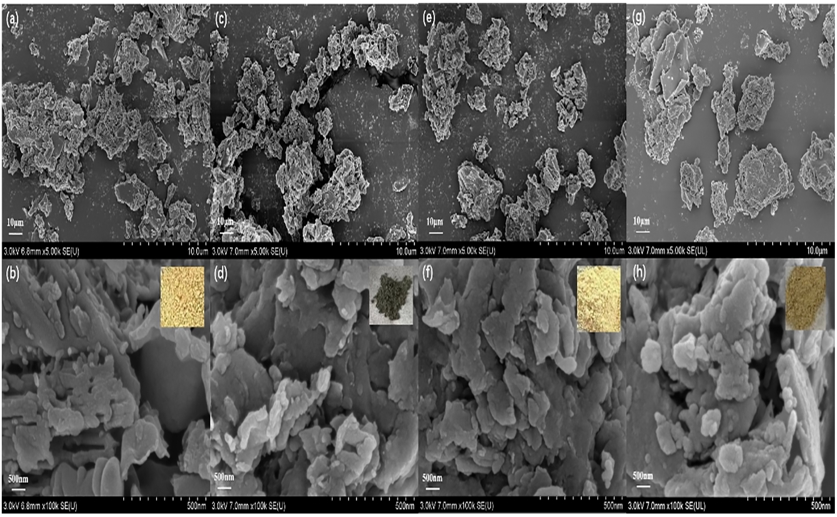
SEM images of carbon nitride composite material.

Image adapted from: Wang et al. / CC BY (Source)

Key Findings

  • Researchers developed composite materials by combining graphitic carbon nitride (g-C3N4) with metal sulfides to improve antibiotic removal from water
  • Combining g-C3N4 with cadmium sulfide (CdS) proved most effective, completely removing sulfadimethylpyrimidine (SMT) antibiotic within six hours using LED light
  • A flexible material incorporating the best composite (g-C3N4/CdS) into nanofibers also achieved 100% SMT removal, showing potential for practical water treatment applications
Antibiotics are increasingly prevalent in the environment, posing a growing concern worldwide. While crucial for human and animal health, their widespread use leads to contamination of water sources, and the need for effective removal technologies is urgent. Traditional methods of antibiotic removal can be costly or inefficient, prompting research into innovative solutions.[1] from Henan Finance University and the University of Szeged have investigated a promising approach: photocatalysis using composite materials. Photocatalysis utilizes light energy to drive chemical reactions that break down pollutants. This technology is considered “green” due to its low cost and potential for high efficiency. The research team focused on graphitic phase carbon nitride (g-C3N4) as the base material for their photocatalysts. g-C3N4 itself has photocatalytic properties, but the researchers aimed to enhance its performance by combining it with various metal sulfides – specifically molybdenum sulfide (MoS2), copper sulfide (CuS), and cadmium sulfide (CdS). To understand how these combinations work, the team meticulously characterized the physical and chemical properties of the resulting composite materials using techniques like scanning electron microscopy (SEM), transmission electron microscopy (TEM), and X-ray diffraction (XRD). These methods revealed that adding metal sulfides didn’t alter the basic structure of g-C3N4, but significantly improved its ability to absorb light, a critical factor for photocatalytic activity. Of the composites tested, g-C3N4/CdS proved most effective at removing sulfadimethylpyrimidine (SMT), a common antibiotic, from water. Under LED illumination at wavelengths of 420 nm and 365 nm, complete removal of SMT was achieved within six hours. Importantly, this material also demonstrated stable performance, meaning it maintained its effectiveness over time. The optimal pH for this process was found to be 3. This research builds on existing knowledge of antibiotic contamination in aquatic environments[2]. Previous studies have highlighted the risks of antibiotics inducing resistance in bacteria, shifting the focus from a purely human health concern to potential ecological damage. Understanding the impact of antibiotics on plankton, sensitive indicators of aquatic ecosystem health, is crucial for assessing these risks[2]. While these studies demonstrate the presence and negative effects of antibiotics, they also point to the need for effective removal strategies. To further enhance practicality, the team developed a flexible material by incorporating the best-performing photocatalyst (g-C3N4/CdS) into polyacrylonitrile nanofibers using a technique called electrostatic spinning. This flexible composite, named PAN/g-C3N4/CdS, also exhibited excellent light absorption and achieved 100% SMT removal after six hours of exposure to 365 nm light. The findings of are particularly relevant when considering the sources of antibiotic contamination. Research has identified medical facilities, livestock farming, and wastewater treatment plants as hotspots for antibiotic release[3]. The ability to efficiently degrade antibiotics like SMT, using a relatively simple and cost-effective method, offers a promising solution for addressing this widespread environmental challenge. Furthermore, the development of a flexible nanofiber material broadens the potential applications of this technology, potentially allowing for its integration into existing water treatment systems.[4] has previously shown that drinking water sources do contain some antibiotics, but that the primary source of exposure for humans is likely not through drinking water, but other routes. This study however focuses on water treatment and doesn't evaluate human exposure.

EnvironmentSustainabilityBiochem

References

Main Study

1) Preparation of g-C3N4-based photocatalytic nanofibers and antibiotic degradation performance research

Published 10th October, 2025

https://doi.org/10.1371/journal.pone.0333967


Related Studies

2) Current situation of antibiotic contamination in China and the effect on plankton.

Journal: Ying yong sheng tai xue bao = The journal of applied ecology, Issue: Vol 34, Issue 3, Mar 2023


3) Antibiotics and antibiotic resistant genes (ARGs) in groundwater: A global review on dissemination, sources, interactions, environmental and human health risks.

https://doi.org/10.1016/j.watres.2020.116455


4) Antibiotics in Drinking Water in Shanghai and Their Contribution to Antibiotic Exposure of School Children.

https://doi.org/10.1021/acs.est.5b05749


Related Articles

An unhandled error has occurred. Reload 🗙