
Viruses effectively target and disrupt bacterial biofilms in wound infections
Greg Howard
10th October, 2025


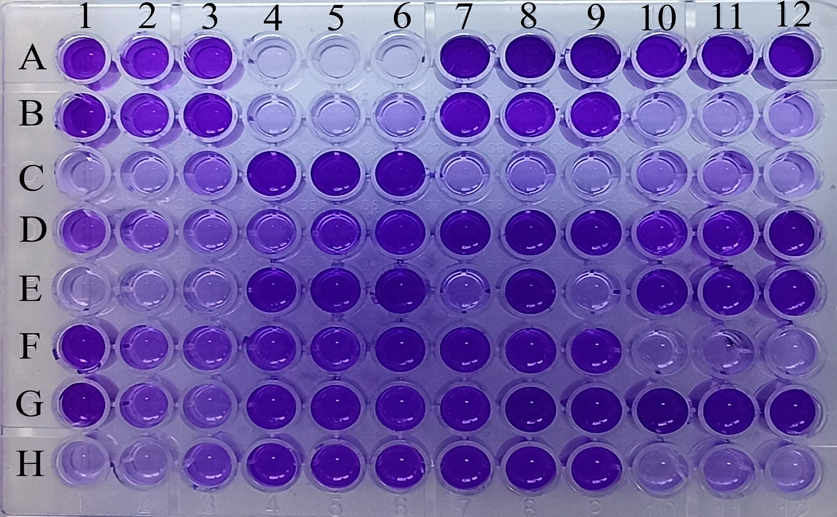
Clinical isolates, along with controls, were incubated in 96-well plates for 24 h at 37 °C, followed by crystal violet staining. The higher the biofilm formation, the greater the intensity of purple color.
Key Findings
- In Nepal, a study of wound samples revealed a high prevalence of Pseudomonas aeruginosa (21.1%) and Staphylococcus aureus (22.5%) infections
- Most P. aeruginosa isolates (89.6%) were multidrug-resistant, and a substantial portion (71.9%) formed biofilms, making treatment difficult
- Bacteriophages isolated from sewage successfully infected some P. aeruginosa strains (22.9%), including MDR and biofilm-producing ones, and significantly reduced biofilm formation by 58%
References
Main Study
1) Bacteriophage as an anti-biofilm agent against Pseudomonas aeruginosa from wound infection
Published 9th October, 2025
https://doi.org/10.1371/journal.pone.0334139
Related Studies
2) Microbial Species Isolated from Infected Wounds and Antimicrobial Resistance Analysis: Data Emerging from a Three-Years Retrospective Study.
3) Isolation and in vitro evaluation of bacteriophages against MDR-bacterial isolates from septic wound infections.
4) Pseudomonas aeruginosa clinical blood isolates display significant phenotypic variability.
Related Articles
 7th June, 2025 | Greg Howard