Gardenia fruit extract shows promise in treating advanced fatty liver disease

Jenn Hoskins
4th October, 2025

Gardenia fruit extract shows promise in treating advanced fatty liver disease

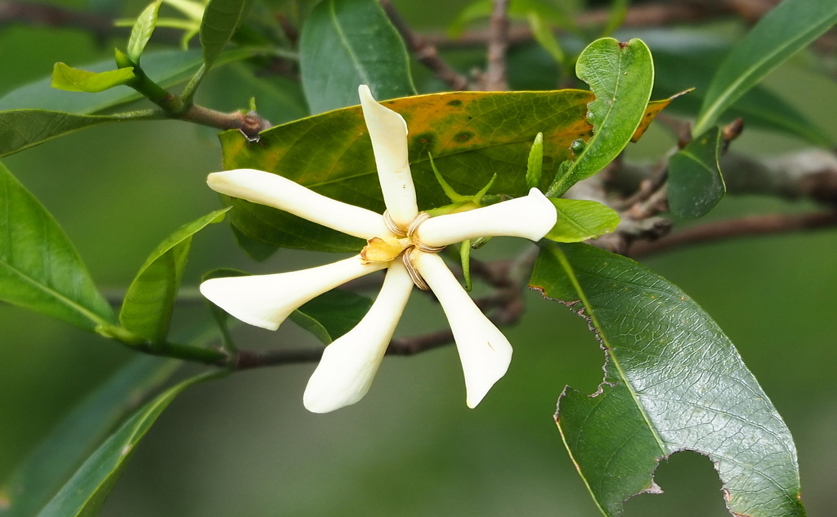
Gardenia jasminoides

Photographer: 葉子

Key Findings

  • In a rat model, Gardenia jasminoides fruit extract (GJE) reduced liver damage caused by a high-fat, high-fructose diet
  • GJE treatment lowered levels of liver enzymes ALT and AST, indicating improved liver health
  • GJE suppressed inflammation and reduced collagen deposition in the liver, suggesting protection against fibrosis
Non-alcoholic steatohepatitis (NASH) is a growing global health concern, characterised by fat buildup in the liver accompanied by inflammation and potential for serious scarring (fibrosis) leading to cirrhosis and liver failure[2]. Currently, effective treatments are limited, driving research into new therapeutic options. A recent study conducted by researchers at Chulalongkorn University and the Institute of Consun Co. for Chinese Medicine in Kidney Diseases, CHINA[1], investigated the potential of Gardenia jasminoides fruit extract (GJE) to combat NASH-related liver fibrosis in a rat model. The study focused on rats fed a high-fat, high-fructose diet – a common way to induce NASH in laboratory settings. The researchers divided the rats into four groups: a control group with a standard diet, a NASH group fed the high-fat, high-fructose diet, and two treatment groups receiving either a low or high dose of GJE alongside the NASH-inducing diet. The aim was to determine if GJE could alleviate the liver damage caused by the diet. Rats in the NASH group developed significant liver injury, evidenced by elevated levels of liver enzymes ALT and AST in their blood. These enzymes are released when liver cells are damaged, serving as indicators of liver health. Histological examination of their livers confirmed the presence of NASH, with visible signs of fat accumulation and collagen deposition – a hallmark of fibrosis. Importantly, treatment with GJE, at both low and high doses, significantly reduced these elevated liver enzyme levels. The low-dose GJE group showed a particularly noticeable improvement in the overall severity of NASH based on microscopic examination of liver tissue. Both GJE treatment groups also exhibited reduced collagen deposition, suggesting a protective effect against fibrosis. To understand how GJE was exerting these beneficial effects, the researchers examined specific molecules involved in inflammation and fibrosis. They found that GJE treatment suppressed the activity of NF-kB p65, a key protein that controls the expression of genes involved in inflammation. This suppression was accompanied by a reduction in the levels of Col1a1, a protein essential for collagen production. Further analysis revealed that GJE also downregulated the levels of several other important proteins: MMP-12, α-SMA, IL-13 and TGF-β1. MMP-12 plays a role in tissue breakdown, α-SMA is a marker of cells involved in scar formation, and both IL-13 and TGF-β1 are potent stimulators of fibrosis[3]. These findings align with existing knowledge of NASH pathogenesis.[3] highlights the central role of lipotoxicity – damage caused by excess fat – in driving oxidative stress and inflammation, ultimately leading to hepatocyte (liver cell) apoptosis and fibrosis. The study suggests that GJE interrupts this process by reducing inflammation and suppressing the fibrogenic pathways. The decrease in adiponectin-R2, P-AMPK, P-ACC and RXR-α observed in high fructose diets[4], which contribute to decreased fat oxidation, weren’t directly addressed in this study, but the overall anti-inflammatory and anti-fibrotic effects of GJE could potentially restore some of this metabolic balance. In essence, the research demonstrates that GJE effectively mitigates NASH-related liver fibrosis in a rat model by modulating key inflammatory and fibrogenic pathways. This suggests GJE holds promise as a potential therapeutic agent for NASH, although further research is needed to confirm these findings in humans.

FruitsMedicineHealth

References

Main Study

1) Gardenia jasminoides fruit extract ameliorates non-alcoholic steatohepatitis with fibrosis by modulating inflammatory and fibrogenic pathways

Published 3rd October, 2025

https://doi.org/10.1371/journal.pone.0333800


Related Studies

2) Global burden of NAFLD and NASH: trends, predictions, risk factors and prevention.

https://doi.org/10.1038/nrgastro.2017.109


3) Evolving concepts in the pathogenesis of NASH: beyond steatosis and inflammation.

https://doi.org/10.3390/ijms15058591


4) Diet high in fructose promotes liver steatosis and hepatocyte apoptosis in C57BL/6J female mice: Role of disturbed lipid homeostasis and increased oxidative stress.

https://doi.org/10.1016/j.fct.2017.02.039


Related Articles

An unhandled error has occurred. Reload 🗙