Evaluating Garcinia Fruit Extract Mouthrinse for Better Oral Hygiene

Jenn Hoskins
12th June, 2024

Evaluating Garcinia Fruit Extract Mouthrinse for Better Oral Hygiene

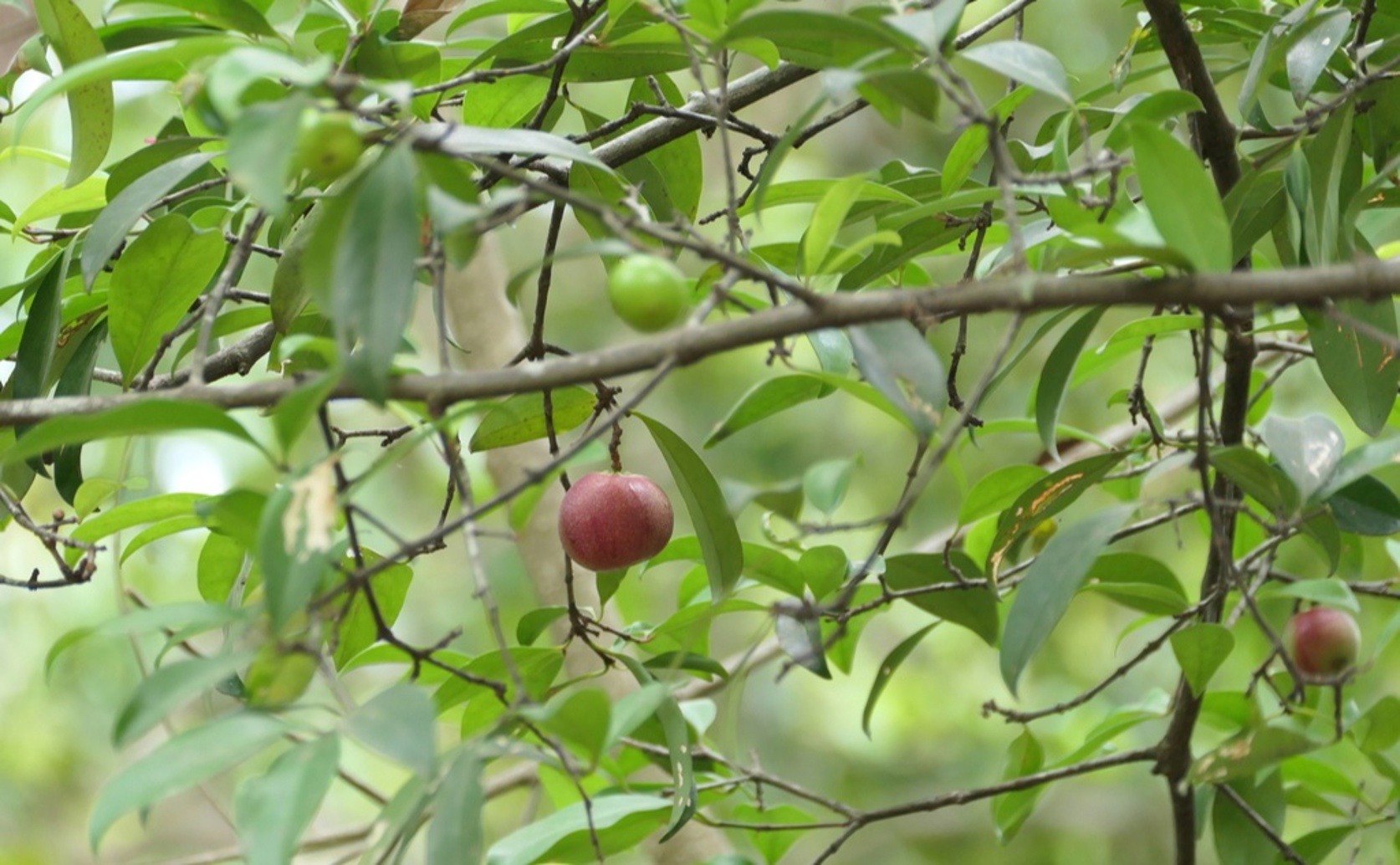
Garcinia indica

Photo adapted from: Dinesh Valke / CC BY SA (Source)

Key Findings

  • Researchers at the Manipal Academy of Higher Education found that a Garcinia indica (GI) mouthrinse is as effective as chlorhexidine (CHX) in reducing oral bacteria
  • The GI mouthrinse caused less tooth staining compared to CHX, making it a more appealing option for users
  • The GI mouthrinse showed higher cell compatibility, indicating it is safer for long-term use and better for oral tissue health
Gingivitis, a common inflammation of the gums, affects a large portion of the population. Effective oral hygiene is crucial for its prevention and treatment. Traditional mouthrinses containing chlorhexidine (CHX) have been the gold standard for plaque control due to their strong antibacterial properties. However, CHX has been associated with several side effects, including tooth staining and cytotoxicity, which can affect patient compliance[2][3][4][5]. In response to these concerns, researchers at the Manipal Academy of Higher Education conducted a study to evaluate the effectiveness of a Garcinia indica (GI) fruit extract-based mouthrinse as a potential natural alternative to CHX[1]. The study compared the GI mouthrinse to a 0.1% turmeric mouthrinse and a 0.2% CHX mouthrinse, focusing on their antimicrobial efficacy, substantivity (the ability to remain active over time), staining potential, and cytocompatibility (compatibility with cell health). The researchers used 182 tooth sections for various tests, including microbial reduction, staining, and cell viability assays. In terms of antimicrobial efficacy, both the 0.2% GI and 0.2% CHX mouthrinses showed similar results, significantly reducing colony-forming units (CFU) on biofilm-coated teeth. This indicates that the GI mouthrinse is as effective as CHX in controlling oral bacteria over a 12-hour period. These findings align with previous studies that have demonstrated the strong antibacterial properties of CHX[2][3]. Substantivity was another critical factor evaluated in this study. The ability of a mouthrinse to remain active over time is essential for sustained antimicrobial action. The results showed that the 0.2% GI mouthrinse had a comparable release rate to the 0.2% CHX mouthrinse but was significantly lower than the 0.1% turmeric mouthrinse. This suggests that while the GI mouthrinse is effective, it may require more frequent application than turmeric-based solutions to maintain its antimicrobial activity. One of the significant drawbacks of CHX is its potential to cause tooth staining, which can be a considerable deterrent to its use[4]. The study found that the 0.2% CHX mouthrinse caused more prominent discoloration changes compared to the 0.2% GI and 0.1% turmeric mouthrinses. This highlights a major advantage of the GI mouthrinse, as it offers effective antimicrobial action without the undesirable side effect of tooth staining. Cytocompatibility was assessed using a colorimetric assay to determine the non-toxic levels of the mouthrinses. The study found that the 0.2% GI mouthrinse had significantly higher cell viability compared to the 0.1% turmeric and 0.2% CHX mouthrinses. This indicates that the GI mouthrinse is less cytotoxic and more compatible with cell health, which is crucial for wound healing and overall oral tissue health. Previous research has shown that higher concentrations of CHX can inhibit cell proliferation and affect cell morphology, which can interfere with periodontal regeneration[5]. The GI mouthrinse, with its higher cytocompatibility, presents a safer alternative for long-term use. In conclusion, the study by the Manipal Academy of Higher Education supports the use of 0.2% Garcinia indica and 0.1% turmeric mouthrinses as viable natural alternatives to chemical mouthrinses like 0.2% chlorhexidine. The GI mouthrinse, in particular, offers effective antimicrobial action, comparable substantivity, minimal staining, and higher cytocompatibility. These findings suggest that natural supplements such as GI fruit extract can be integrated into oral healthcare regimens, providing effective plaque control without the adverse side effects associated with traditional chemical mouthrinses.

FruitsMedicineHealth

References

Main Study

1) Formulation and assessment of biological properties of garcinia indica fruit extract mouthrinse as an adjunct to oral hygiene regimen: an in vitro analysis.

Published 12th June, 2024

https://doi.org/10.1590/1678-7757-2023-0291


Related Studies

2) Comparing the effect of 0.06% -, 0.12% and 0.2% Chlorhexidine on plaque, bleeding and side effects in an experimental gingivitis model: a parallel group, double masked randomized clinical trial.

https://doi.org/10.1186/s12903-017-0400-7


3) Effectiveness of Different Commercial Chlorhexidine-Based Mouthwashes After Periodontal and Implant Surgery: A Systematic Review.

https://doi.org/10.1097/ID.0000000000000854


4) Chlorhexidine with an anti discoloration system after periodontal flap surgery: a cross-over, randomized, triple-blind clinical trial.

https://doi.org/10.1111/j.1600-051X.2008.01238.x


5) Clinical implications of the growth-suppressive effects of chlorhexidine at low and high concentrations on human gingival fibroblasts and changes in morphology.

https://doi.org/10.3892/ijmm.2016.2550


Related Articles

An unhandled error has occurred. Reload 🗙