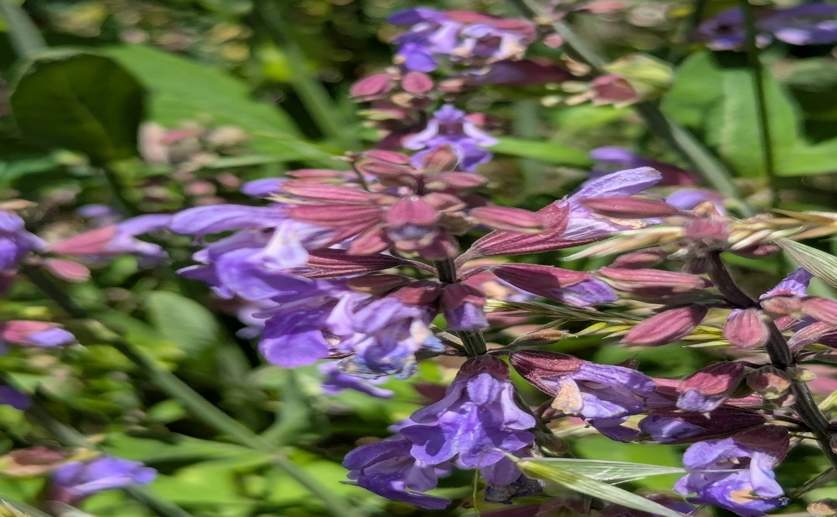
Sage extract shows promise against infection and inflammation in lab studies

Jim Crocker
3rd October, 2025

Sage extract shows promise against infection and inflammation in lab studies

A study in mouse models suggests that Sage (Salvia officinalis) extract may be effective in the treatment of Trichinellosis.

Photo adapted from: Denis Bastianelli / CC BY (Source)

Key Findings

  • In mice, sage extract and albendazole significantly reduced adult worms and larvae counts from a Trichinella spiralis infection
  • Combining sage extract with albendazole showed the greatest reduction in parasite numbers, suggesting a synergistic effect
  • Sage extract boosted the immune response by decreasing oxidative stress and reducing inflammation in infected tissues
Trichinellosis is a parasitic disease contracted through consuming undercooked meat, causing significant health problems worldwide, particularly muscle damage[2]. Current treatments are often inadequate, prompting a search for more effective therapies. Researchers at Ain Shams University recently investigated whether Sage ( Salvia officinalis ) leaf extract could serve as a viable alternative or addition to existing treatments, specifically comparing its effectiveness to the commonly used drug albendazole[1]. The study involved seventy mice divided into six groups: a control group that wasn’t infected, a non-infected group receiving the sage extract, an infected control group receiving no treatment, and three infected groups treated with either albendazole, sage extract, or a combination of both. The researchers examined the mice at two key stages of the infection – seven days post-infection (intestinal phase) and thirty-seven days (muscle phase) – to assess the impact of the treatments on parasite numbers. The results showed considerable promise. All treatment groups – albendazole, sage extract, and the combination – significantly reduced the number of adult worms and larvae in the mice compared to the untreated infected group. Albendazole alone reduced adult worm counts by 97.3% and larval counts by 74.19%, while sage extract reduced adult worms by 80% and larvae by 60%. However, the most significant reduction was observed in the combination treatment group, achieving a 91.9% reduction in adult worms and 81.4% in larvae. These findings suggest a synergistic effect, where the combined treatment is more effective than either drug alone. Beyond simply reducing parasite numbers, the study explored how the treatments affected the mice’s immune response. Infections like trichinellosis often trigger inflammation and oxidative stress, damaging tissues[2][3]. The researchers measured levels of various markers to assess these effects. Sage extract was found to decrease levels of nitric oxide (NO) and malondialdehyde (MDA), both indicators of oxidative stress, while increasing levels of superoxide dismutase (SOD), catalase (CAT), and glutathione (GSH) – all antioxidants that protect cells from damage. This suggests that sage extract possesses antioxidant properties that help mitigate the harmful effects of the infection. Furthermore, the study investigated the impact of the treatments on inflammatory gene expression. Genes like fibronectin (FN1), tumor necrosis factor-alpha (TNFα), transforming growth factor-beta (TGF-β), and interleukin-10 (IL-10) play crucial roles in the inflammatory process and tissue fibrosis (scarring) associated with trichinellosis. Both albendazole and sage extract, particularly when used together, effectively suppressed the expression of these genes, indicating a reduction in inflammation and a potential to limit tissue damage. These findings build on previous research exploring alternative treatments for trichinellosis. For example, studies have shown artemisinin to have promising anti-parasitic effects and reduce inflammation[4]. Similarly, gallic acid has demonstrated effectiveness against the encysted larval phase of Trichinella spiralis and improved biochemical markers of tissue damage[3]. The current study adds to this body of knowledge by identifying sage extract as another potentially valuable therapeutic agent. The observed antioxidant and anti-inflammatory effects of sage extract align with research demonstrating the in vitro antioxidant properties of Salvia officinalis and Mentha suaveolens essential oils[5], although this study provides in vivo evidence of these effects within the context of a parasitic infection. The research suggests that sage extract isn’t merely killing the parasites but is also actively helping the body combat the damaging effects of the infection and promoting a more effective immune response. This multifaceted approach, combined with the synergistic effect observed with albendazole, positions sage extract as a practical and effective alternative herbal drug for treating trichinellosis.

HerbsMedicineAnimal Science

References

Main Study

1) Potential antioxidant and anti-inflammatory impacts of Salvia officinalis leaves extract on mice experimentally infected with Trichinella spiralis

Published 30th September, 2025

https://doi.org/10.1007/s11259-025-10875-w


Related Studies

2) Therapeutic effects of myrrh extract and myrrh-based silver nanoparticles on Trichinella spiralis-infected mice: parasitological, histopathological, and immunological (IFN-γ, IL-10, and MMP-9) investigations.

https://doi.org/10.3389/fvets.2024.1433964


3) Ameliorative synergistic therapeutic effect of gallic acid and albendazole against Trichinella spiralis muscular phase infection and assessment of their effects on hepatic and cardiac tissues in male mice.

https://doi.org/10.1016/j.sjbs.2023.103763


4) Implication of artemisinin nematocidal activity on experimental trichinellosis: In vitro and in vivo studies.

https://doi.org/10.1016/j.parint.2016.11.012


5) Antioxidant, Antidiabetic, and Antibacterial Potentials and Chemical Composition of Salvia officinalis and Mentha suaveolens Grown Wild in Morocco.

https://doi.org/10.1155/2022/2844880


Related Articles

An unhandled error has occurred. Reload 🗙