Funding Conservation: Using the BIOFIN Tool for Native Livestock Breeds

Jim Crocker
27th August, 2025

Funding Conservation: Using the BIOFIN Tool for Native Livestock Breeds

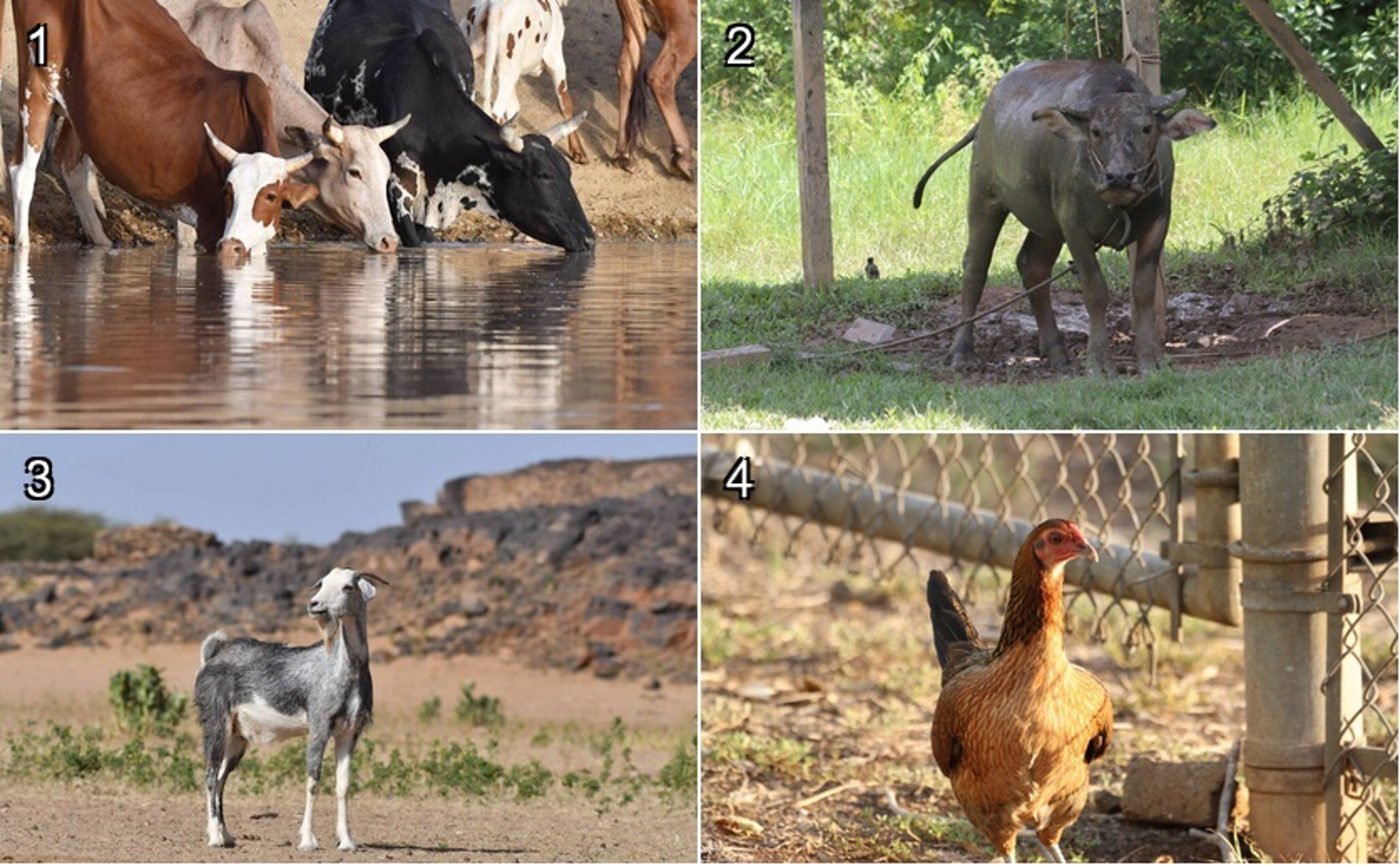
The study focuses on the conservation of native and indigenous livestock including cattle Bos taurus (1), buffaloes Bubalus bubalis (2), goats Capra hircus (3) and Kadaknath chicken Gallus gallus domesticus (4).

Composite: Natural Science News / CC BY. [Sources]

Key Findings

  • This study, conducted in Madhya Pradesh, India, assessed financial investments in livestock conservation between 2016 and 2022
  • Approximately $727.4 million was invested in livestock conservation and sustainable production during the study period, showing increased funding over time
  • While current funding meets defined biodiversity goals, prioritizing livestock production can threaten overall genetic diversity within native breeds
India has a significant commitment to biodiversity conservation, particularly concerning its livestock resources, aligning with international goals like the Aichi Biodiversity Targets (ABTs) and the United Nations’ sustainable development goals (SDGs). Livestock isn’t just about food production; it plays a vital role in maintaining healthy ecosystems and supporting the economic stability of rural communities, especially indigenous groups[1]. However, factors like increasing urbanization, changes in land use, and a preference for high-yield breeds are putting this diversity at risk. A recent study by researchers at Amity University, in collaboration with the Madhya Pradesh Biodiversity Board, University of Delhi, Auburn University and Indira Gandhi National Tribal University, investigated how effectively financial resources are being allocated to protect this livestock diversity within the state of Madhya Pradesh, India. The study focused on financial mechanisms used by the state’s Animal Husbandry Department, employing a framework called the Biodiversity Finance Initiative (BIOFIN). BIOFIN categorizes funding into five areas: conservation efforts, sustainable use of resources, education and awareness programs, policy development, and ensuring fair access to benefits derived from biodiversity. The researchers aimed to determine if the funding available across these categories was sufficient to meet the state’s biodiversity targets, as outlined in the Madhya Pradesh Biodiversity Strategy and Action Plan (2018–30). A total of 43 government schemes were identified and analyzed to see where the investment was being directed. The analysis revealed that between 2016 and 2022, approximately INR 5,159.88 crore (roughly US $727.4 million) was invested in livestock conservation and sustainable production within Madhya Pradesh. The BIOFIN methodology proved useful in creating a structured approach to financial planning for the livestock sector, demonstrating that the sector is currently meeting its financial needs as defined by the state’s biodiversity strategy. This includes investments in both conserving livestock and promoting its sustainable use, along with effective programs to raise awareness. However, the study also highlighted a continuing challenge: the drive to increase production of native livestock breeds. While seemingly positive, this focus can inadvertently undermine broader biodiversity conservation efforts. This is because prioritizing specific breeds, even native ones, can lead to a reduction in the overall genetic diversity within the livestock population. The research builds on earlier findings that demonstrate the ongoing sixth mass extinction is driven by the loss of populations, ultimately leading to species extinction[2]. This study specifically looks at a sector contributing to this, and the financial mechanisms used to combat it. The importance of protecting diverse populations is further underscored by research showing that species on the brink of extinction often exist in areas with high human impact, suggesting wider regional biodiversity collapses[2]. The study in Madhya Pradesh, by systematically mapping financial investments, provides a critical step towards addressing this issue. Furthermore, it aligns with the growing call for integrating a more ‘ecocentric’ perspective into Environmental, Social, and Governance (ESG) frameworks, recognizing the intrinsic value of all species, not just those with economic importance[3]. The research in Madhya Pradesh demonstrates a practical application of this concept, moving beyond traditional anthropocentric (human-centered) ESG metrics by focusing on the conservation of all livestock varieties. The study also touches upon the broader context of the Anthropocene, a period characterized by both climate change and biodiversity loss[4]. While climate change often receives more attention, the researchers acknowledge the complexity of the biodiversity crisis and the need for targeted conservation efforts. The livestock sector, as highlighted in the study[5], is itself affected by factors like competition for resources and the need for sustainable practices, making financial planning for biodiversity conservation even more crucial.

AgricultureSustainabilityAnimal Science

References

Main Study

1) Financing sustainability: Applying the BIOFIN framework to government investments in conserving native and indigenous livestock breeds in central India

Published 25th August, 2025

https://doi.org/10.1371/journal.pone.0330728


Related Studies

2) Vertebrates on the brink as indicators of biological annihilation and the sixth mass extinction.

https://doi.org/10.1073/pnas.1922686117


3) The inclusion of biodiversity into Environmental, Social, and Governance (ESG) framework: A strategic integration of ecocentric extinction accounting.

https://doi.org/10.1016/j.jenvman.2023.119808


4) Safeguarding our future by protecting biodiversity.

https://doi.org/10.1016/j.pld.2020.04.002


5) Livestock production: recent trends, future prospects.

https://doi.org/10.1098/rstb.2010.0134


Related Articles

An unhandled error has occurred. Reload 🗙