
A Host's Sea Floor Germs and Unique Gut Bacteria
Greg Howard
13th August, 2025


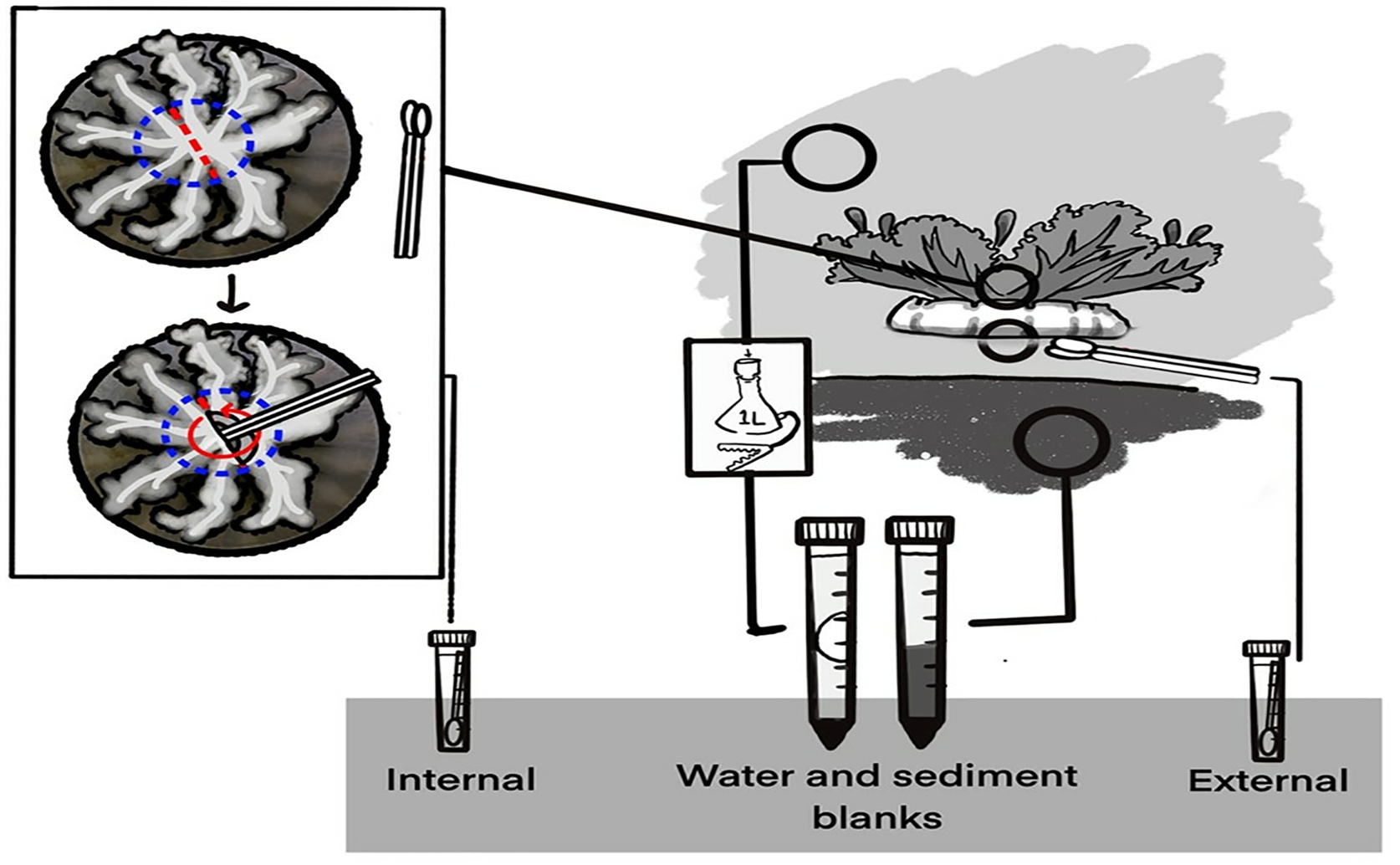
This sampling design separated the gastrovascular cavity and bell of the Upside-Down Jellyfish (Cassiopea xamachana) to demonstrate that the internal microbiome is dominated by Vibrio, Endozoicomonas, and Mycoplasma, whereas the external bell community mirrors the surrounding benthos.
Key Findings
- Research on Upside-Down Jellyfish in the Florida Keys revealed their internal bacterial communities are highly specific and low in diversity, dominated by just three types
- In contrast, their outer surface bacteria were diverse and largely resembled the surrounding environment, highlighting distinct host control versus environmental influence
References
Main Study
1) Florida Keys Cassiopea host benthos-like external microbiomes and a gut dominated by Vibrio, Endozoicomonas and Mycoplasma
Published 12th August, 2025
https://doi.org/10.1371/journal.pone.0330180
Related Studies
2) Host-microbe interactions in octocoral holobionts - recent advances and perspectives.
3) Worldwide exploration of the microbiome harbored by the cnidarian model, Exaiptasia pallida (Agassiz in Verrill, 1864) indicates a lack of bacterial association specificity at a lower taxonomic rank.
4) Microbial Community Shifts Associated With the Ongoing Stony Coral Tissue Loss Disease Outbreak on the Florida Reef Tract.
5) Microbiota mediated plasticity promotes thermal adaptation in the sea anemone Nematostella vectensis.
Related Articles
 15th July, 2025 | Jenn Hoskins