Desert Teak Under Threat: AI Predicts Climate Change's Impact On A Key Tree

Jim Crocker
11th July, 2025

Desert Teak Under Threat: AI Predicts Climate Change's Impact On A Key Tree

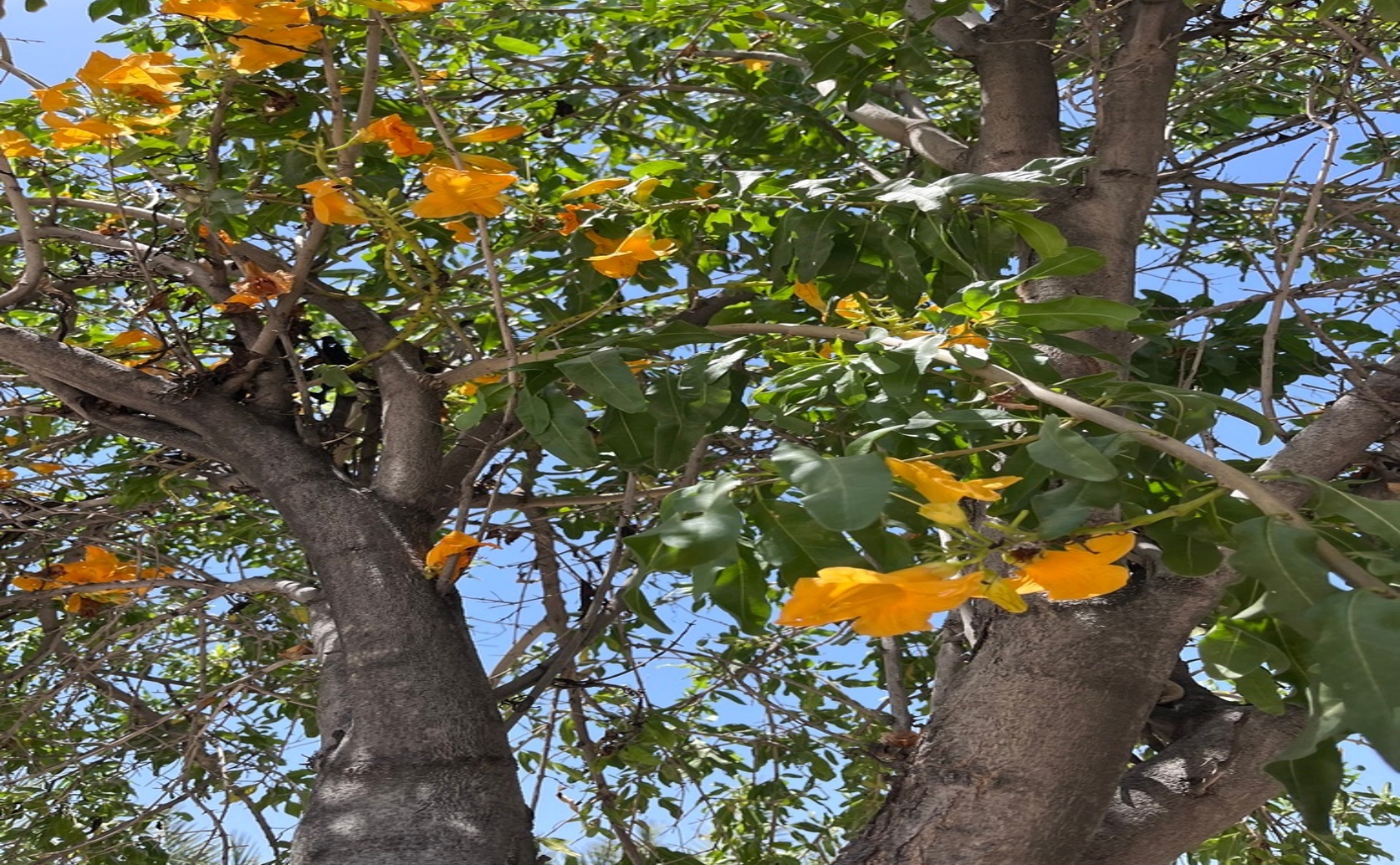
Desert teak (Tecomella undulata)

Photo adapted from: Arabella Willing / CC BY (Source)

Key Findings

  • A study in Iran found that Desert teak, a valuable plant, currently thrives in southern regions, with its distribution primarily shaped by seasonal temperature changes
  • Future climate change scenarios predict a drastic decline in suitable habitats for Desert teak across Iran, with high-suitability areas potentially shrinking by up to 98% by 2090
The accelerating pace of climate change is profoundly reshaping the natural world, leading to significant shifts in where species can survive and thrive. This phenomenon, known as species redistribution, is not merely an ecological curiosity; it has far-reaching consequences for essential ecosystem functions, human well-being, and even the dynamics of climate change itself[2]. For instance, changes in species distribution can alter the production of natural resources vital for food security, influence patterns of disease transmission, and impact processes like carbon sequestration. Despite these critical implications, consideration of biodiversity redistribution is often lacking in global mitigation and adaptation strategies, including major international goals[2]. Many studies have highlighted that species can respond to these climatic challenges by shifting their suitable habitats across space, among other adaptations, with models consistently pointing to alarming consequences for biodiversity, potentially leading to extinction rates that could qualify as the Earth's sixth mass extinction event[3]. Against this backdrop, recent research conducted by scientists from Shiraz University, Valencia University, and Uyo University has focused on Tecomella undulata, commonly known as Desert teak[1]. This species is highly valued for its economic and medicinal properties, yet it faces significant threats from the ongoing impacts of climate change. The study aimed to understand its current distribution and, critically, to predict how its suitable habitats might change in the future, providing essential information for its conservation. To achieve this, the researchers employed a sophisticated computer modeling technique called the Maximum Entropy model, or MaxEnt. This model is a widely used tool in ecology for predicting species distributions based on their known locations and environmental conditions. For Tecomella undulata, the model was built using 44 specific locations where the species has been observed, combined with various environmental data. This environmental data included bioclimatic factors, which are variables derived from temperature and precipitation patterns (such as annual rainfall or average temperature of the warmest quarter), and a Digital Elevation Model (DEM), which provides information about the terrain's height and slope. The model's predictive power was notably strong, indicated by an Area Under the Curve (AUC) value of approximately 0.91 and a True Skill Statistic (TSS) value of 0.79. These metrics are standard ways to assess the accuracy of species distribution models; values closer to 1 indicate excellent predictive performance, meaning the model is very good at distinguishing between areas where the species is present and where it is absent. The analysis revealed that temperature seasonality was the most critical environmental factor influencing the distribution of Tecomella undulata, accounting for nearly 36% of the model's predictions. Temperature seasonality describes the variation in temperature over the course of a year. Other important factors included the mean temperature of the wettest quarter and precipitation seasonality, which measures the variation in rainfall throughout the year. The study's habitat suitability maps showed that Tecomella undulata currently thrives predominantly in the southern regions of Iran, with the Fars and Bushehr provinces being particularly conducive to its growth. Looking ahead, the study utilized future climate-change scenarios known as Shared Socioeconomic Pathways (SSPs). These pathways describe different possible futures based on varying levels of greenhouse gas emissions and societal development. Specifically, the researchers examined SSP245 (a medium-emissions scenario) and SSP585 (a high-emissions scenario) for several future time points: 2030, 2050, 2070, and 2090. The projections painted a concerning picture: a significant decline in suitable habitats for Tecomella undulata. Under these future climate conditions, high-suitability areas are projected to decrease dramatically, potentially by up to 98%, while areas completely unsuitable for the species are predicted to expand. This application of the MaxEnt model is consistent with other recent research focused on valuable tree species. For example, a similar study on Castanea henryi, an important tree species in China valued for its edible nuts and timber, also used the MaxEnt model to predict its distribution under current and future climate scenarios[4]. That research similarly identified temperature as a critical determinant of distribution patterns, with winter low temperatures imposing effective constraints on its spread, and projected shifts in suitable habitats, including northward expansion and southern edge contraction. Both studies, and[4], underscore how climate variables, particularly temperature, are key drivers of species distribution and how modeling tools can precisely map these changes. The findings for Tecomella undulata reinforce the broader scientific consensus that climate change is forcing species to shift their geographical ranges[3]. The predicted contraction of suitable habitats for Tecomella undulata provides a tangible example of the "alarming consequences for biodiversity" that many global models indicate[3]. This study, like the one on Castanea henryi[4], moves beyond general predictions to offer specific, actionable insights for conservation. It highlights the urgent need for tailored conservation measures to mitigate the severe impacts of climate change on this valuable species, directly addressing the call for integrated mitigation and adaptation strategies that consider species redistribution[2].

EnvironmentSustainabilityPlant Science

References

Main Study

1) Tecomella undulata under threat: The impact of climate change on the distribution of a valuable tree species using a machine learning model

Published 9th July, 2025

https://doi.org/10.1371/journal.pone.0326609


Related Studies

2) Biodiversity redistribution under climate change: Impacts on ecosystems and human well-being.

https://doi.org/10.1126/science.aai9214


3) Impacts of climate change on the future of biodiversity.

https://doi.org/10.1111/j.1461-0248.2011.01736.x


4) Effects of climate-change scenarios on the distribution patterns of Castanea henryi.

https://doi.org/10.1002/ece3.9597


Related Articles

An unhandled error has occurred. Reload 🗙