
Factors Influencing Plant Choices and Traditional Knowledge in Tujia Homegardens
Jim Crocker
4th December, 2024


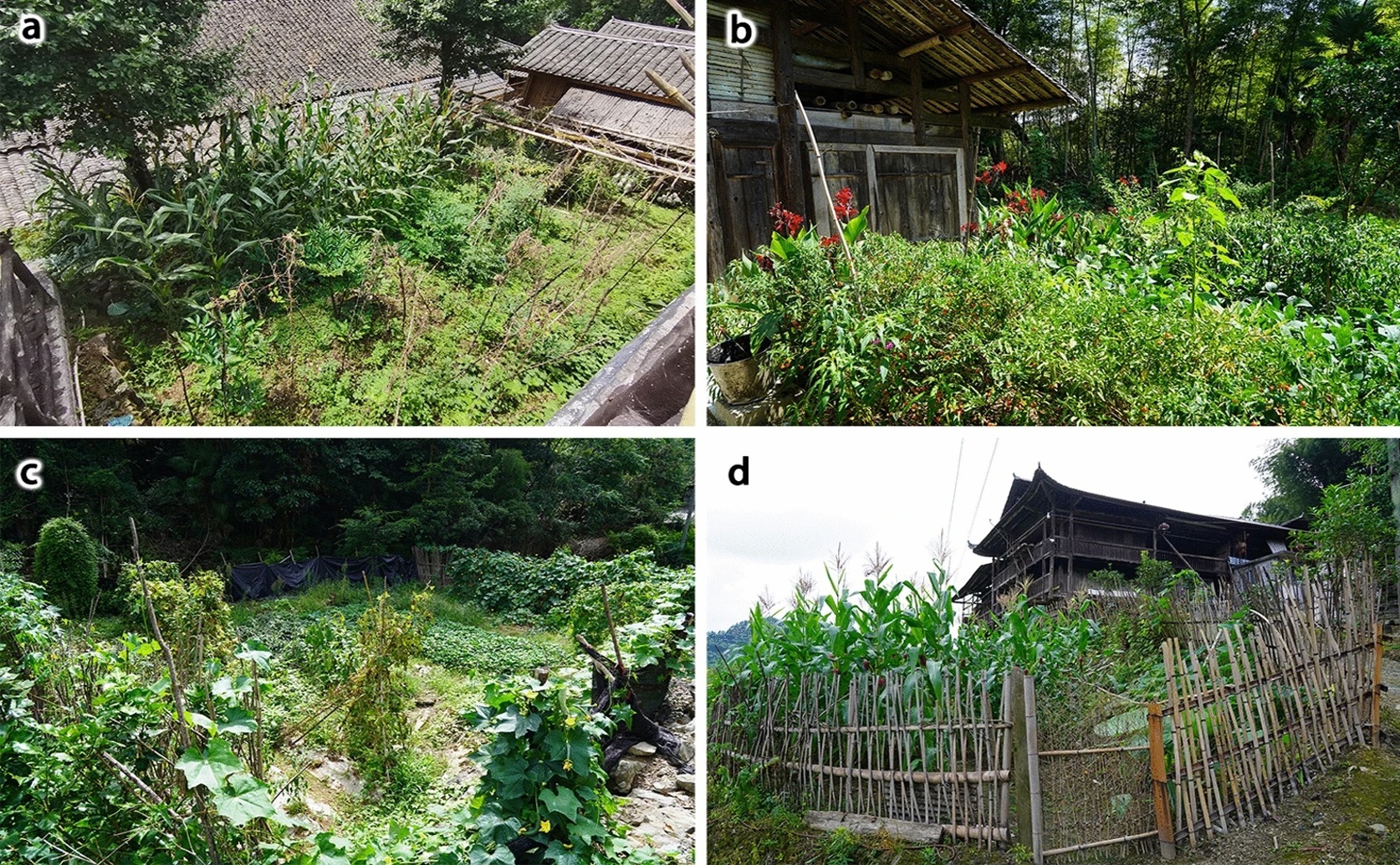
The homegardens of the Laifeng Tujia ethnic communities, as depicted in several villages (a-d), are diverse, small-scale agricultural ecosystems essential for providing food, medicine, and ornamental plants that sustain local livelihoods and preserve traditional knowledge.
Key Findings
- In Laifeng County, Hubei Province, researchers documented 414 species of homegarden plants from 114 families
- These plants serve multiple functions, including ornamental, medicinal, edible, traded, timber, forage, and other uses
- Traditional knowledge and homegarden area significantly impact plant composition and diversity, with the average age of household residents also playing a role
EnvironmentSustainabilityPlant Science
References
Main Study
1) Ethnobotanical study on factors influencing plant composition and traditional knowledge in homegardens of Laifeng Tujia ethnic communities, the hinterland of the Wuling mountain area, central China.
Published 2nd December, 2024
https://doi.org/10.1186/s13002-024-00742-4
Related Studies
2) Changes in homegardens in relocation villages, a case study in the Baiku Yao area in Southern China.
3) Agro-ecosystem and socio-economic role of homegarden agroforestry in Jabithenan District, North-Western Ethiopia: implication for climate change adaptation.
4) An ethnobotanical survey of medicinal plants in the Eastern Himalayan zone of Arunachal Pradesh, India.
Related Articles
 10th February, 2024 | David Palenski