Stingless Bee Propolis Boosts Longevity and Fights Alzheimer’s Effects

Jenn Hoskins
5th June, 2025

Stingless Bee Propolis Boosts Longevity and Fights Alzheimer’s Effects

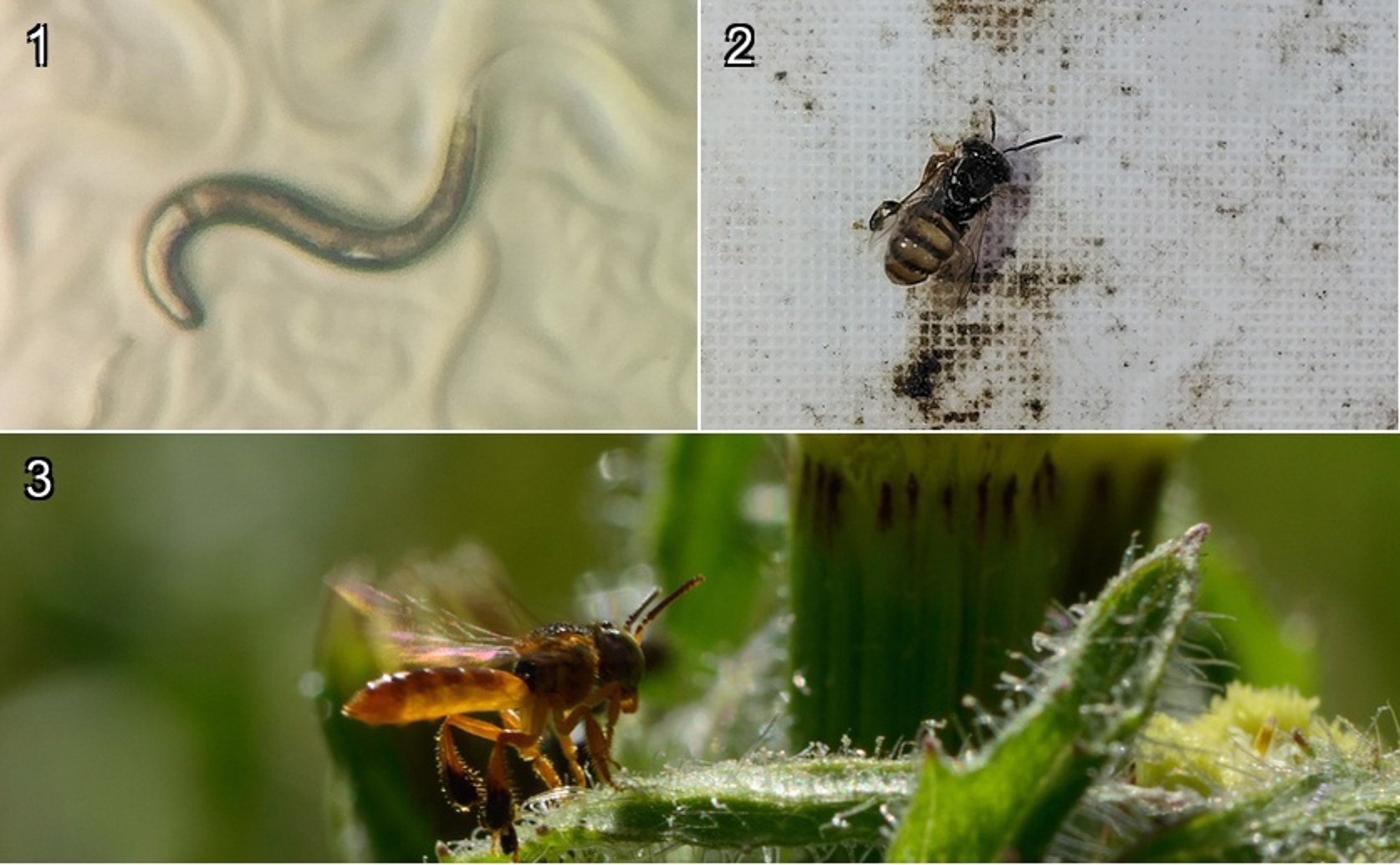
Results indicate that the nematode Caenorhabditis elegans (1), exhibits increased longevity and significant resistance to Alzheimer’s-associated paralysis when treated with antioxidant-rich propolis extracts produced by stingless bees Plebeia catamarcensis (2) and Tetragonisca fiebrigi (3).

Composite: Natural Science News / CC BY. [Sources]

Key Findings

  • In Dourados, Brazil, researchers discovered that propolis from stingless bees acts as a natural antioxidant by neutralizing harmful free radicals linked to Alzheimer’s disease
  • Laboratory tests showed these propolis extracts protect proteins and DNA from oxidative damage, helping cells withstand stress
  • In a nematode Alzheimer’s model, the extracts extended lifespan and reduced paralysis, suggesting potential benefits for neurodegenerative treatments
In a recent study conducted by researchers at the Federal University of Grande Dourados, the State University of Mato Grosso do Sul, and the University of the Pacific[1], scientists explored the potential of propolis extracts from stingless bees as a treatment strategy against Alzheimer’s disease. Alzheimer’s disease is a progressive neurodegenerative condition linked with the buildup of abnormal proteins in the brain, particularly amyloid-beta peptides, and is closely associated with oxidative stress. Oxidative stress occurs when there is an imbalance between free radicals—unstable molecules that can damage cells—and the body’s antioxidant defenses. Previous studies have shown that this imbalance contributes significantly to neuronal damage in Alzheimer’s and other neurodegenerative conditions[2][3]. The study focused on characterizing the chemical makeup and antioxidant activity of ethanolic extracts of propolis produced by two stingless bees, Plebeia catamarcensis and Tetragonisca fiebrigi. Propolis is a resinous substance collected by bees from plants, known for its natural antioxidant properties. The researchers used sophisticated techniques such as gas chromatography–mass spectrometry (GC-MS) and high-performance liquid chromatography (HPLC) to identify the main chemical constituents in these extracts. The analysis revealed the presence of phenolic compounds and terpenes, substances known for their ability to neutralize free radicals and protect biological molecules from damage. In laboratory experiments performed in vitro, the propolis extracts were tested for their capacity to scavenge free radicals using the DPPH• assay. This method involves a stable free radical, DPPH•, which changes color when it accepts an electron from an antioxidant. The study demonstrated that the extracts were effective in reducing these free radicals. Furthermore, the extracts showed protective effects against oxidative damage to proteins and DNA. These findings support earlier work which has established the role of antioxidants in moderating oxidative stress, a key factor in Alzheimer's disease pathology[2][3]. To further explore the potential therapeutic benefits, the research team employed the nematode Caenorhabditis elegans, a widely-used model organism in neurodegeneration research[4]. Because of its well-mapped nervous system and short lifespan, C. elegans is an ideal organism to study age-related neurodegenerative processes and the impacts of oxidative stress. In this study, mutants of C. elegans that exhibit Alzheimer's-like symptoms, including the accumulation of β-amyloid peptides and induced paralysis, were used to assess the effects of the propolis extracts. A series of in vivo tests revealed that treatment with the extracts did not cause reproductive or locomotor toxicity. Instead, the propolis extracts exhibited significant antioxidant effects, as observed by increased survival when the nematodes were subjected to an oxidative stress inducer, Juglone. Juglone is a compound known to generate high levels of reactive oxygen species (ROS) in cells. By boosting the nematodes’ resistance to Juglone, the propolis extracts showcased their potential to enhance the organism’s ability to combat oxidative stress. A key finding of the study was that both propolis extracts extended the lifespan of the nematodes and reduced the signs of paralysis that are typically induced by amyloid-beta peptide accumulation. In Alzheimer’s disease, the buildup of these peptides in the brain is linked to neuronal damage and the progression of cognitive decline[2][3]. The reduction in paralysis symptoms observed in the mutant C. elegans model suggests that the antioxidant properties of the propolis extracts might interfere with the pathological processes triggered by β-amyloid deposition. This aligns with earlier observations that antioxidants can mitigate the oxidative damage associated with the progression of Alzheimer’s-related pathology[2]. The study highlights how natural products such as propolis may offer a novel route for developing therapies aimed at managing oxidative stress in Alzheimer’s disease. By employing both in vitro assays and an in vivo nematode model, the research bridges previous findings regarding the impact of oxidative stress on neurodegeneration[2][3][5] and advances our understanding of potential therapeutic mechanisms. The use of C. elegans in this research adds value by providing a simple yet powerful tool to screen potential treatments, build on our knowledge of cellular stress responses, and potentially expedite the translation of these findings into mammalian models[4]. This approach of combining chemical analyses with biological testing in established disease models underlines the importance of integrating diverse methodologies in biomedical research. The promising results obtained with propolis extracts pave the way for more detailed investigations into their efficacy and safety in higher organisms and, ultimately, in human clinical trials.

MedicineHealth

References

Main Study

1) Plebeia catamarcensis and Tetragonisca fiebrigi (Hymenoptera, Apidae) propolis promotes longevity and anti-Alzheimer effects in Caenorhabditis elegans

Published 3rd June, 2025

https://doi.org/10.1371/journal.pone.0321487


Related Studies

2) Oxidative stress and the amyloid beta peptide in Alzheimer's disease.

https://doi.org/10.1016/j.redox.2017.10.014


3) Role of oxidative stress in Alzheimer's disease.

Journal: Biomedical reports, Issue: Vol 4, Issue 5, May 2016


4) Modeling neurodegeneration in Caenorhabditiselegans.

https://doi.org/10.1242/dmm.046110


5) Oxidative stress: A target to treat Alzheimer's disease and stroke.

https://doi.org/10.1016/j.neuint.2023.105509


Related Articles

An unhandled error has occurred. Reload 🗙