Nanoparticle Therapy With Black Seed Compound Reduces Parasite Damage

Jenn Hoskins
1st June, 2025

Nanoparticle Therapy With Black Seed Compound Reduces Parasite Damage

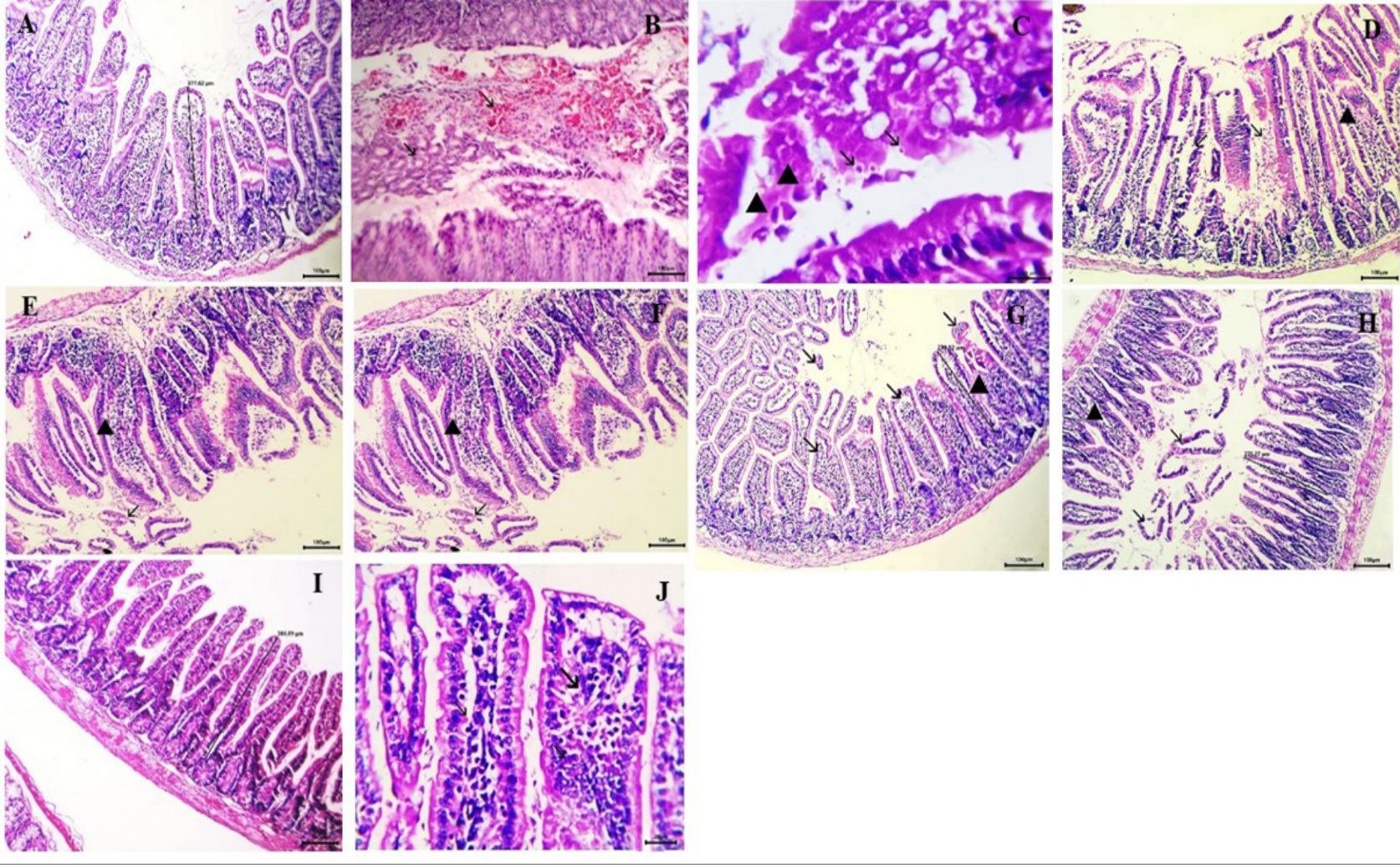
Histopathological examination revealed that Thymoquinone-loaded chitosan nanoparticles (h, i) most effectively restored intestinal mucosal architecture and induced re-epithelialization following Cryptosporidium parvum infection, outperforming the partial improvements seen with Nitazoxanide (e, f) or free Thymoquinone (g) and contrasting with the severe tissue damage observed in untreated controls (b, c).

Image adapted from: Ali et al. / CC BY (Source)

Key Findings

  • In Egypt, researchers tested a new nanoparticle method using thymoquinone to treat Cryptosporidium infection in immunocompromised mice
  • Thymoquinone loaded on chitosan nanoparticles cut parasite shedding and repaired gut damage more effectively than the standard drug nitazoxanide
  • The nanoparticle approach improved drug absorption and blood levels, offering faster, longer-lasting effects compared to free drug forms
[1] A recent study by researchers at Zagazig University; Theodor Bilharz Research Institute; Beni-Suef University; Princess Nourah bint Abdulrahman University; Ain Shams University; and Mansoura University investigated a new approach to treating cryptosporidiosis—a parasitic disease caused by Cryptosporidium that currently lacks an effective vaccine and has limited treatment options. Cryptosporidiosis poses a significant health risk, particularly for young children and immunocompromised individuals, including patients with HIV/AIDS. The disease is transmitted through the fecal-oral route and can affect both humans and animals, making it an important One Health problem. The current approved treatment, nitazoxanide (NTZ), is the only medication recognized by the US Food and Drug Administration for this condition. However, NTZ shows reduced efficacy in immunosuppressed hosts. Earlier studies have highlighted the broad impact of Cryptosporidium infections on various hosts[2] and noted that treatment with NTZ results in improvements in some immunocompetent patients, while its effectiveness among those with compromised immune systems is limited[3]. To address these limitations, the current study explored thymoquinone (THQ), the active component of the Nigella sativa plant, which is already known for its immunomodulatory, antioxidant, antimicrobial, and antiprotozoal properties. The researchers further evaluated whether loading THQ onto chitosan nanoparticles (CsNPs)—tiny carriers that can improve the delivery and effectiveness of drugs—could enhance its therapeutic benefits. For comparison, the study included evaluations of NTZ also loaded onto chitosan nanoparticles. The research team synthesized chitosan nanoparticles and characterized them using several techniques. X-ray diffraction (XRD) was employed to detect changes in the crystal structure when THQ or NTZ was loaded into the CsNPs; this method helps confirm that the drug is successfully incorporated by showing changes in the pattern of diffraction peaks. Fourier transform infrared spectroscopy (FTIR) provided additional confirmation by showing differences in the chemical bonding patterns between the loaded nanoparticles and their individual components. Zeta potential analysis gave insight into the stability of the nanoparticles, and scanning electron microscopy offered visual confirmation of their morphology. To ensure that the nanoparticles were safe, cytotoxicity tests were conducted on HT-29 cells, which are human colon cancer cells frequently used to indicate cell viability and potential drug toxicity. The findings showed that all formulations had dose-dependent effects on cell viability, with NTZ-loaded CsNPs showing the highest level of cytotoxicity compared to the THQ formulations. The study’s in vivo experiments were performed in mice. The mice were divided into seven groups to compare different treatments, including groups treated with free THQ, free NTZ, THQ loaded on CsNPs, NTZ loaded on CsNPs, and untreated controls. The researchers measured the therapeutic efficacy by analyzing several factors: • Oocyst shedding: This refers to the expulsion of oocysts, the hardy and infectious form of Cryptosporidium, in the animal’s feces. The reduction in oocyst shedding is a direct indicator of how effectively the treatment reduces the parasite burden in the host. In this study, free THQ reduced oocyst shedding by 77%, compared to 54% for free NTZ. Loading THQ onto CsNPs increased the reduction rate to 89%, while NTZ-loaded particles achieved a 78% reduction. • Histopathological examination: Tissue sections from the intestine, liver, and spleen were examined microscopically to assess structural changes induced by the infection. The treated groups, especially those receiving nanoparticle formulations, demonstrated a restoration of normal tissue architecture. Such repairs in tissues highlight the ability of these treatments to mitigate the damage that the parasite can cause. • Immunohistochemical analysis: The researchers used cyclin D1 staining on intestinal tissues. Cyclin D1 is a marker often associated with cell cycle regulation, and higher levels can indicate abnormal cell proliferation often seen during tissue damage or stress. The results showed significantly reduced cyclin D1 immunoreactivity in tissues from the THQ/CsNP-treated group, suggesting an improvement in the overall cell regulatory processes in the infected tissues following treatment. • Immune response modulation: Immune markers were evaluated by measuring cytokines—small proteins important in cell signaling during immune responses. In this study, there was a significant decrease in interferon-gamma (IFN-γ), a pro-inflammatory cytokine, and an increase in interleukin-10 (IL-10), an anti-inflammatory cytokine, in the treatment groups. These changes indicate that the nanoparticle therapy not only reduces the parasite load but also modulates the host immune response towards a more balanced state. Furthermore, the study addressed an essential aspect of drug therapy—pharmacokinetics. This involves understanding how the drug is absorbed, distributed, metabolized, and excreted from the body. The researchers found that the CsNP formulations of both THQ and NTZ achieved higher peak plasma concentrations (Cmax), reached these peaks earlier (Tmax), and maintained the drug in the system for a longer time (prolonged half-life, t1/2) compared to the drugs administered in their free forms. Such improvements in drug bioavailability imply that the therapeutic agent stays effective for longer and might lead to better clinical outcomes. The current study builds on earlier findings that outline the global challenge posed by Cryptosporidium infections[2] and the limitations of NTZ treatment in certain patient groups[3]. By focusing on THQ—a compound with well-documented biological activity—and optimizing its delivery using chitosan nanoparticles, the study offers promising evidence of an alternative treatment strategy. The nanoparticle approach not only enhanced the efficacy of THQ but also improved its pharmacokinetic profile and overall safety, as evidenced by reduced cytotoxicity in a controlled dose-dependent manner. Through these findings, the study enhances our understanding of potential treatments for cryptosporidiosis and opens up new avenues for therapeutic intervention. The use of nanoparticle-based drug delivery could represent an important step towards more effective management of infections, particularly in immunocompromised patients who are most at risk from severe outcomes of cryptosporidiosis.

MedicineBiotech

References

Main Study

1) Thymoquinone loaded on chitosan nanoparticles alleviated the consequences of cryptosporidiosis infection in a murine model: Evidence from parasitological, histopathological, immunohistochemical, and immunological studies

Published 30th May, 2025

https://doi.org/10.1371/journal.pone.0325077


Related Studies

2) Cryptosporidiosis: A zoonotic disease concern.

https://doi.org/10.14202/vetworld.2018.681-686


3) Treatment of cryptosporidiosis in immunocompromised individuals: systematic review and meta-analysis.

Journal: British journal of clinical pharmacology, Issue: Vol 63, Issue 4, Apr 2007


Related Articles

An unhandled error has occurred. Reload 🗙