How Cats React to Human Scents

Greg Howard
31st May, 2025

How Cats React to Human Scents
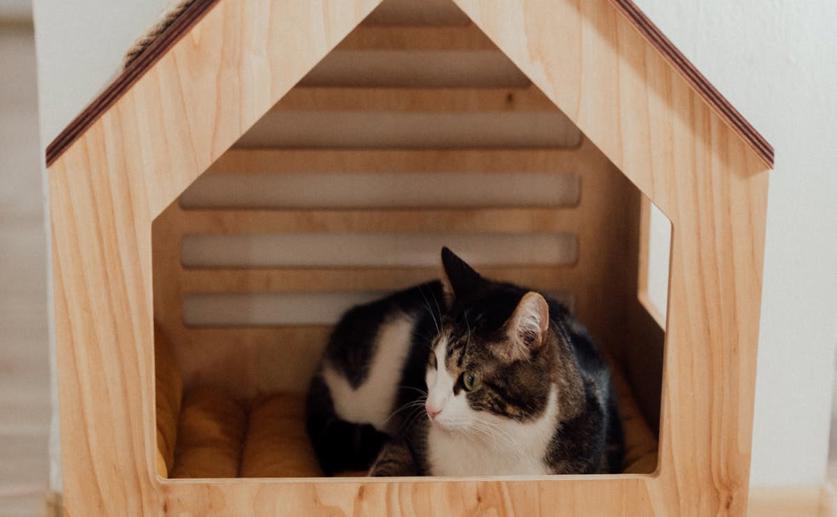
Image Source: Arina Krasnikova (photographer)

Key Findings

  • Researchers in Japan and Sri Lanka tested pet cats and found they sniffed an unfamiliar person’s scent much longer than their owner’s or a blank swab, showing they prefer new smells
  • Cats first used their right nostril when sampling a stranger’s scent and then switched to the left as they got used to it, hinting that each brain side handles smells differently
  • Bolder cats tended to sniff the stranger’s scent first while more cautious cats began with their owner’s smell, and the strength of the cat–owner bond didn’t change how long they sniffed
Cats live closely with humans yet how they use smell to tell people apart has been unclear. A team from Tokyo University of Agriculture and the University of Kelaniya, Sri Lanka[1] tested whether domestic cats can distinguish the scent of their owner from that of a stranger and how they explore these smells. Research over the past decade shows that cats form long-lasting olfactory memories. Kittens deprived of their mother after weaning still preferred their mother’s body odor as adults[2], indicating a stable recognition of familiar scents. Studies of anal sac secretions reveal that cats can use short-chain fatty acids to identify individual conspecifics, with scent profiles conserved over months and cats discriminating between secretions of different cats[3]. Recent work has also shown that cats respond differently to human emotional odors, displaying higher stress and right-nostril use when exposed to fear scents versus neutral ones[4]. Building on this foundation, the new study presented 30 pet cats with three simultaneously available cotton swabs carrying the scent of their owner, an unfamiliar person, or a blank control. Each cat’s behavior was recorded, including the time spent sniffing each swab, choice of nostril, repetitive sniffing, and any face-rubbing against the swab holder. Before testing, owners completed two questionnaires: the Feline Five personality scale and the Cat–Owner Relationship Scale (CORS). Cats spent significantly more time sniffing the unknown person’s swab than the owner’s or the blank. This finding suggests that, as with other mammals, novelty drives olfactory investigation. When sampling the stranger’s scent, cats exhibited a clear nostril preference, switching more often to one side. This lateralization mirrors the pattern seen when cats process fear odors[4], hinting that the two hemispheres of the brain may specialize in different aspects of scent processing, even for human odors. The order in which cats first approached the three swabs correlated with their personality profiles. More curious or bold cats tended to sniff the novel scent first, while more reserved ones began with the familiar. In male cats, a higher frequency of repeated sniffs at any swab also aligned with personality scores, suggesting that individual differences shape the intensity of olfactory exploration. Surprisingly, the quality of the human–cat bond measured by the CORS did not predict sniffing behavior. Cats treated strongly bonded owners and strangers similarly in terms of exploration time, indicating that, at least in this setting, olfactory recognition of people is governed more by novelty and cat temperament than by the depth of the relationship. After sniffing, many cats rubbed their faces on the swab holder. Face rubbing transfers scent from facial glands back onto the object, a behavior linked to territory marking and familiarization. This pattern echoes how cats use anal sac secretions to mark and recognize territories in conspecific contexts[3]. By demonstrating that cats can discriminate between the odors of different humans and that they show lateralized nostril use and personality-dependent sniffing patterns, this study sheds light on feline perception of people. It suggests that cats rely on their sense of smell not only for social interactions with other cats but also to navigate their relationships with humans. Further research could explore whether cats form long-term memories of specific human odors, as they do with their mother’s scent[2], and how scent-marking behaviors influence the cat–human bond.

Animal Science

References

Main Study

1) Behavioral responses of domestic cats to human odor

Published 28th May, 2025

https://doi.org/10.1371/journal.pone.0324016


Related Studies

2) Are you my mummy? Long-term olfactory memory of mother's body odour by offspring in the domestic cat.

https://doi.org/10.1007/s10071-021-01537-w


3) Olfactory discrimination of anal sac secretions in the domestic cat and the chemical profiles of the volatile compounds.

https://doi.org/10.1007/s10164-017-0532-x


4) Relationship between asymmetric nostril use and human emotional odours in cats.

https://doi.org/10.1038/s41598-023-38167-w


Related Articles

An unhandled error has occurred. Reload 🗙