Medicinal Mushroom Helps Protect Gut from Virus Damage by Balancing Fats

Jenn Hoskins
23rd May, 2025

Medicinal Mushroom Helps Protect Gut from Virus Damage by Balancing Fats

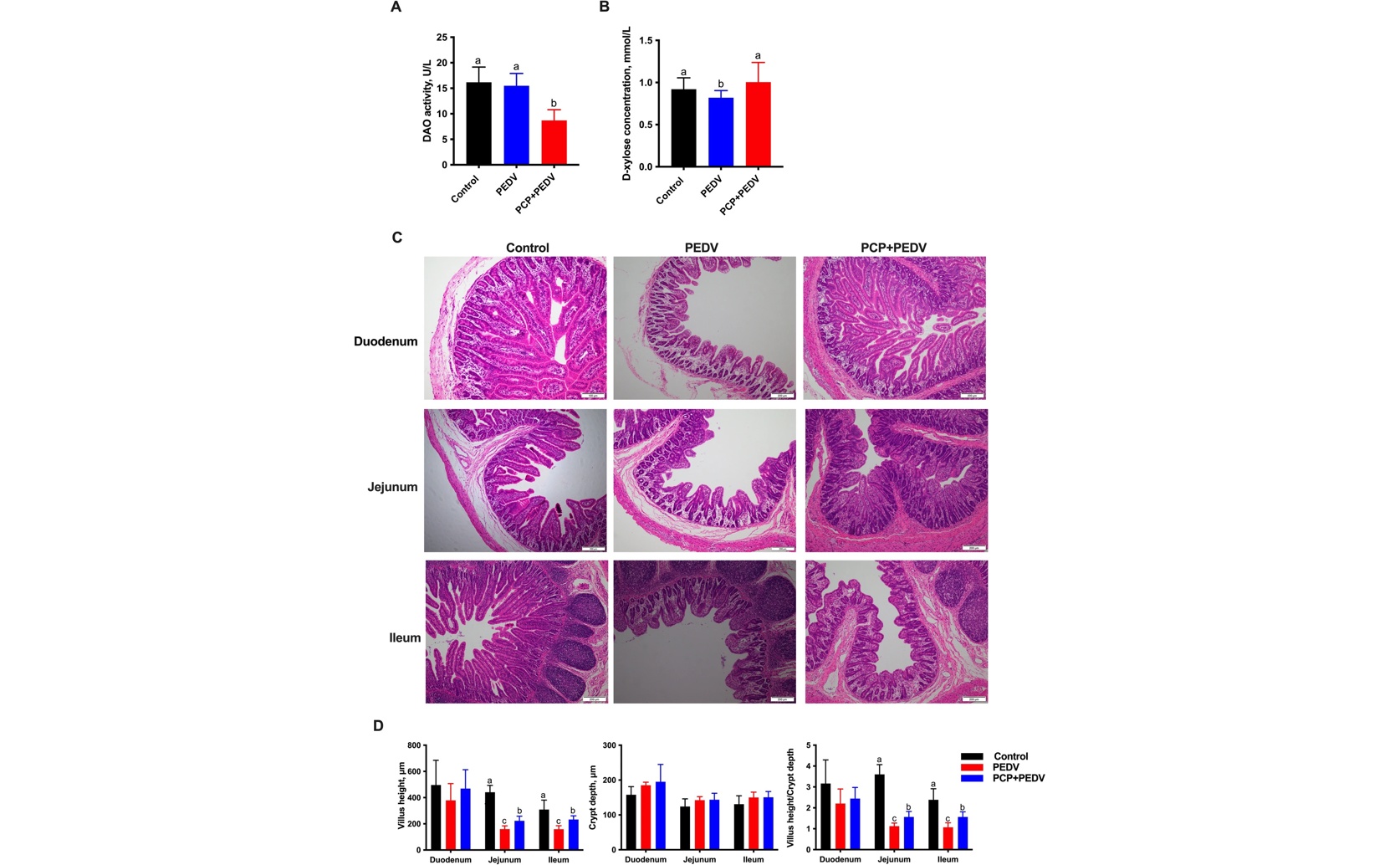
Administration of Poria cocos polysaccharides significantly mitigated intestinal injury in PEDV-infected piglets by increasing plasma D-xylose levels (a), reducing diamine oxidase activity (b), and repairing mucosal morphology (c) and villus structure (d).

Image adapted from: Zhang et al. / CC BY (Source)

Key Findings

  • In Wuhan, researchers discovered that a natural mushroom extract (PCP) reduced diarrhea and virus levels in piglets infected with PEDV
  • PCP improved the intestines' structure and function, enhancing nutrient absorption and overall intestinal health
  • The extract regulated fat metabolism, supporting the pigs' immune system and further decreasing the virus's impact
Porcine epidemic diarrhea virus (PEDV) remains a major threat to the swine industry worldwide, causing severe diarrhea, dehydration, and high mortality rates in young piglets. Controlling PEDV is challenging due to the virus's ability to mutate and evade existing vaccines, making it essential to explore new preventive and therapeutic strategies. A recent study from Wuhan Polytechnic University[1] investigates the potential of Poria cocos polysaccharides (PCP), a natural compound derived from the Poria cocos mushroom, in mitigating PEDV-induced intestinal damage in piglets. In the study, 18 seven-day-old piglets were divided into three groups: a control group, a PEDV-infected group, and a group treated with PCP before PEDV infection. The piglets in the PCP + PEDV group received 10 mg/kg of PCP daily from day 4 to day 10. On the eighth day, all piglets in the PEDV groups were exposed to the virus. The researchers aimed to determine whether PCP could alleviate the intestinal injuries caused by PEDV and to understand the underlying mechanisms involved. The results were promising. Piglets treated with PCP showed significantly less diarrhea and reduced levels of PEDV replication in both the small intestine and colon compared to those that were not treated. Additionally, the intestinal mucosal structure was notably improved in the PCP-treated group. Specifically, the height of the villi—small, finger-like projections in the intestine that aid in nutrient absorption—was greater in the jejunum and ileum regions of the intestines. The ratio of villus height to crypt depth, an indicator of intestinal health, was also higher in the ileum of PCP-treated piglets. Improved intestinal function in the PCP group was further supported by biochemical markers. Elevated levels of plasma D-xylose, a sugar used to assess nutrient absorption, indicated better intestinal absorption capabilities. Meanwhile, decreased diamine oxidase activity suggested reduced intestinal permeability and damage. To understand how PCP exerts these protective effects, the researchers conducted transcriptomic and proteomic analyses, which examine gene and protein expressions, respectively. These analyses revealed that lipid metabolism—a crucial process involving the synthesis and breakdown of fats—plays a key role in the beneficial effects of PCP during PEDV infection. Specifically, PCP treatment led to the upregulation of genes involved in sphingolipid metabolism, including ectonucleotide pyrophosphatase/phosphodiesterase family member 7 and N-acylsphingosine amidohydrolase 2. Sphingolipids are important components of cell membranes and play roles in signaling pathways that regulate cell growth and death. Further metabolomic analysis, which studies the chemical processes involving metabolites, showed that PCP primarily influenced levels of plasmanylphosphoethanolamine, lysophosphatidylcholine, and carnitine. These molecules are involved in various aspects of lipid metabolism and energy production. Additionally, PCP was found to reverse the expression of key genes responsible for fatty acid uptake, intracellular lipid transport, and fatty acid synthesis. These include fatty acid binding protein 2, fatty acid transport protein 4, apolipoprotein B, apolipoprotein C3, fatty acid synthase, long-chain fatty acyl CoA synthetase 3, lipoprotein lipase, and acyl-CoA thioesterases 12. By modulating these genes, PCP helps maintain lipid homeostasis, which is vital for healthy intestinal function and immune response. The findings of this study build upon earlier research that has highlighted the complexity of PEDV-host interactions and the challenges in controlling the virus. Previous studies have shown that PEDV disrupts intestinal integrity and evades the host's innate immune system, leading to severe disease in piglets[2][3][4]. For instance, PEDV infection leads to extensive damage in the jejunum and ileum, areas of the intestine critical for nutrient absorption, and triggers strong inflammatory responses[2]. Additionally, the ability of PEDV to manipulate lipid metabolism, as demonstrated in the current study, aligns with findings that viruses often alter host lipid pathways to facilitate their replication and evade immune detection[3][4]. The use of PCP as a dietary supplement offers a novel approach to enhancing the intestinal health and immune defenses of piglets against PEDV. By improving lipid metabolism and maintaining intestinal integrity, PCP not only reduces the severity of PEDV infection but also supports overall growth and health in piglets. This approach is particularly valuable given the limitations of current biosecurity measures and vaccine efficacy against rapidly evolving PEDV strains[2]. Moreover, the study from Wuhan Polytechnic University provides a foundation for future research into natural compounds that can support animal health and disease resistance. Understanding the mechanisms by which PCP modulates lipid metabolism and immune responses can lead to the development of more effective interventions against PEDV and other enteric coronaviruses affecting swine. This aligns with ongoing efforts to enhance biosecurity and vaccine strategies, as highlighted in earlier research[2]. In summary, the investigation by Wuhan Polytechnic University demonstrates that Poria cocos polysaccharides can significantly mitigate the impact of PEDV in piglets by improving intestinal health and regulating lipid metabolism. These findings offer a promising avenue for developing dietary supplements that enhance disease resistance and intestinal function, providing a valuable tool for the swine industry in its ongoing battle against PEDV and similar viral threats.

BiochemAnimal ScienceMycology

References

Main Study

1) Multi-omics profiling reveals Poria cocos polysaccharides mitigate PEDV-induced intestinal injury by modulating lipid metabolism in piglets

Published 20th May, 2025

https://doi.org/10.1186/s40104-025-01211-y


Related Studies

2) Porcine epidemic diarrhea virus (PEDV): An update on etiology, transmission, pathogenesis, and prevention and control.

https://doi.org/10.1016/j.virusres.2020.198045


3) PEDV and PDCoV Pathogenesis: The Interplay Between Host Innate Immune Responses and Porcine Enteric Coronaviruses.

https://doi.org/10.3389/fvets.2019.00034


4) Swine Enteric Coronavirus: Diverse Pathogen-Host Interactions.

https://doi.org/10.3390/ijms23073953


Related Articles

An unhandled error has occurred. Reload 🗙