Harmful Effects of a UV Chemical on Baby Fish Growth and Behavior

Jim Crocker
25th May, 2025

Harmful Effects of a UV Chemical on Baby Fish Growth and Behavior

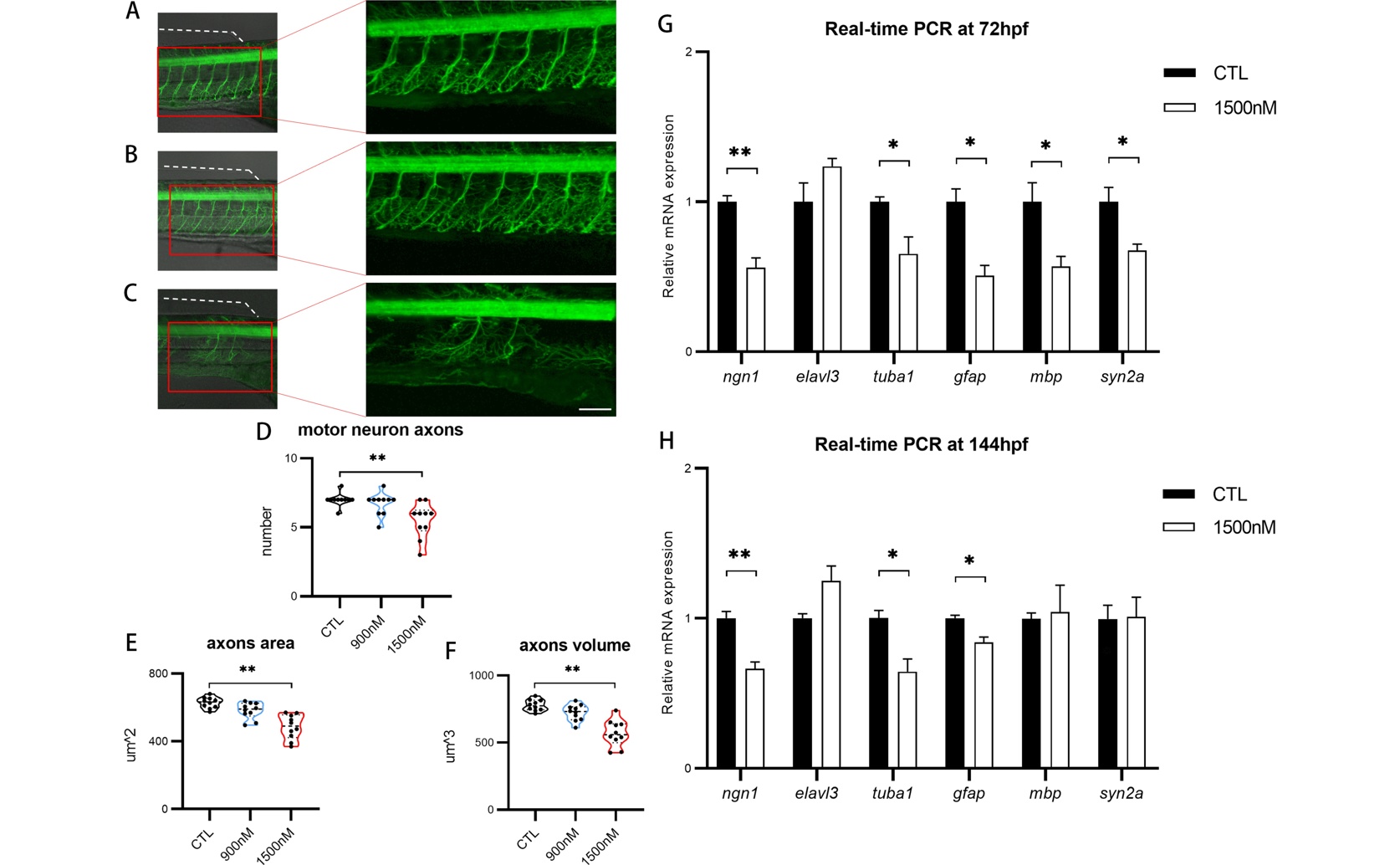
Demonstrating the compound's neurotoxic potential, exposure to high concentrations of UV-360 resulted in significant malformations and reductions in the spinal motor neuron axons of zebrafish (Danio rerio) larvae (a–f) and the downregulation of key neurotoxicity-related genes (g, h).

Image adapted from: Xu et al. / CC BY (Source)

Key Findings

  • In Hangzhou, China, scientists found that the UV-360 chemical harms the development of zebrafish
  • High levels of UV-360 caused fewer eggs to hatch, slower heart rates, and smaller fish
  • UV-360 also disrupted zebrafish movement and damaged their nervous systems by affecting neuron growth and gene activity
Ultraviolet stabilizers (UV stabilizers) are chemicals commonly added to plastics and other materials to prevent degradation from UV radiation. These substances enhance the durability and lifespan of products but can enter the environment through various pathways, leading to potential ecological and health concerns. Recent studies have highlighted the widespread presence of these stabilizers in aquatic ecosystems. For instance, a study conducted in Manila Bay, Philippines, detected multiple benzotriazole ultraviolet stabilizers (BUVSs) in fish, with UV-328 being the most prevalent[2]. This widespread contamination raises questions about the impact of these chemicals on aquatic life. Building on this concern, researchers at Hangzhou Normal University in Hangzhou, China, conducted a study to investigate the effects of another BUVS, UV-360, on zebrafish during their early development[1]. Zebrafish are commonly used in toxicological studies due to their rapid development and transparent embryos, which allow for easy observation of developmental changes. The study began by exposing zebrafish larvae to varying concentrations of UV-360 to evaluate its developmental impact. The findings revealed significant adverse effects, including a reduced hatching rate, slower heart rates, and impaired growth in body length. These developmental delays indicate that UV-360 interferes with essential physiological processes in the early stages of fish development. In addition to developmental issues, the researchers examined the behavioral effects of UV-360 exposure. Zebrafish exposed to this chemical exhibited noticeable changes in their locomotor activities, suggesting that UV-360 affects their nervous system function. Further analysis showed malformations in spinal motor neuron axons—the long projections of neurons that transmit signals—and a decrease in both the area and volume of these axons. These structural changes in neurons can impair the ability of zebrafish to coordinate movement effectively. To understand the underlying mechanisms of these effects, the study delved into the molecular level. The expression of genes associated with neurotoxicity was significantly altered in zebrafish exposed to UV-360. Genes involved in the development and function of the nervous system showed changes in activity, indicating that UV-360 disrupts normal gene regulation. Electrophysiological recordings, which measure the electrical activity of neurons, also demonstrated altered spike activity in exposed fish. These changes suggest that UV-360 interferes with normal neuronal signaling, potentially leading to the observed behavioral and developmental abnormalities. Expanding the investigation to the transcriptome—the complete set of RNA transcripts produced by the genome—the study identified significant modifications in gene expression profiles. A substantial number of differentially expressed genes were linked to signal transduction processes and the neuroactive ligand-receptor interaction pathway. Signal transduction involves the transmission of molecular signals from the cell surface to the interior, influencing various cellular responses. Neuroactive ligand-receptor interactions are critical for communication between neurons, affecting everything from muscle movement to cognitive functions. Disruptions in these pathways can lead to widespread neurological impacts, as evidenced by the impaired motor functions and developmental delays observed in the zebrafish. The findings of this study are particularly noteworthy when considered alongside previous research on BUVSs. The Manila Bay study[2] showed that compounds like UV-328 are pervasive in fish, indicating extensive environmental exposure. The current research adds to this body of knowledge by demonstrating that another BUVS, UV-360, can have serious developmental and neurological effects on aquatic organisms. This suggests that the presence of multiple BUVSs in the environment could have compounded negative effects on marine life, potentially disrupting entire ecosystems. Moreover, the dose-dependent nature of the toxicity observed in zebrafish larvae underscores the importance of regulating the levels of UV stabilizers in the environment. Higher concentrations of UV-360 led to more severe developmental and neurobehavioral impairments, highlighting the need for stringent controls to prevent excessive contamination. The research conducted by Hangzhou Normal University not only advances our understanding of the toxicological effects of UV-360 but also provides valuable insights into the broader impacts of UV stabilizers on aquatic ecosystems. By elucidating the mechanisms through which UV-360 induces toxicity, the study offers a foundation for developing strategies to mitigate its harmful effects. This is particularly relevant in light of findings from regions like Manila Bay, where BUVSs are already present at significant levels in marine life[2]. In conclusion, the study highlights the critical need for further research and regulatory measures to address the environmental contamination of UV stabilizers. As UV-360 and other BUVSs continue to be used in various products, understanding their long-term impacts on wildlife and ecosystems becomes increasingly important. The comprehensive approach taken by the researchers at Hangzhou Normal University provides a robust framework for future investigations into the environmental and biological effects of these pervasive chemicals.

EnvironmentBiochemAnimal Science

References

Main Study

1) Developmental and neurobehavioral toxicity of benzotriazole ultraviolet stabilizer UV-360 on zebrafish larvae

Published 23rd May, 2025

https://doi.org/10.1371/journal.pone.0324355


Related Studies

2) Contamination and bioaccumulation of benzotriazole ultraviolet stabilizers in fish from Manila Bay, the Philippines using an ultra-fast liquid chromatography-tandem mass spectrometry.

https://doi.org/10.1016/j.chemosphere.2011.06.054


Related Articles

An unhandled error has occurred. Reload 🗙