Do Yeasts Live in the Gut of People with HIV

Greg Howard
24th May, 2025

Do Yeasts Live in the Gut of People with HIV

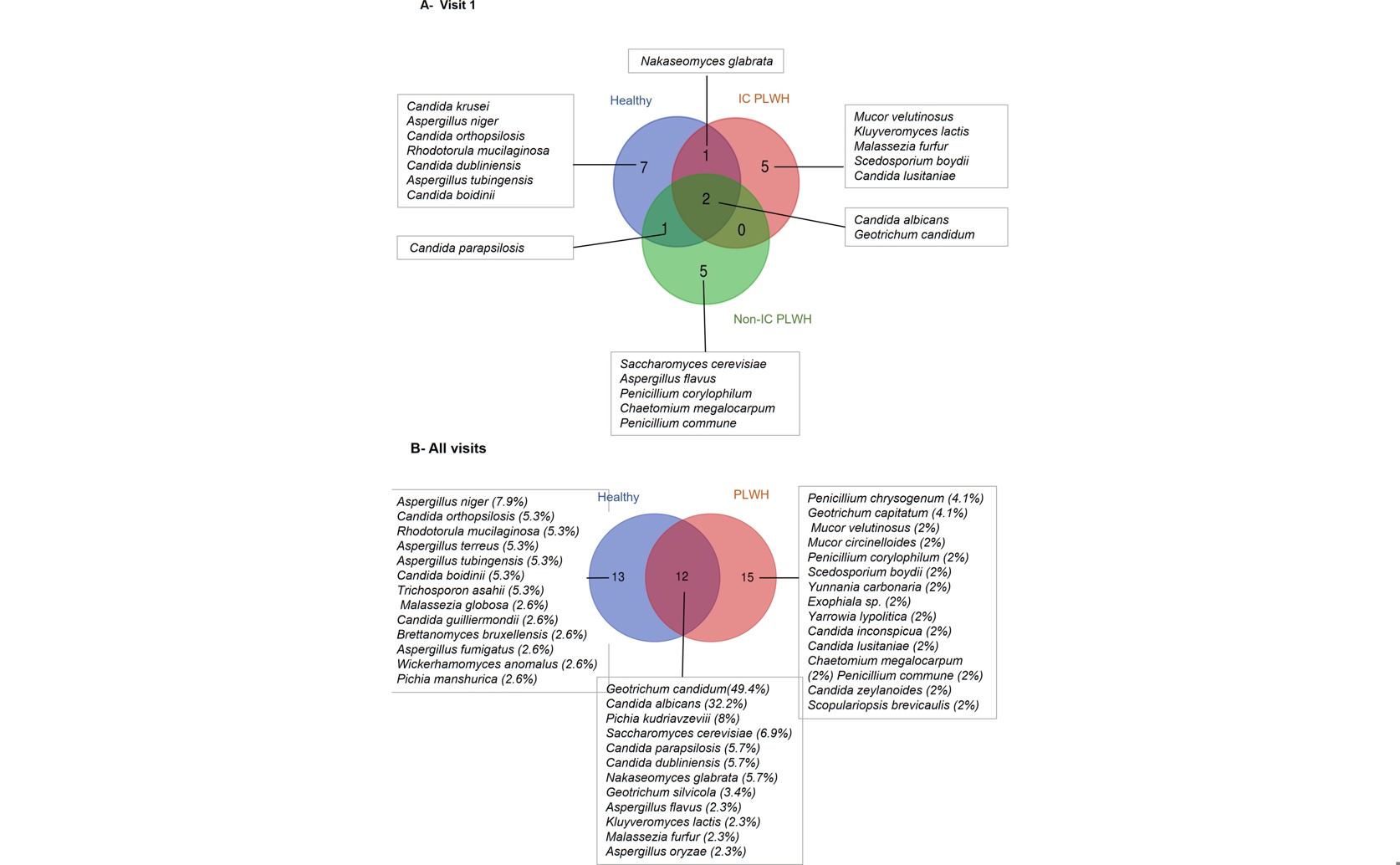
The culture isolation data reveals that while a core mycobiome is shared across all visits (B), Malassezia furfur was specifically identified in immunocompromised patients at the initial visit (A), consistent with the study's conclusion that HIV-related immunosuppression is associated with the presence of these yeasts in the digestive tract.

Image adapted from: Abdillah et al. / CC BY (Source)

Key Findings

  • In Marseille, France, researchers found Malassezia yeasts more often in the guts of HIV-positive patients with weakened immune systems than in healthy individuals
  • These yeasts rarely remained in the gut over time and were mostly not alive, indicating they don't establish a lasting presence
  • The study suggests that Malassezia typically stays on the skin and only temporarily appears in the gut, even in those with HIV
Malassezia yeasts are commonly found on human skin, where they coexist harmlessly as part of the normal microbiome. However, recent research has expanded our understanding of where these yeasts might reside and their potential roles in human health. A study conducted by researchers at Aix-Marseille Université in Marseille, France[1], investigates the presence of Malassezia in the human gut, particularly among individuals living with HIV. The problem addressed by this study stems from previous findings that Malassezia DNA has been detected in various body sites beyond the skin, including the gut[2][3]. While metagenomic studies have reported abundant Malassezia sequences in the gastrointestinal tracts of HIV-positive individuals, it remains unclear whether these yeasts are actual colonizers or merely transient passengers. Understanding this distinction is crucial, especially considering reports of Malassezia acting as causative agents in severe infections like infective endocarditis (IE)[4]. To explore this, the research team collected stool samples from both healthy individuals and patients living with HIV over multiple visits. Specifically, they included ten control participants and 23 HIV-positive patients, subdivided based on their immune status measured by CD4 counts. The samples underwent several analytical processes: culturing to grow any present yeasts, Malassezia-specific viability PCR to determine if the detected DNA came from living organisms, and metabarcoding to identify and quantify both fungal and bacterial populations. The findings revealed that while Malassezia was more frequently detected in the gut of immunocompromised HIV patients compared to healthy controls, the yeasts did not consistently persist over time. Only a few cases showed viable Malassezia, and even then, the presence was sporadic. For instance, M. furfur was successfully cultured from one HIV-immunocompromised patient, and both M. furfur and M. globosa were isolated in minimal quantities from healthy individuals. Additionally, viability PCR confirmed the presence of living Malassezia in three immunocompromised patients. Despite these detections, metagenomic analyses indicated that Malassezia reads were not stably maintained in the gut environment. These results suggest that although Malassezia can appear in the gut, especially among those with weakened immune systems, they do not establish a lasting presence. This aligns with earlier research indicating that Malassezia species are primarily skin inhabitants and their detection in other body sites might often be due to contamination or transient passage[2][3]. Moreover, the study by Aix-Marseille Université provides evidence against the notion that HIV-related immunosuppression facilitates the establishment of Malassezia in the gut, despite higher detection rates. This research builds upon previous studies that have identified Malassezia in diverse body sites and associated them with various chronic conditions[2][3][4]. For example, study[4] highlighted the role of Malassezia restricta in infective endocarditis, emphasizing the challenges in accurately diagnosing infections caused by these yeasts due to their cross-reactivity with other fungal species. By demonstrating that Malassezia do not permanently colonize the gut, the current study helps clarify the potential risks associated with their transient presence and supports the importance of accurate microbial identification in clinical settings. Furthermore, the methods employed in this study, such as viability PCR and advanced metabarcoding techniques, address some of the limitations of earlier research[3]. These approaches enhance the ability to distinguish between live and dead yeasts, providing a clearer picture of Malassezia’s role in the gut microbiome. The findings also prompt a reevaluation of how Malassezia presence is interpreted in metagenomic data, especially concerning immune-compromised populations. In conclusion, the study by Aix-Marseille Université advances our understanding of Malassezia in the human gut, particularly in the context of HIV-associated immunodeficiency. It underscores that while Malassezia can be detected more frequently in immunocompromised individuals, their ability to colonize and persist in the gut is limited. This insight is valuable for both microbiologists and healthcare professionals in assessing the implications of Malassezia presence in various body sites and in developing strategies for accurate diagnosis and treatment of fungal-related conditions.

MedicineHealthMycology

References

Main Study

1) Do Malassezia yeasts colonize the guts of people living with HIV?

Published 21st May, 2025

https://doi.org/10.1371/journal.pone.0322982


Related Studies

2) Chronic Diseases Associated with Malassezia Yeast.

https://doi.org/10.3390/jof7100855


3) Sequence-based methods for detecting and evaluating the human gut mycobiome.

https://doi.org/10.1111/lam.12539


4) Malassezia restricta: An Underdiagnosed Causative Agent of Blood Culture-Negative Infective Endocarditis.

https://doi.org/10.1093/cid/ciab377


Related Articles

An unhandled error has occurred. Reload 🗙