How Natural Yeasts from Fruits Help Make Bread Rise

Jenn Hoskins
21st May, 2025

How Natural Yeasts from Fruits Help Make Bread Rise

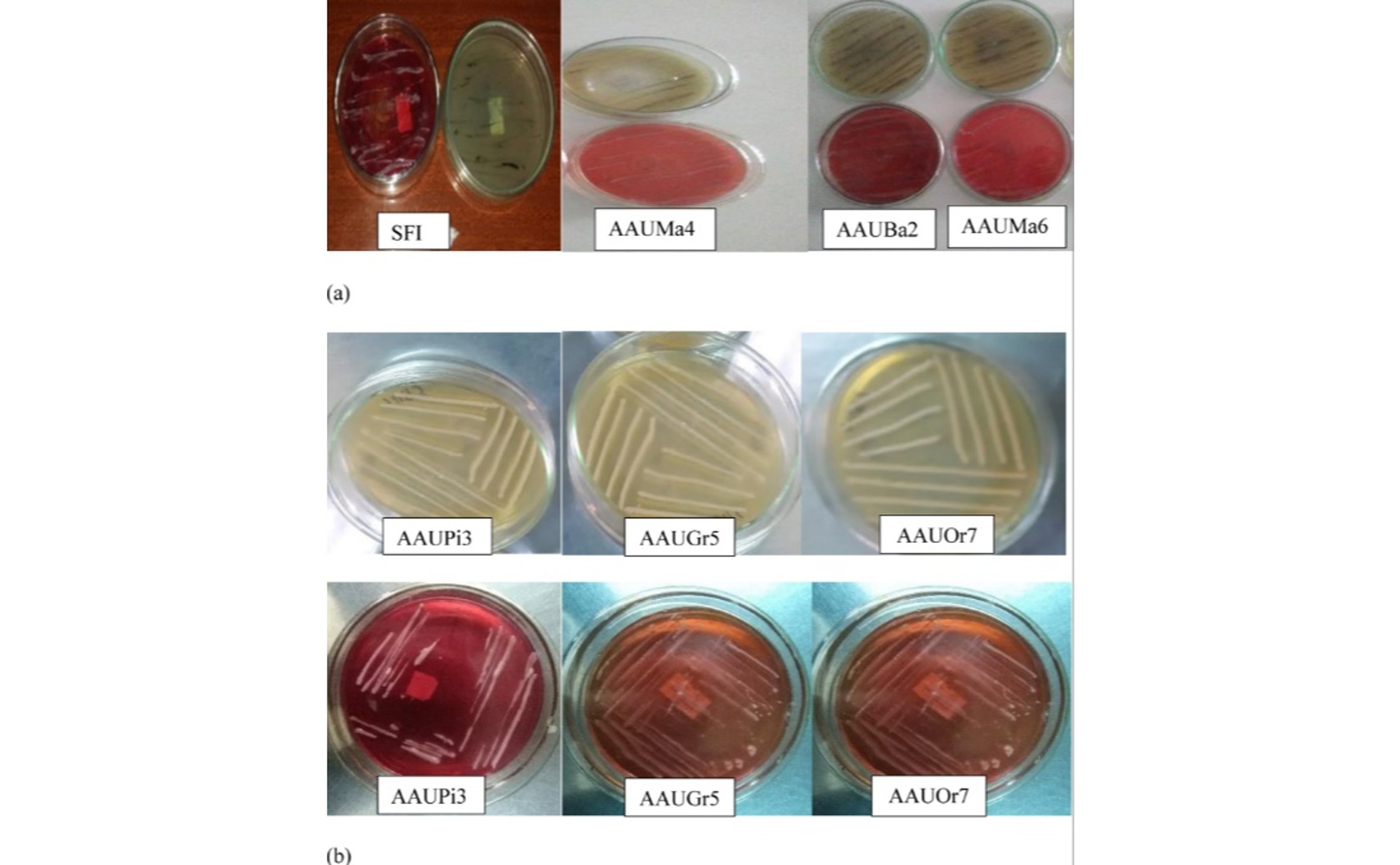
Screening on differential media indicated that the commercial control and wild yeasts from mango (Mangifera indica) and banana (Musa acuminate) produced undesirable hydrogen sulfide (a), whereas isolates from pineapple (Ananas comosus), grape (Vitis vinifera), and orange (Citrus sinensis) did not (b), identifying the latter group as superior candidates for high-quality bread leavening.

Image adapted from: Tesfaye et al. / CC BY (Source)

Key Findings

  • Researchers in Ethiopia and Nigeria found wild fruit yeasts that help dough rise without creating bad smells
  • Three specific yeast strains were chosen for effectively producing carbon dioxide while avoiding hydrogen sulfide
  • One strain, AAUGr5, outperformed commercial yeast, promising higher quality and better-tasting bread
Yeast is essential in baking, transforming sugars in dough into carbon dioxide (CO₂) and ethanol, which cause the dough to rise. However, some yeast strains produce hydrogen sulfide (H₂S), a compound that can negatively affect the flavor and quality of bread. Addressing this issue is crucial for producing high-quality baked goods. A recent study conducted by researchers at Hawassa University, Addis Ababa University, and Ladoke Akintola University of Technology in Nigeria aimed to identify wild yeast strains that are both efficient in leavening and do not produce H₂S[1]. The research focused on isolating yeasts from various fruits, a method supported by earlier findings where fruit-derived yeasts showed high ethanol production capabilities[2]. From 88 wild yeast isolates, three strains—AAUGr5, AAUOr7, and AAUPi3—were selected based on their ability to produce CO₂ effectively while being free of H₂S. These selected strains were identified as members of the Saccharomyces genus through a combination of cultural, morphological, and biochemical analyses. This identification aligns with previous research that highlighted the role of Saccharomyces cerevisiae in H₂S production and its genetic regulation[3]. Understanding the genetic factors that influence H₂S production, such as the activity of specific genes like MET17 and CYS4, is important for selecting yeast strains that minimize unwanted sulfur compounds. The optimal growth conditions for these wild yeast strains were determined to be a pH of 5 and a temperature of 30°C in Yeast Extract Peptone Dextrose (YPD) medium. Additionally, the presence of 2% (w/v) D-glucose and 0.5% (w/v) NaCl was found to support maximum growth, with peak biomass achieved after 96 hours of incubation. These conditions are similar to those used in earlier studies that emphasized the importance of environmental factors in yeast metabolism and stress tolerance[2]. Among the three selected strains, AAUGr5 demonstrated superior leavening performance compared to commercial yeast, achieving CO₂ production rates of 9.09% at 30°C and 8.92% at room temperature. This enhanced performance suggests that AAUGr5 could be a valuable alternative to traditional commercial yeasts, offering better efficiency in dough rising. Furthermore, when the three H₂S-free wild yeast strains were cultured together, their leavening activity was further improved. This co-culture approach highlights the potential for synergistic interactions among different yeast strains to enhance baking performance. The significance of producing H₂S-free yeasts cannot be overstated, as reducing H₂S levels improves the sensory qualities of bread by preventing off-flavors associated with sulfur compounds. This aspect of the study builds on the understanding from previous research that identified genetic factors influencing H₂S production[3]. By selecting strains with low or no H₂S production, the researchers ensure that the resulting bread has better taste and quality. Moreover, the ability of these wild yeast strains to thrive under specific conditions makes them suitable for industrial applications. The findings suggest that these strains could be used to produce high-quality bread with consistent leavening performance. The resistance of these strains to various stressors, as observed in earlier studies that isolated stress-tolerant yeasts for ethanol production[2], further supports their potential for commercial use. In conclusion, the study successfully identified wild Saccharomyces strains that are efficient in dough leavening and free of hydrogen sulfide, addressing a key issue in bread quality. By building on previous research related to yeast genetics and stress tolerance, the researchers have provided valuable insights that could lead to the development of better baking yeasts, benefiting both consumers and the baking industry.

FruitsBiotechMycology

References

Main Study

1) Assessing the bread-leavening ability of wild yeasts isolated from selected fruits collected from local markets

Published 20th May, 2025

https://doi.org/10.1371/journal.pone.0324252


Related Studies

2) Isolation of Saccharomyces Cerevisiae from Pineapple and Orange and Study of Metal's Effectiveness on Ethanol Production.

https://doi.org/10.1556/1886.2016.00035


3) Hydrogen sulfide synthesis in native Saccharomyces cerevisiae strains during alcoholic fermentations.

https://doi.org/10.1016/j.fm.2017.10.006


Related Articles

An unhandled error has occurred. Reload 🗙