
How to Remove Antibiotics from Water: Adsorption vs Light Breakdown
Jim Crocker
22nd April, 2025


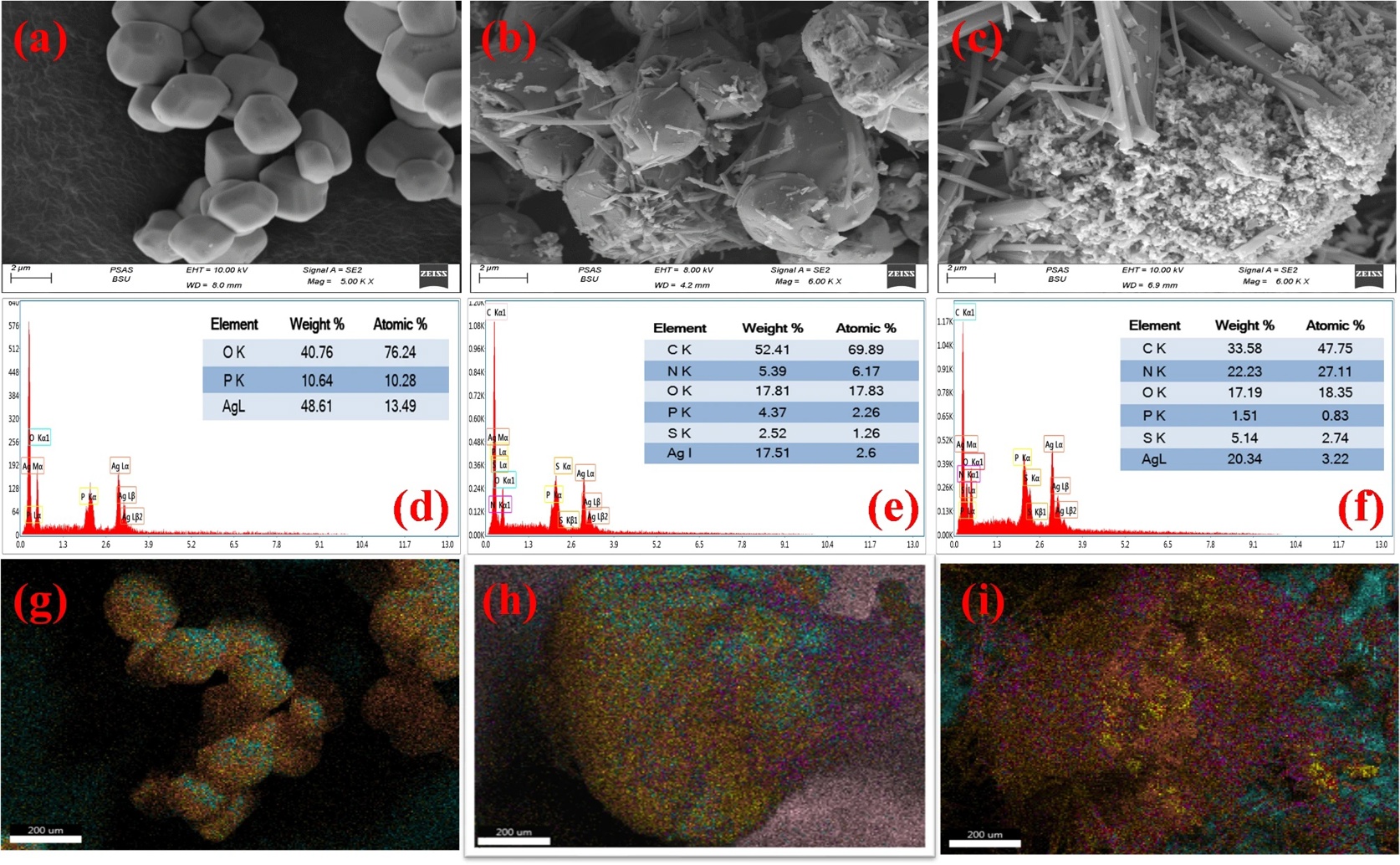
Microscopic imaging (a–c) and elemental analysis (d–i) confirm the successful attachment of sulfamethoxazole to the silver phosphate (Ag3PO4) surface following both adsorption and photocatalytic degradation, providing physical evidence for the material's ability to remove the antibiotic from water.
Key Findings
- *Researchers in Egypt removed over 95% of the antibiotic SMX from water using silver phosphate.*
- *Using light, the silver phosphate broke down nearly 98% of SMX, enhancing water quality.*
- *The silver phosphate material can be reused multiple times, offering a sustainable water treatment solution.*
References
Main Study
1) A comparison between adsorption and photocatalytic degradation for the management of sulfamethoxazole in water
Published 19th April, 2025
https://doi.org/10.1038/s41598-025-95947-2
Related Studies
2) Retention of sulfamethoxazole by cinnamon wood biochar and its efficacy of reducing bioavailability and plant uptake in soil.
3) Adsorption of sulfamethoxazole and lincomycin from single and binary aqueous systems using acid-modified biochar from activated sludge biomass.
4) Aqueous adsorption of sulfamethoxazole on an N-doped zeolite beta-templated carbon.
Related Articles
 3rd March, 2024 | Jim Crocker