
New Yeast Model to Research How Rapamycin Affects Aging and Cancer
Jenn Hoskins
12th April, 2025


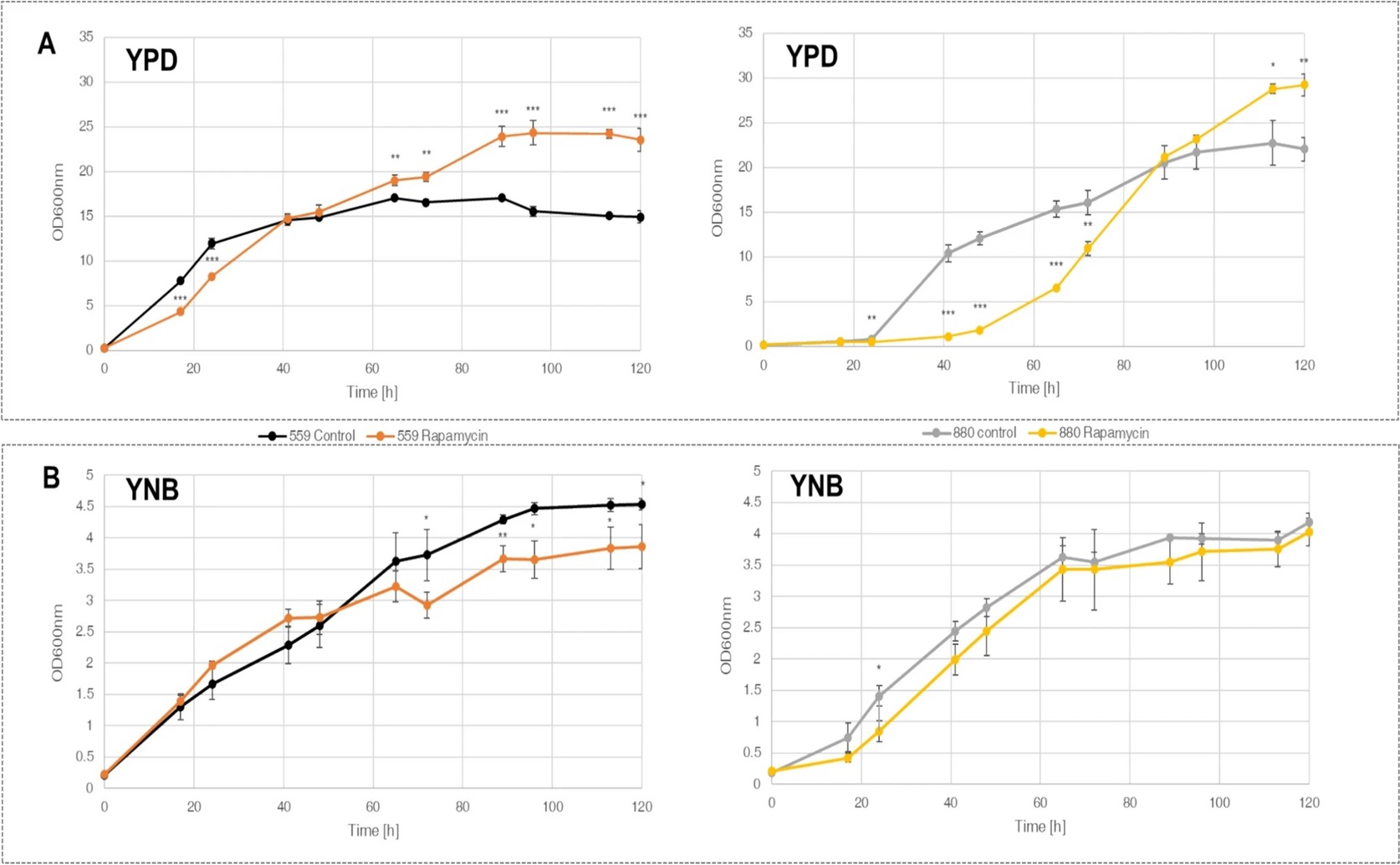
Rapamycin treatment severely inhibited the growth of the Rhodosporidium toruloides IFO0880 haplotype while having little effect on the IFO0559 haplotype in nutrient-rich medium (a), demonstrating a key differential sensitivity that was absent in nutrient-poor medium (b).
Key Findings
- *In Germany, researchers examined two types of a special yeast to see how the drug rapamycin affects their growth and production of fats and pigments.*
- *They discovered that one yeast type stopped growing when treated with rapamycin, while the other continued to grow, highlighting genetic differences in stress response.*
- *The study also found protein changes in the yeasts similar to those in human cancers and aging, suggesting this yeast could help understand these human diseases.*
References
Main Study
1) Rhodosporidium toruloides—a new surrogate model to study rapamycin induced effects on human aging and cancer
Published 9th April, 2025
https://doi.org/10.1007/s00018-025-05662-4
Related Studies
2) Rhodosporidium toruloides - A potential red yeast chassis for lipids and beyond.
3) Two TOR complexes, only one of which is rapamycin sensitive, have distinct roles in cell growth control.
Journal: Molecular cell, Issue: Vol 10, Issue 3, Sep 2002
4) Adaptation of Proteome and Metabolism in Different Haplotypes of Rhodosporidium toruloides during Cu(I) and Cu(II) Stress.
Related Articles
 2nd August, 2024 | Jim Crocker