Using Genetic Tools to Understand and Boost Heat Tolerance in Farmed Salmon

Jim Crocker
27th March, 2025

Using Genetic Tools to Understand and Boost Heat Tolerance in Farmed Salmon

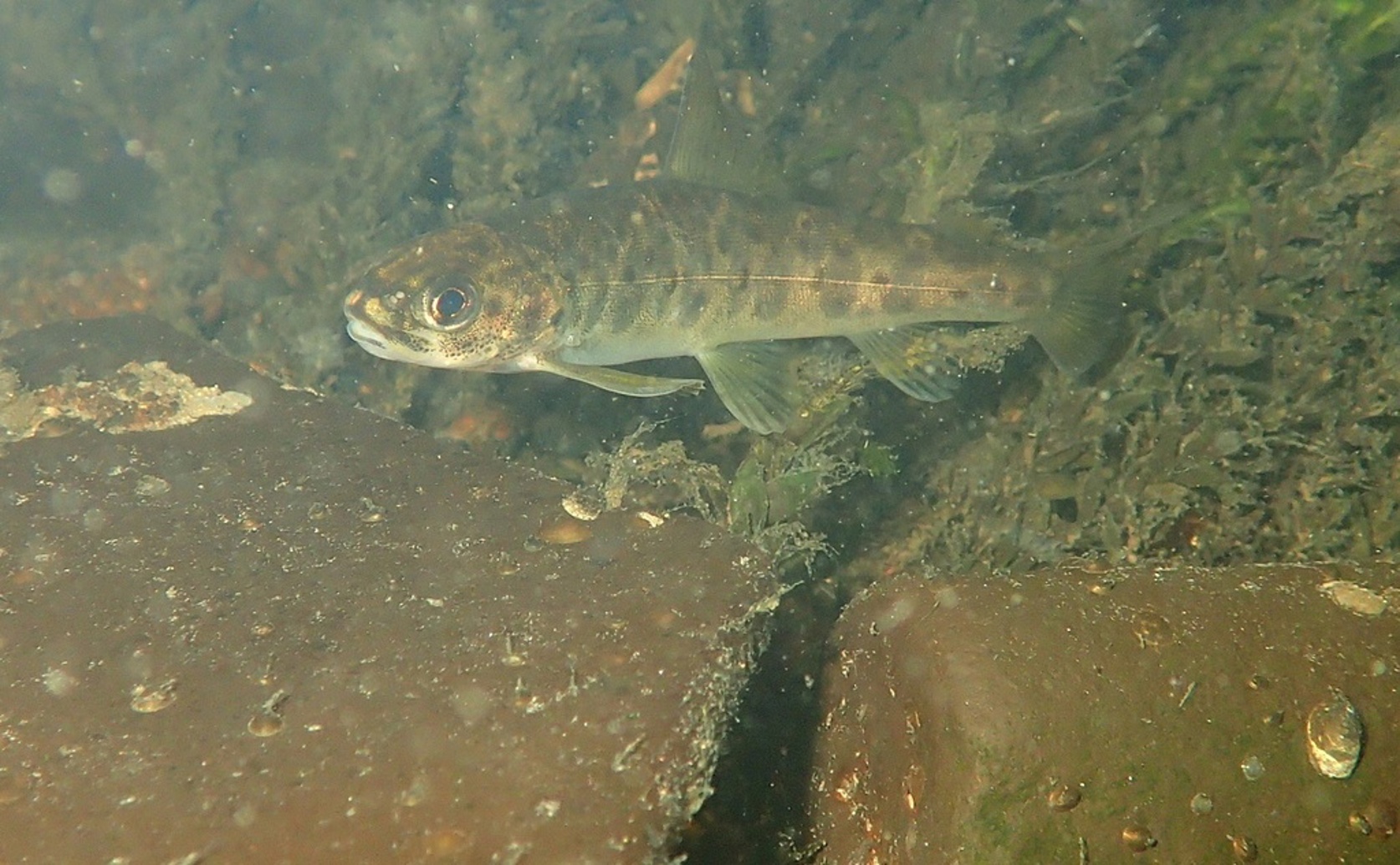
Atlantic Salmon (Salmo salar)

Photo adapted from: Julien Renoult / CC BY (Source)

Key Findings

  • *Newfoundland researchers studied Atlantic salmon to understand how rising ocean temperatures affect their survival.*
  • *They discovered that salmon growth at higher temperatures is strongly controlled by genetics, identifying five key genetic markers.*
  • *The study also pinpointed specific genes that help salmon better handle heat, aiding future breeding for more resilient fish.*
Climate change is increasingly impacting marine ecosystems, with rising seawater temperatures and more frequent marine heatwaves posing significant challenges to aquaculture. The Atlantic salmon (Salmo salar) aquaculture industry, vital for food production, must develop strategies to mitigate these effects to ensure sustainable fish farming. A recent study conducted by researchers at Memorial University of Newfoundland and Labrador delves into the genetic factors that determine a salmon’s ability to withstand high temperatures, offering valuable insights for breeding more resilient fish[1]. The study employed a genome-wide association study (GWAS), a method that scans the entire genome to identify genetic variations linked to specific traits. Using fin clips from 251 salmon subjected to an incremental thermal maximum (ITMax) challenge, the researchers analyzed genetic data with the North American 50K SNP chip, which examines 50,000 single nucleotide polymorphisms (SNPs) across the salmon genome. The ITMax trait, which measures the upper thermal tolerance of the fish, was found to be highly polygenic, meaning it is influenced by many genes. The heritability estimates, which indicate how much of the trait variation is due to genetic differences, were low to moderate (mean SNP-based heritability of 0.20 and pedigree-based heritability of 0.25). This suggests that while genetics play a role in thermal tolerance, environmental factors also significantly influence the trait. In addition to ITMax, the study examined the thermal-unit growth coefficient (TGC), which assesses growth rates at elevated temperatures. The GWAS for TGC identified five significant SNPs located on chromosomes three and five. Unlike ITMax, TGC showed high heritability estimates (mean SNP-based h² = 0.62 and pedigree-based h² = 0.64), indicating that genetic factors strongly influence growth performance under thermal stress. This finding is particularly important as it suggests that selective breeding for improved growth at higher temperatures could be a viable strategy for enhancing the resilience of Atlantic salmon aquaculture. To gain further insights into the biological mechanisms underlying thermal tolerance, the researchers conducted RNA sequencing (RNA-seq) analyses on liver samples from the most and least thermally tolerant salmon families at two temperatures: 10°C and 20°C. This analysis revealed hundreds of differentially expressed transcripts—genes whose activity levels change in response to temperature. Specifically, 347 transcripts were differentially expressed at 10°C, and 175 at 20°C, highlighting distinct biological responses between the tolerant and sensitive families. Gene Ontology (GO) term enrichment analysis identified key biological processes affected by temperature, including blood coagulation, sterol metabolism, and neuromuscular synaptic growth. These processes are crucial for maintaining physiological functions under thermal stress. Further validation using quantitative PCR (qPCR) confirmed differences in specific genes related to cholesterol metabolism, inflammation, apoptosis (programmed cell death), angiogenesis (formation of new blood vessels), nervous system processes, and heat stress response. Notably, three differentially expressed transcripts—ppp1r9a, gal3st1a, and f5—were located near significant SNPs identified in the GWAS. These genes are involved in neurological functions and blood coagulation, suggesting a link between these biological pathways and thermal tolerance in salmon. This study builds on previous research that has documented the effects of climate change on marine species. For instance, marine heatwaves are projected to increase in frequency and intensity with rising global temperatures, leading to more severe impacts on marine life, including fish populations[2]. Additionally, previous studies have shown that fish exhibit phenotypic changes in response to climate change, such as altered migration and reproduction timings, which are largely attributed to environmental variability rather than genetic adaptation[3]. The current study advances this understanding by identifying specific genetic markers associated with thermal tolerance, providing a foundation for breeding programs aimed at enhancing resilience in farmed salmon. Moreover, the findings align with earlier research on the physiological impacts of heatwaves on Atlantic salmon. Previous studies have observed that extreme temperatures can disrupt feeding, osmoregulation (the balance of salts and water in the body), and liver and kidney functions in salmon, leading to reduced growth and compromised health[4]. By identifying genetic factors that confer thermal tolerance, the current study offers potential biomarkers that can be used to select and breed salmon strains better equipped to handle temperature-induced stress, thereby mitigating the negative effects of climate warming on aquaculture. The implications of this research are significant for the aquaculture industry. By understanding the genetic basis of thermal tolerance, breeders can develop salmon strains that are more resilient to increasing ocean temperatures and frequent heatwaves. This approach complements other strategies aimed at mitigating climate change impacts, such as improving farm management practices to support feed intake and promote recovery after thermal stress events[4]. Additionally, the high heritability of TGC suggests that selective breeding could effectively enhance growth performance in warmer waters, ensuring the sustainability and productivity of salmon farming. In conclusion, the study from Memorial University of Newfoundland and Labrador provides valuable insights into the genetic and molecular mechanisms that underpin thermal tolerance in Atlantic salmon. By identifying key genetic markers and understanding the biological processes involved, the research offers practical tools for breeding more resilient fish. This advancement is crucial for adapting aquaculture practices to the realities of a warming world, ensuring the continued viability of Atlantic salmon farming in the face of climate change.

BiotechGeneticsMarine Biology

References

Main Study

1) Application of genomic tools to study and potentially improve the upper thermal tolerance of farmed Atlantic salmon (Salmo salar)

Published 24th March, 2025

https://doi.org/10.1186/s12864-025-11482-4


Related Studies

2) Changes in regional heatwave characteristics as a function of increasing global temperature.

https://doi.org/10.1038/s41598-017-12520-2


3) Plastic and evolutionary responses to climate change in fish.

https://doi.org/10.1111/eva.12135


4) Effects of an unprecedented summer heatwave on the growth performance, flesh colour and plasma biochemistry of marine cage-farmed Atlantic salmon (Salmo salar).

https://doi.org/10.1016/j.jtherbio.2018.12.021


Related Articles

An unhandled error has occurred. Reload 🗙