Evolution and Diversification of Light Structures in Sea Algae

Jim Crocker
24th February, 2025

Evolution and Diversification of Light Structures in Sea Algae

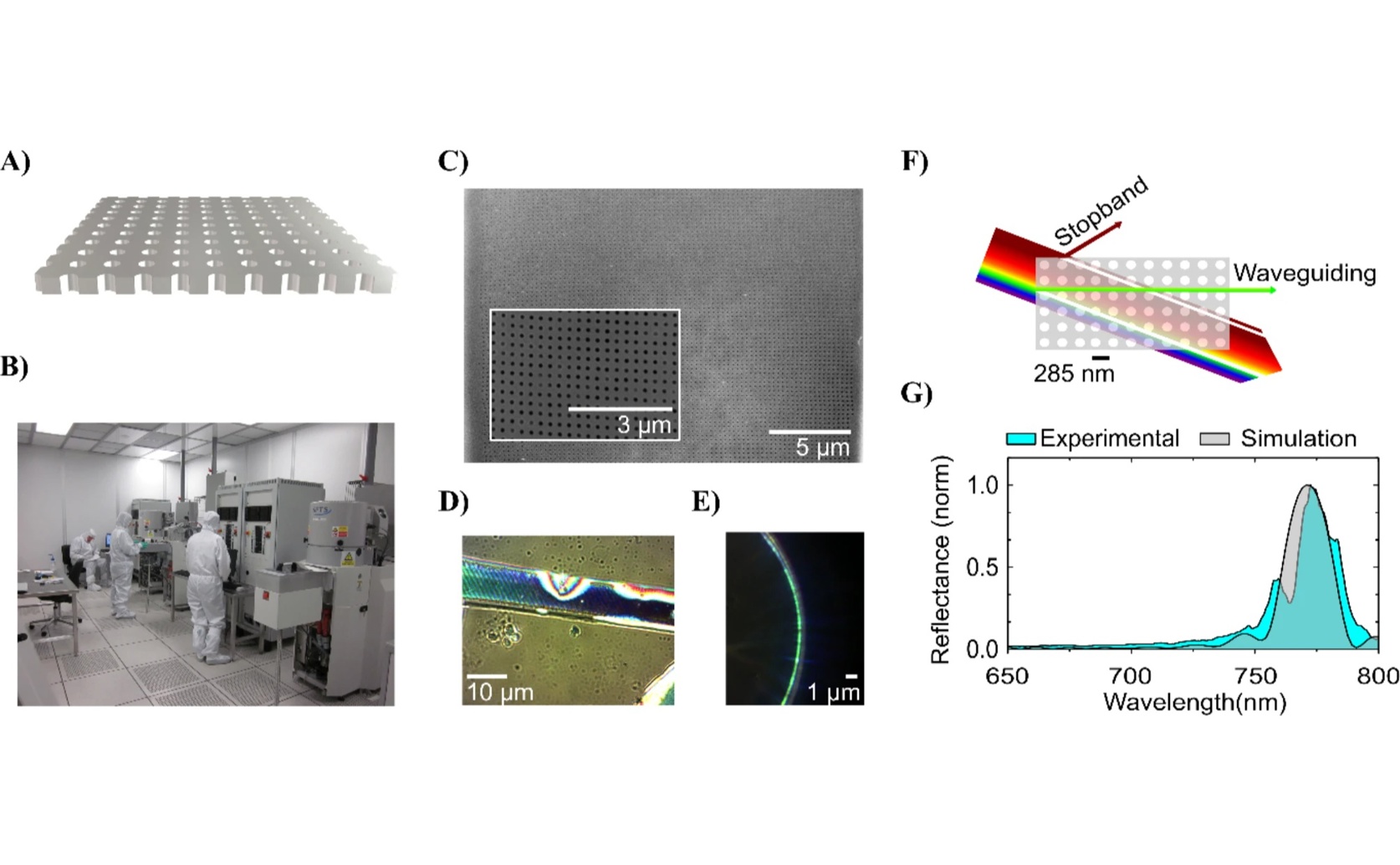
Contrasting complex artificial nanofabrication methods (a, b) with the natural biosilica architecture of Coscinodiscus granii (c) confirms that diatoms possess functional slab photonic crystals exhibiting advanced optical properties, such as waveguiding and stopband reflectance (d–g), which predate human technological invention.

Image adapted from: Ashworth et al. / CC BY (Source)

Key Findings

  • Researchers at the University of Texas discovered that diatoms’ silica shells contain natural structures that precisely control light
  • These light-controlling structures evolved from simple to more complex forms, enhancing diatoms’ ability to manage light for growth
  • The findings could inspire new light-manipulating technologies, benefiting areas like energy and electronics
Diatoms, a group of single-celled algae, are renowned for their intricate silica shells known as frustules. These frustules are not only structurally complex but also possess unique optical properties that contribute to the ecological success of diatoms in various aquatic environments. Despite their abundance and ecological significance, the precise reasons behind their optical prowess have remained partially understood. Recent research conducted by scientists at the University of Texas at Austin[1] has shed new light on the optical functionalities of diatom frustules, particularly focusing on the presence of natural slab photonic crystals. Photonic crystals are advanced nanomaterials that can control and manipulate light with high precision, creating what are known as photonic stopbands. These stopbands are critical in technologies such as quantum computing and photonics, where precise light manipulation is essential. However, the natural role of these photonic crystals in diatoms had been unclear until now. The study employed a multidisciplinary approach, integrating taxonomic analysis, evolutionary insights, and detailed examinations of photonic properties. By utilizing scanning electron microscopy, researchers examined the girdle elements of the silica shells from several hundred diatom species. This extensive survey aimed to uncover any correlations between the presence of slab photonic crystals and the taxonomic relationships among diatoms. The findings revealed that slab photonic crystals are predominantly found in some of the oldest diatom classes. These structures exhibit stopband properties that span from the visible to the mid-infrared spectrum, indicating their potential role in finely tuning light absorption and reflection. One of the key discoveries was the evolutionary progression of these photonic structures. Initially, diatoms developed square lattice formations from quasi-ordered templates. Over time, these structures evolved into more efficiently packed hexagonal arrangements. This transition from quasi-order to a higher degree of order highlights an evolutionary trajectory aimed at optimizing the light-manipulating capabilities of the frustules. Such ordered structures are more effective in creating photonic stopbands, which can enhance the diatom’s ability to manage light for photosynthesis and other cellular processes. This study builds upon earlier research that has explored various optical characteristics of diatoms. For instance, previous studies have demonstrated that the frustule’s nano-patterned structure can act as a photonic crystal, enhancing light absorption around specific wavelengths that correspond to chlorophyll pigments[2]. Another study highlighted the ability of diatom frustules to focus light, acting similarly to microlenses, which could concentrate light to improve photosynthetic efficiency[3]. Additionally, research on the optical properties of different parts of the frustule, such as girdle bands, revealed that they attenuate different wavelengths of visible light and exhibit iridescent coloration based on light direction[4]. These findings collectively suggest that diatom frustules are sophisticated optical systems capable of modulating light in ways that benefit the organism. The current study advances this understanding by providing a comprehensive inventory of natural slab photonic crystals across a wide range of diatom species. By correlating the presence of these photonic structures with taxonomic data, the researchers were able to trace the evolutionary development of photonic order in diatoms. The discovery that older diatom classes possess these advanced photonic structures suggests that the ability to manipulate light precisely has been a crucial factor in the long-term ecological success of diatoms. Moreover, the study’s findings have significant implications beyond the realm of biology. The natural evolution of photonic crystals in diatoms provides a sustainable model for developing new photonic materials and devices. Understanding how diatoms achieve efficient light manipulation through their frustules can inspire innovative designs in micro-optic technologies and smarter energy management systems. These insights could lead to advancements in areas such as solar energy harvesting, where efficient light control is vital. The methodology employed in this research involved detailed scanning electron microscopy to capture high-resolution images of the diatom frustules. These images were then analyzed to identify the presence and arrangement of photonic crystals. By comparing these structures across different species and taxonomic groups, the researchers could identify patterns and evolutionary trends. Numerical simulations of electromagnetic field propagation further supported the experimental findings, demonstrating how the regular geometry of the diatom structures contributes to their light-manipulating abilities. In summary, the study by the University of Texas at Austin provides a groundbreaking insight into the natural occurrence and evolutionary development of slab photonic crystals in diatoms. By integrating taxonomic, evolutionary, and photonic analyses, the research highlights how these microscopic structures have evolved to optimize light manipulation, contributing to the ecological success of diatoms. This work not only enhances our understanding of diatom biology but also opens new avenues for the application of natural photonic materials in modern technology.

BiotechMarine BiologyEvolution

References

Main Study

1) Adaptive evolution and early diversification of photonic nanomaterials in marine diatoms

Published 21st February, 2025

https://doi.org/10.1038/s41598-024-82209-w


Related Studies

2) Wavelength and orientation dependent capture of light by diatom frustule nanostructures.

https://doi.org/10.1038/srep17403


3) Lensless light focusing with the centric marine diatom Coscinodiscus walesii.

Journal: Optics express, Issue: Vol 15, Issue 26, Dec 2007


4) Differences in the optical properties of valve and girdle band in a centric diatom.

https://doi.org/10.1098/rsfs.2018.0031


Related Articles

An unhandled error has occurred. Reload 🗙