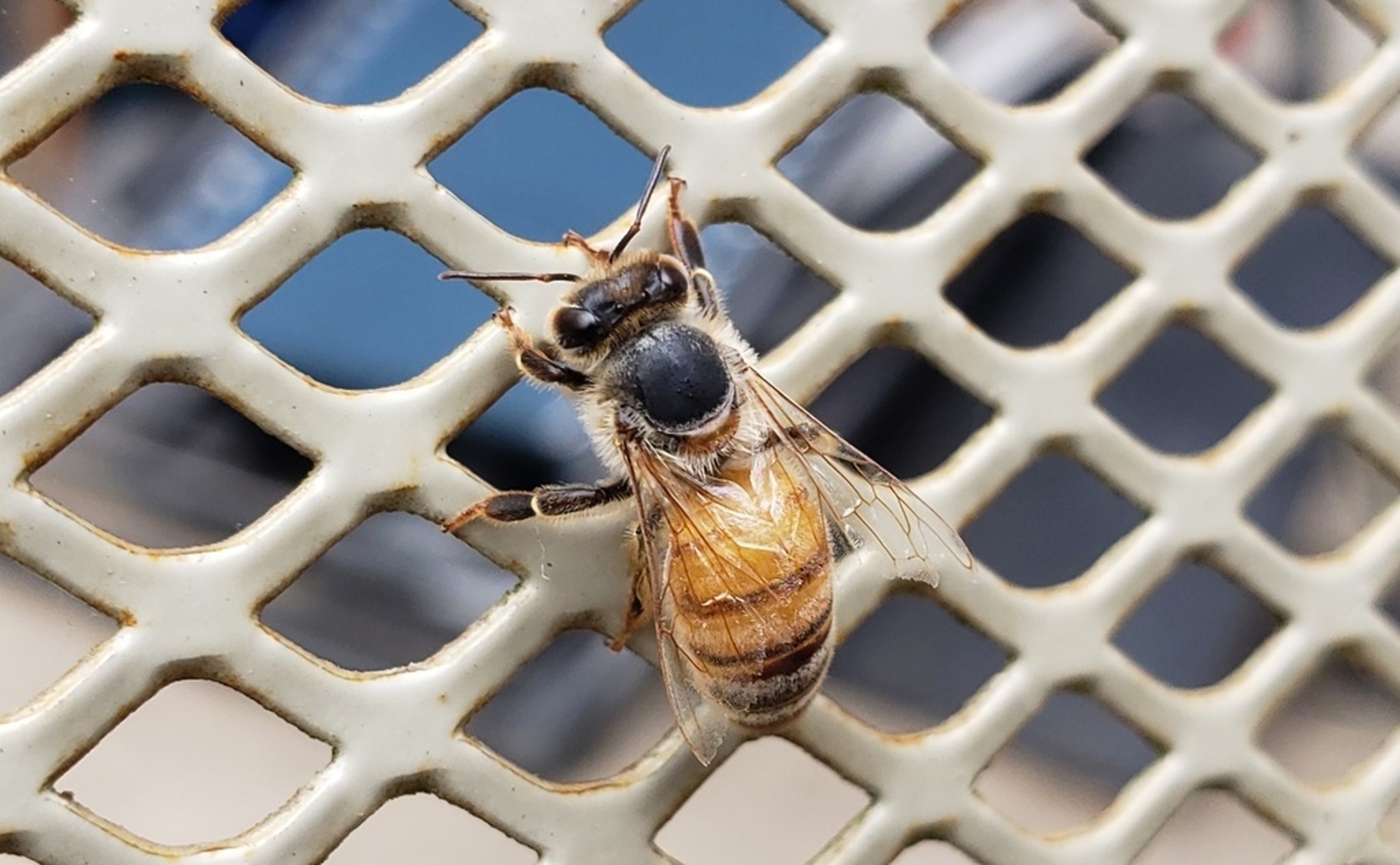
Heart Activity Changes in Honeybees When Exposed to Fipronil

Jenn Hoskins
6th August, 2024

Heart Activity Changes in Honeybees When Exposed to Fipronil

Western Honey Bee (Apis mellifera)

Photo adapted from: Gavin Slater / CC BY (Source)

Key Findings

  • The study by the Federal University of Pará found that fipronil significantly reduces the frequency and intensity of cardiac activity in bees
  • This reduction in cardiac function suggests a disruption of homeostasis in bee hemodynamics, indicating potential harm to their circulatory system
  • The findings highlight the urgent need for stricter regulations on fipronil to protect bee populations, crucial for pollination and ecosystem health
The decline of honey bee populations, particularly Apis mellifera, is a pressing concern due to their crucial role in pollination and the production of honey and other hive products. This decline has been linked to various factors, including the use of broad-spectrum systemic insecticides such as fipronil. A recent study conducted by the Federal University of Pará has provided new insights into the impact of fipronil on bees by assessing cardiac activity as a biomarker of intoxication[1]. Fipronil is a relatively new insecticide belonging to the phenpyrazole group. Its selective toxicity towards insects over mammals has been well-documented, primarily due to its action on the gamma-aminobutyric acid (GABA) receptor and glutamate-activated chloride channels, which are present in insects but not in mammals[2]. Despite its effectiveness in controlling pest populations, fipronil poses a significant threat to non-target organisms, including bees. Previous studies have highlighted the detrimental effects of fipronil on bees, including behavioral changes, reduced motor activity, and colony abandonment[3]. In the study by the Federal University of Pará, researchers aimed to further understand the physiological effects of fipronil on bees by focusing on cardiac activity. Eighteen forager bees from the apiary of EMBRAPA—Eastern Amazon were selected for the study. The bees were divided into a control group and a group treated with fipronil at a dose of 0.025 mg/bee. Electrophysiological recordings of cardiac activity were taken from the bees, which were anesthetized and restrained on a stereotaxic base within a Faraday cage to minimize external interference. The recordings lasted for 4 minutes and were evaluated at 1-second intervals. The results showed that fipronil significantly reduced the frequency and intensity of cardiac activity in bees. This reduction in cardiac function indicates a disruption of homeostasis in bee hemodynamics, which is the stable functioning of the circulatory system. The study observed variations in spike amplitude, indicating a loss of cardiac strength and the magnitude of the electrical impulse in the bees' hearts during exposure to fipronil. These findings align with previous research that has shown the toxic effects of fipronil on bees. For example, fipronil exposure has been linked to increased oxidative stress and alterations in antioxidant enzyme levels in mice, which suggests a similar mechanism may be at play in bees[4]. Furthermore, the impact of fipronil on bee behavior and colony health has been well-documented, with sublethal doses leading to reduced brood viability, population growth, and overall colony maintenance[3]. The study by the Federal University of Pará adds to the growing body of evidence that fipronil poses a significant threat to bee populations. By demonstrating the impact of fipronil on cardiac activity, the study provides a new biomarker for assessing fipronil intoxication in bees. This biomarker can be used to further investigate the physiological mechanisms underlying fipronil toxicity and to develop strategies for mitigating its impact on bee populations. In conclusion, the study highlights the urgent need for more stringent regulations on the use of fipronil and other broad-spectrum insecticides to protect bee populations. Given the essential role bees play in pollination and ecosystem services, their decline could have far-reaching consequences for biodiversity and food security. Further research is needed to explore alternative pest control methods that are less harmful to bees and other non-target organisms.

HealthBiochemAnimal Science

References

Main Study

1) Changes recorded in cardiac graphoelements bees (Apis mellifera) during contact with fipronil

Published 5th August, 2024

https://doi.org/10.1007/s44338-024-00017-y


Related Studies

2) Differential actions of insecticides on target sites: basis for selective toxicity.

Journal: Human & experimental toxicology, Issue: Vol 26, Issue 4, Apr 2007


3) Fipronil promotes motor and behavioral changes in honey bees (Apis mellifera) and affects the development of colonies exposed to sublethal doses.

https://doi.org/10.1002/etc.2889


4) Fipronil induced oxidative stress in kidney and brain of mice: protective effect of vitamin E and vitamin C.

https://doi.org/10.1016/j.pestbp.2014.10.013


Related Articles

An unhandled error has occurred. Reload 🗙