How Calcium and Phosphorus in Diet Affect Fat Metabolism in Young Animals

Jenn Hoskins
6th August, 2024

How Calcium and Phosphorus in Diet Affect Fat Metabolism in Young Animals

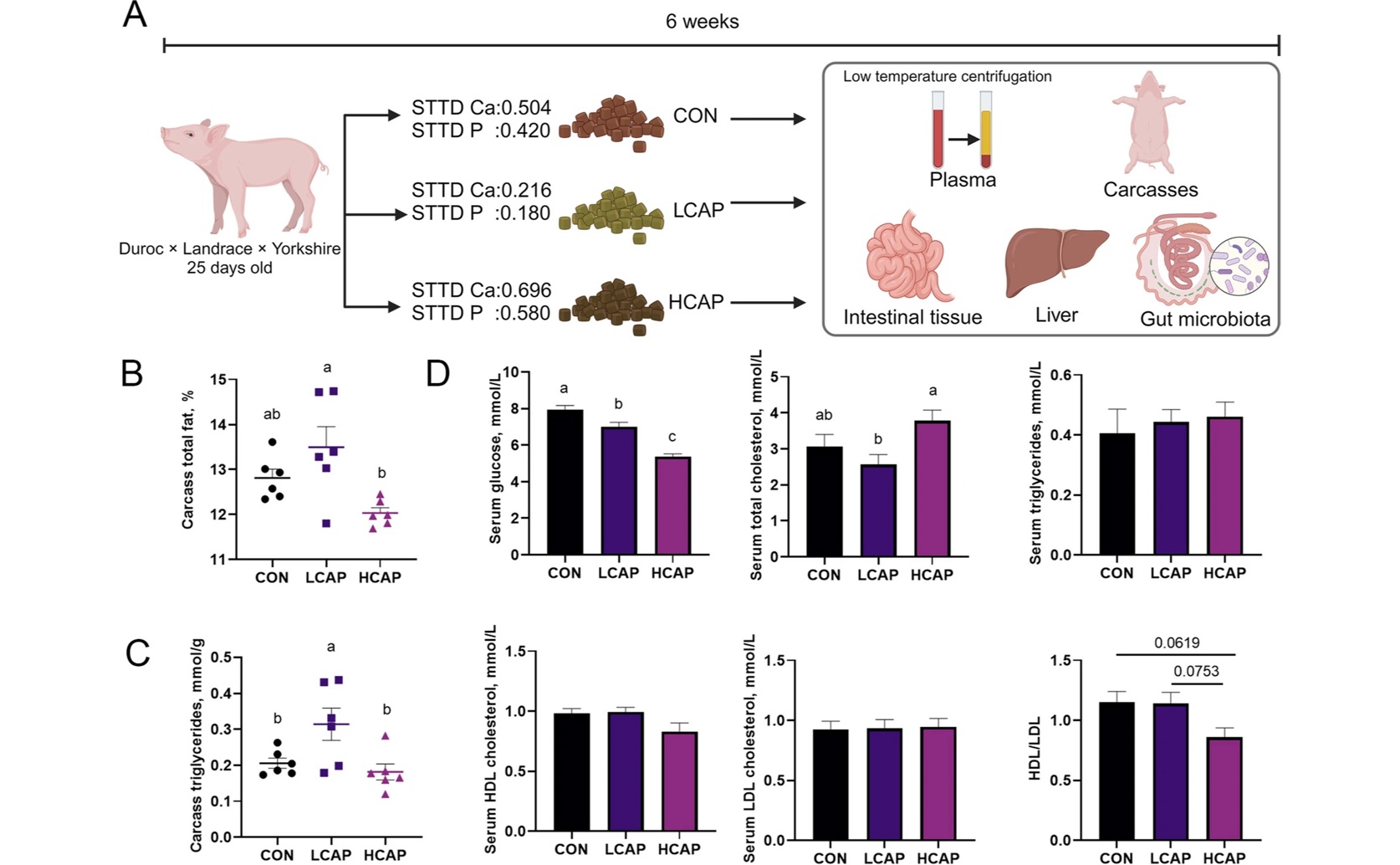
Higher dietary calcium and phosphorus levels reduce carcass fat and triglyceride accumulation and lower serum glucose in weaned piglets, demonstrating that calcium–phosphorus intake directly modulates systemic lipid and energy metabolism consistent with improved lipid homeostasis.

Image adapted from: Miao et al. / CC BY (Source)

Key Findings

  • The study by the Guangdong Academy of Agricultural Sciences found that balanced dietary calcium and phosphorus significantly improved lipid metabolism in swine
  • Swine on a balanced diet had lower levels of total cholesterol and triglycerides, indicating better fat breakdown and utilization
  • The balanced diet also enhanced the expression of genes involved in lipid oxidation and hydrolysis, suggesting improved fat metabolism
In swine production, optimizing body composition and reducing excessive fat accumulation are crucial for improving both economic efficiency and meat quality. Recent research conducted by the Guangdong Academy of Agricultural Sciences delves into the synergistic effects of dietary calcium (Ca) and phosphorus (P) on fat metabolism, aiming to elucidate the precise mechanisms behind these effects[1]. Dietary calcium and phosphorus are essential nutrients known to influence lipid metabolism, but their combined impact on fat accumulation in livestock has not been fully understood. Previous studies have shown that high phosphorus intake can affect lipid composition and gene transcription in mice, indicating a potential link between phosphorus levels and lipid metabolism[2]. Similarly, dietary calcium has been suggested to have a beneficial effect on cardiovascular risk by interacting with fatty acids and bile acids, which are crucial for lipid absorption and metabolism[3]. The study by the Guangdong Academy of Agricultural Sciences investigates how varying levels of calcium and phosphorus in the diet influence fat metabolism in swine. The researchers hypothesized that a balanced intake of these minerals could optimize lipid metabolism, thereby reducing excessive fat accumulation and improving meat quality. To test this hypothesis, the researchers conducted a controlled feeding experiment with swine, providing different groups with diets that varied in calcium and phosphorus content. The study meticulously measured various biochemical indicators in the plasma and tissues of the swine, including lipid profiles and gene expression related to lipid metabolism. The findings revealed that diets with balanced calcium and phosphorus levels significantly improved lipid metabolism compared to diets with imbalanced mineral levels. Swine on the balanced diet exhibited lower levels of total cholesterol and triglycerides, which are indicators of improved lipid metabolism. Additionally, the expression of genes involved in lipid oxidation and hydrolysis was higher in the balanced diet group, suggesting enhanced fat breakdown and utilization. These results align with previous research that highlighted the role of dietary phosphorus in lipid metabolism. For instance, a study on mice demonstrated that high phosphorus intake led to changes in muscle lipid composition and gene transcription, affecting lipid metabolism pathways[2]. Similarly, research on broiler chickens showed that both deficient and high phosphorus diets negatively impacted meat quality and lipid metabolism, emphasizing the importance of maintaining appropriate phosphorus levels[4]. Moreover, the study also builds on findings related to dietary calcium's role in lipid metabolism. The interaction between calcium and fatty acids and bile acids, crucial for lipid absorption, suggests that calcium can influence lipid metabolism in complex ways[3]. This is further supported by research indicating that maternal calcium intake affects lipid metabolism and the progression of nonalcoholic fatty liver disease (NAFLD) in offspring, highlighting the long-term impact of calcium on lipid metabolism[5]. In conclusion, the study by the Guangdong Academy of Agricultural Sciences provides valuable insights into the synergistic effects of dietary calcium and phosphorus on fat metabolism in swine. By demonstrating that balanced mineral intake optimizes lipid metabolism and reduces excessive fat accumulation, this research offers practical implications for improving meat quality and economic efficiency in swine production. The findings also underscore the importance of considering both calcium and phosphorus levels in dietary formulations to achieve optimal outcomes in livestock management.

NutritionBiochemAnimal Science

References

Main Study

1) CAMKK2-AMPK axis endows dietary calcium and phosphorus levels with regulatory effects on lipid metabolism in weaned piglets

Published 5th August, 2024

https://doi.org/10.1186/s40104-024-01061-0


Related Studies

2) A High-Phosphorus Diet Moderately Alters the Lipidome and Transcriptome in the Skeletal Muscle of Adult Mice.

https://doi.org/10.3390/nu15173734


3) Role of calcium on lipid digestion and serum lipids: a review.

https://doi.org/10.1080/10408398.2021.1954873


4) Effect of dietary phosphorus levels on meat quality and lipid metabolism in broiler chickens.

https://doi.org/10.1016/j.foodchem.2016.02.133


5) Sex-specific maternal calcium requirements for the prevention of nonalcoholic fatty liver disease by altering the intestinal microbiota and lipid metabolism in the high-fat-diet-fed offspring mice.

https://doi.org/10.1080/19490976.2020.1768645


Related Articles

An unhandled error has occurred. Reload 🗙